

"More gambling."
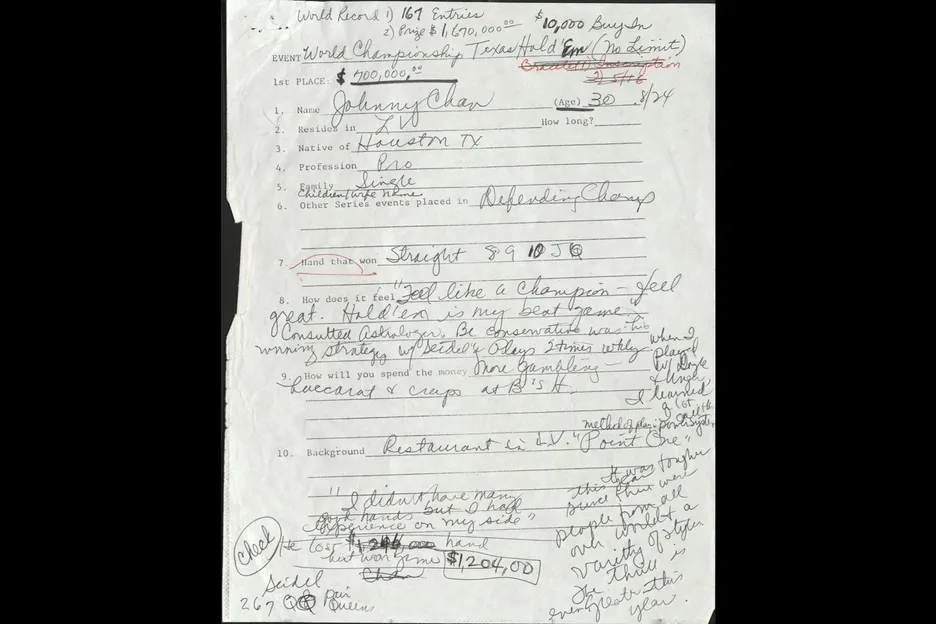
Baccarat and craps, specifically. That was Johnny Chan's answer in a short post-win interview with Binion's PR staff after he won his second straight World Series of Poker Main Event in 1988. The question was "How will you spend the money?" and it was among other simple post-win queries on the standard Binion's bio sheet.
A few other notes are scribbled. How does it feel? "Feel like a champion — feel great. Hold'em is my best game." Background: Restaurant in Las Vegas. Chan, 30 at the time, also told the interviewer that he consulted an astrologer.
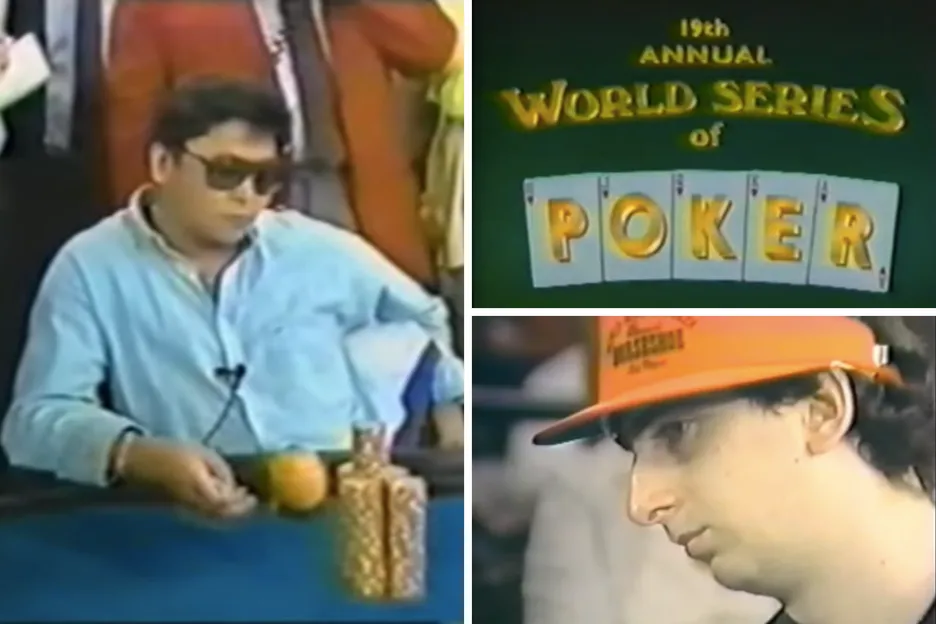
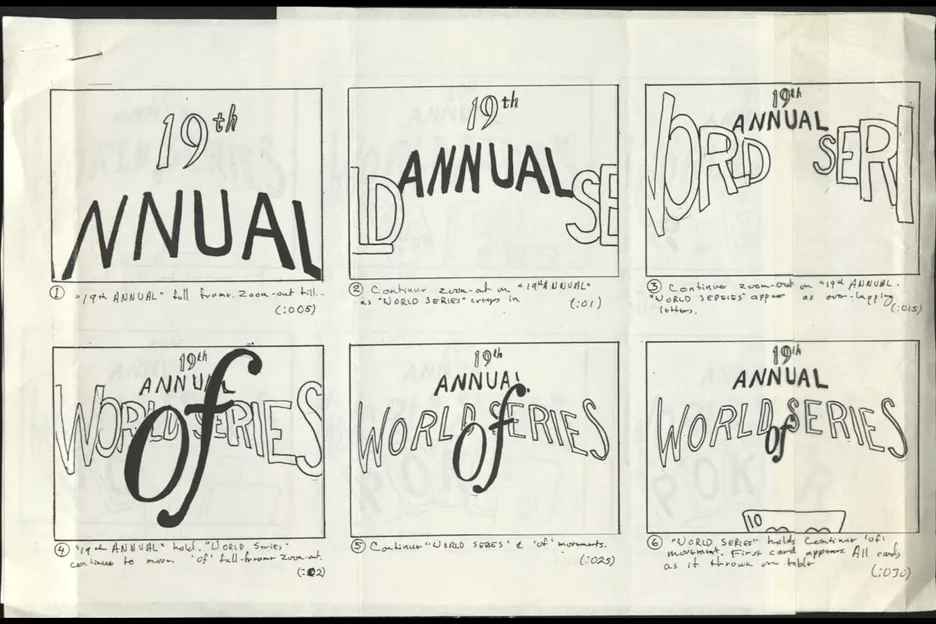
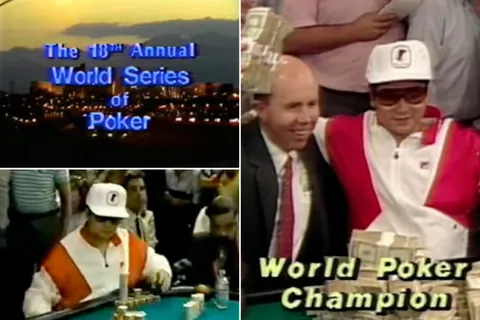
It was a different world from the modern post Main Event media scrum with dozens of media outlets trying to throw a camera in the winner's face. Not that the 1988 WSOP wasn't a big deal — it would go on to fame as ESPN's second annual telecast, featuring a heads-up battle between Chan and Erik Seidel that would find eternal life in the film Rounders.
All of the structure sheets, chip count tallies, and media notes from the 1988 World Series are still intact in the Special Collections library at UNLV in Las Vegas. A deep dive reveals more about the fast-growing poker spectacle.
Dinner and 'non-tournament play'
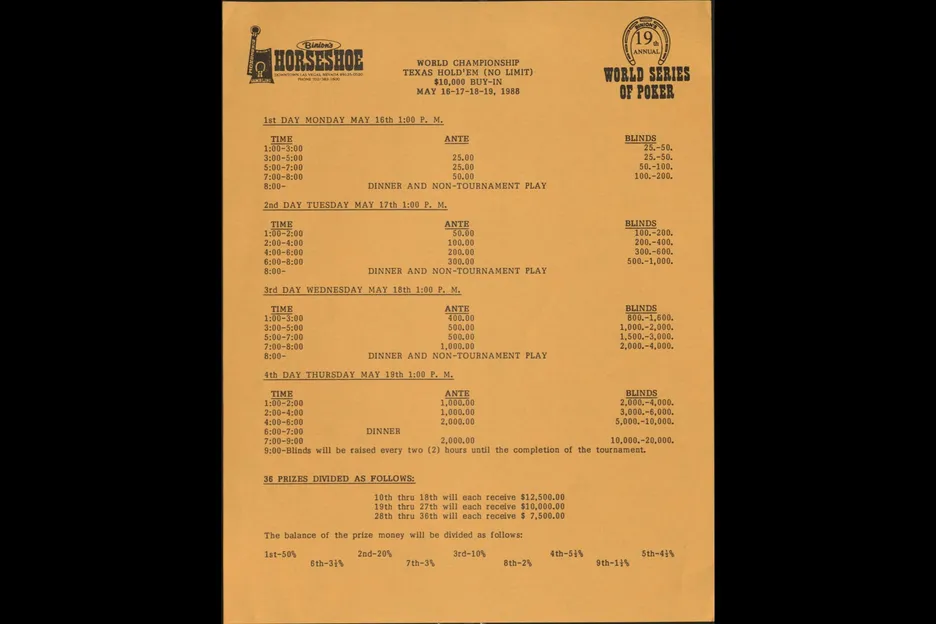
The Main Event at the 19th Annual World Series of Poker ran from May 16-19 in 1988, drawing 167 entries with a $10,000 buy-in and a $50 entry fee. Chan won $700,000 for first place, shy of half of the $1,670,000 prize pool and a big jump up from Seidel's runner-up prize of $280,000. Both the total entries and prize pool were another new record for the WSOP's Main Event at the time, and they would continue to break it every year until a slight pullback in the player count in 1992.
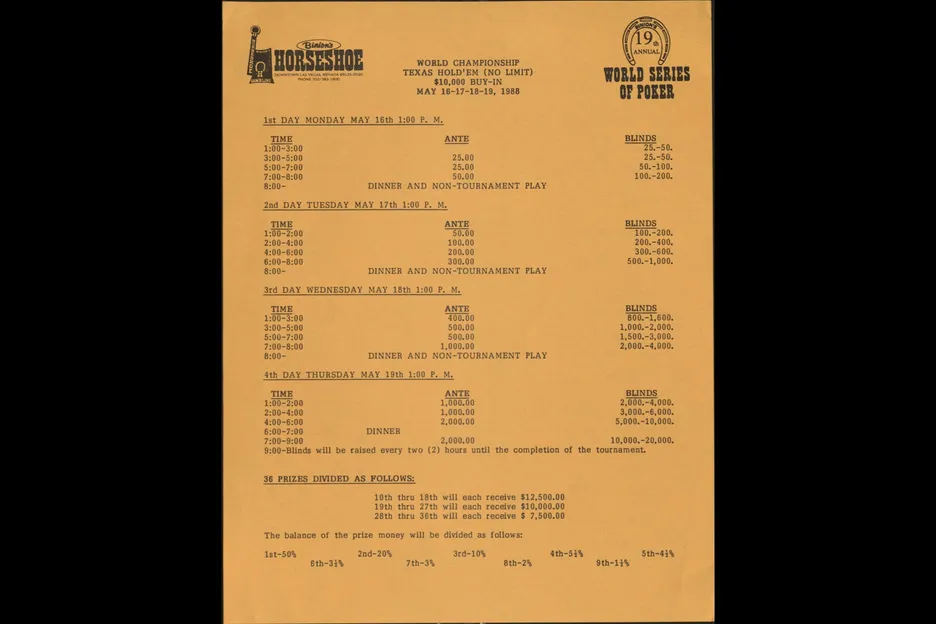
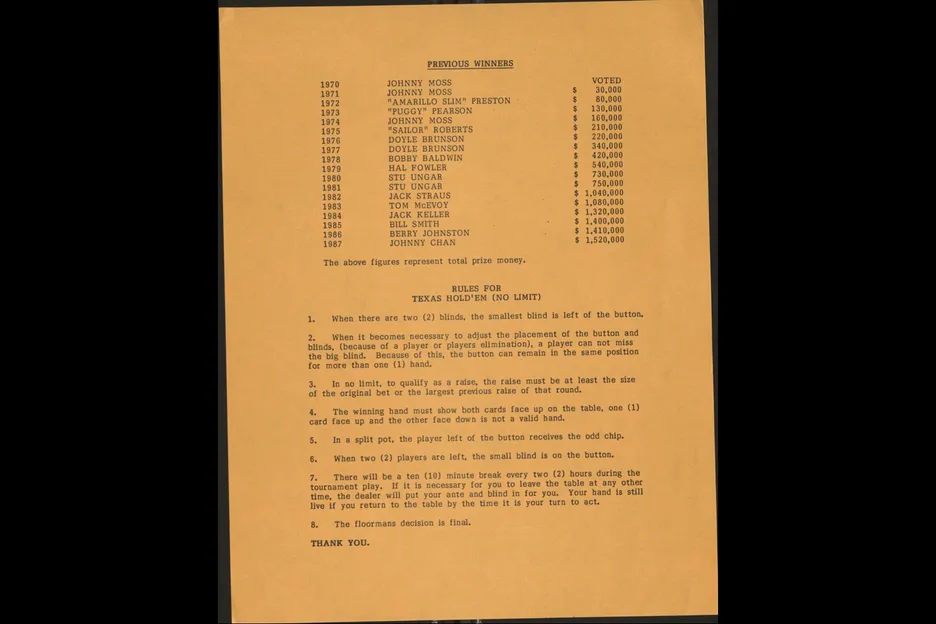
A structure sheet from the event reflects a much different time. The first day had three two-hour levels and half of Level 4 before play broke for dinner and cash games. Players returned on Day 2 to play the second hour of Level 4 and three more two-hour levels. More dinner and cash games followed, with a repeat of the first day's schedule on Day 3. Day 4 continued with a dinner break, and the night would play out until a winner was declared.
The rules were similar to today's general guidelines, with one noticeable difference. If you needed to leave the table for any reason, your hand was "still live if you return to the table by the time it is your turn to act."








Phillip Hellmuth Jr.'s first Main Event cash
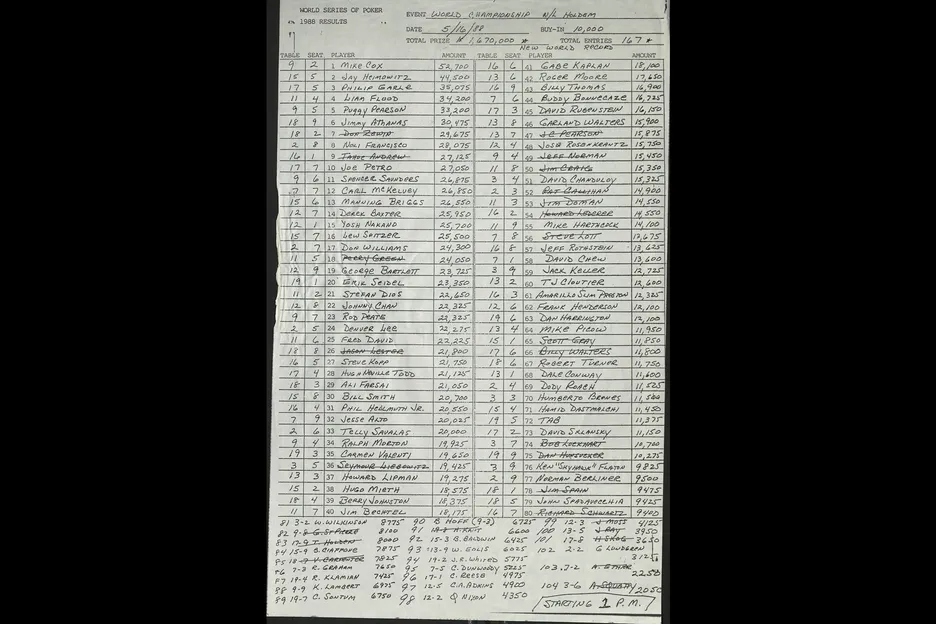
Day 1 counts were gathered by hand, and 104 players bagged between 2,050 and 52,700 chips from a 10K starting stack. Mike Cox had the big stack (he would go on to finish in eighth), and Puggy Pearson made the top ten. Other interesting names were Phil Hellmuth in 31st place with 20,550 chips, TV's Telly Savalas with 20,000, and a young Howard Lederer with 14,550. Meanwhile, the inevitable exacta duo of Seidel and Chan were very close with 23,350 and 22,325, respectively.
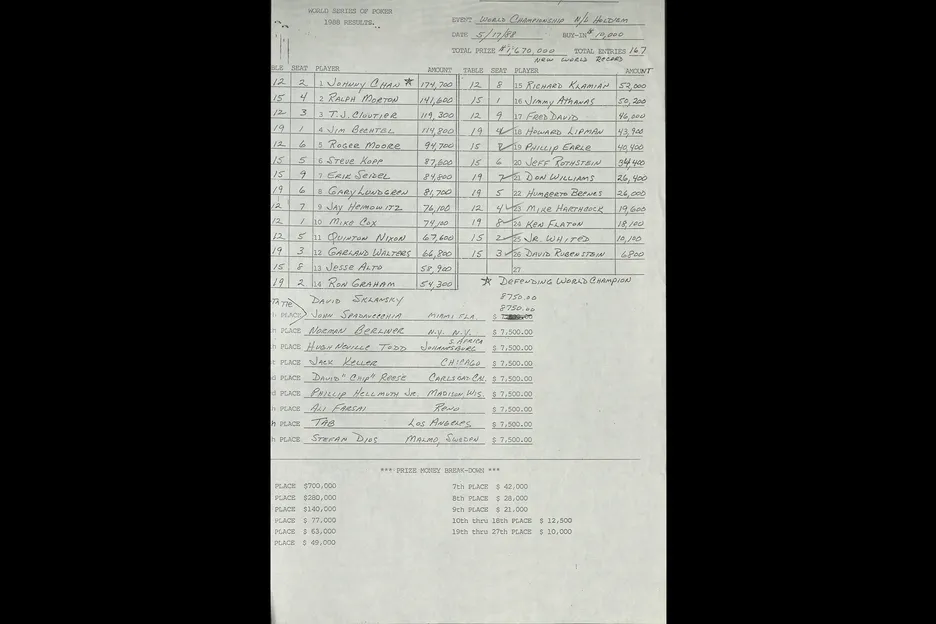
Day 2 chopped the field down to 26 players, handing out a few min-cashes of $7,500 before players went for dinner and cash games. Among them were Phillip Hellmuth Jr. and David 'Chip' Reese, who bounced back from the short stacks to get most of his money back. Chan would move to the chip lead on the second day, joined by T.J. Cloutier, 1993 champ Jim Bechtel, and Seidel in the top ten.
The Day 3 chip count sheet lists all of the cashing finishers and their hometowns, with Hellmuth representing Madison, Wisconsin. The top 26 players all returned on the third day with $10K locked up after David Sklansky and John Spadavecchia split $17,500 into two parts at the end of Day 2 with a double bustout.
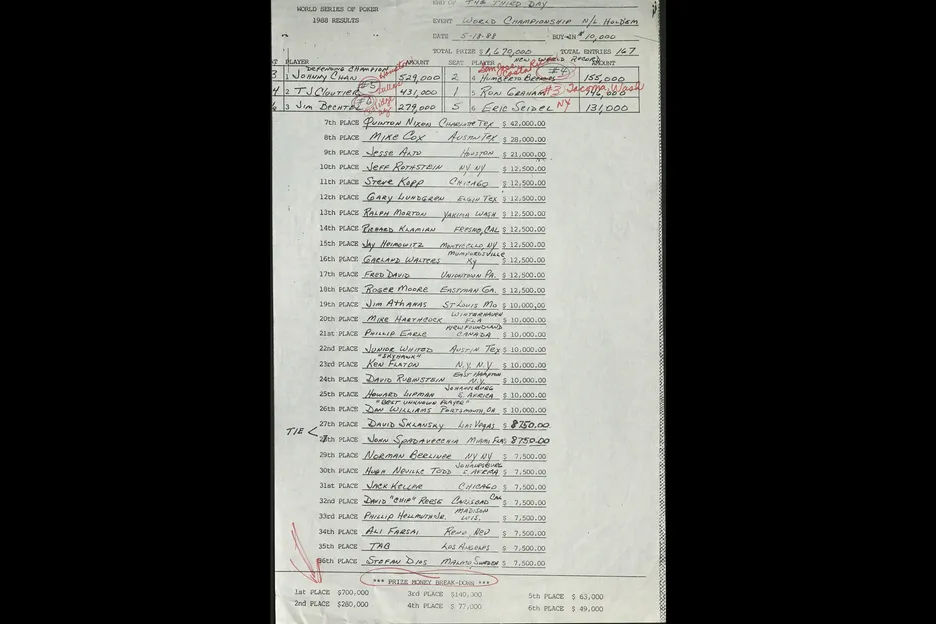
Eventually, six players were left standing at the end of Day 3. New York's Seidel on the short stack and defending champion Chan in the lead. In between them were Cloutier, Bechtel, Ron Graham, and Costa Rica's Humberto Brenes, who was the first foreign player to place in the money in the Main Event the previous year, according to his post-game bio sheet.
'Temporary insanity'
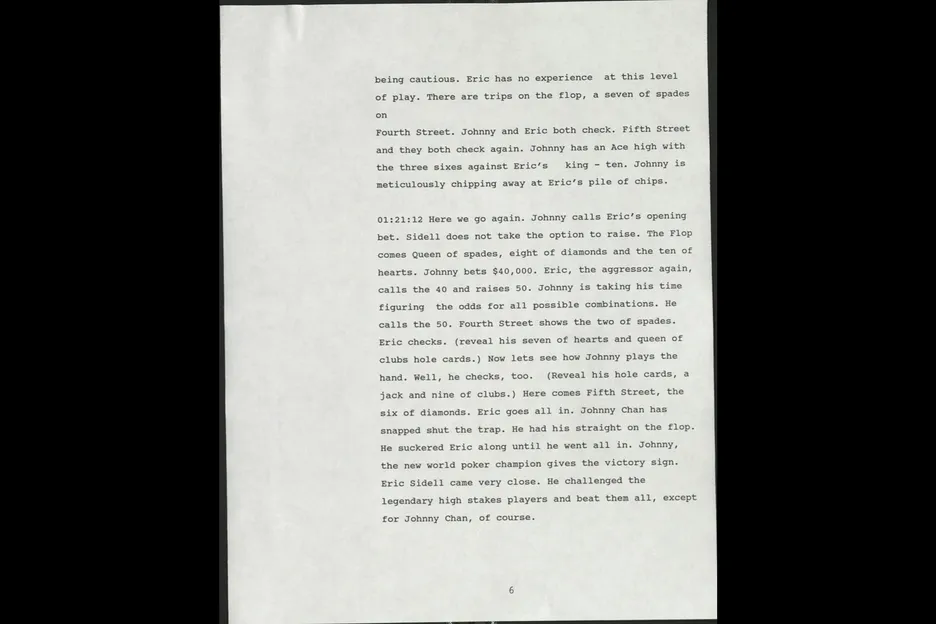
The final six would return for Day 4 and work themselves down to Chan and Seidel for the timeless confrontation. Bechtel would go first, followed by Cloutier, Brenes, and Graham. Chan won with his flopped straight, fending off the underdog Seidel, who would famously walk right into the trap.
"Chan makes you uncomfortable because he plays so well," Seidel told media staff afterwards. The 28-year-old had started playing poker after he "came to LV for a backgammon tourney," and entered the $10,000 tournament in an act of "temporary insanity."
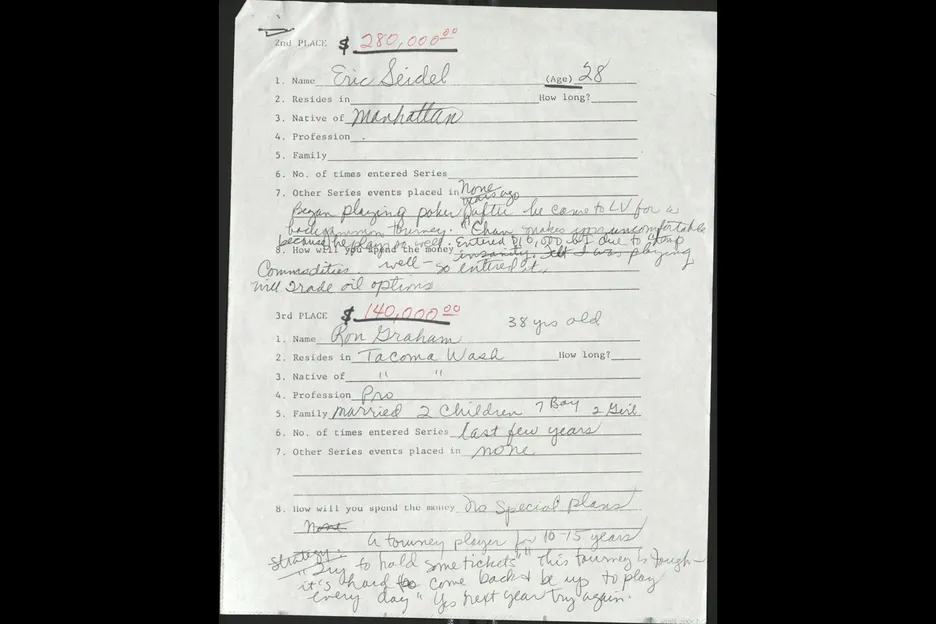
Seidel's plans for the money included trading oil options and other commodities. He would win his first of ten WSOP bracelets in 1992.
Hellmuth would go on to beat a field of 178 players in 1989 as the WSOP Main Event continued to grow. It would add runners almost every year until the Moneymaker Boom, when the event jumped from 839 players in 2003 to 2,576 in 2004.
See more in the 1988 WSOP Main Event gallery below:
Artifacts obtained from Binion's Horseshoe Casino Records on Poker, 1960-2006. MS-00325. Special Collections and Archives, University Libraries, University of Nevada, Las Vegas. Las Vegas, Nevada.


