

Luke Geel is an AI engineer for the US Air Force with degrees in math and economics. As an avid poker player he can often be found at the live tables in the Boston area, as well as occasional appearances on the Garage Game live stream.
This week, as part of his regular series for PokerOrg looking at the intersection of poker and AI, Luke shares some details of a potentially game-changing project he’s been working on.
What lies at the crossroads of AI and poker?
Or, to be more specific, what ideas can be found there that haven’t been done yet?
As an AI engineer I have a natural interest in its uses, and as a poker player I’m always looking to improve.
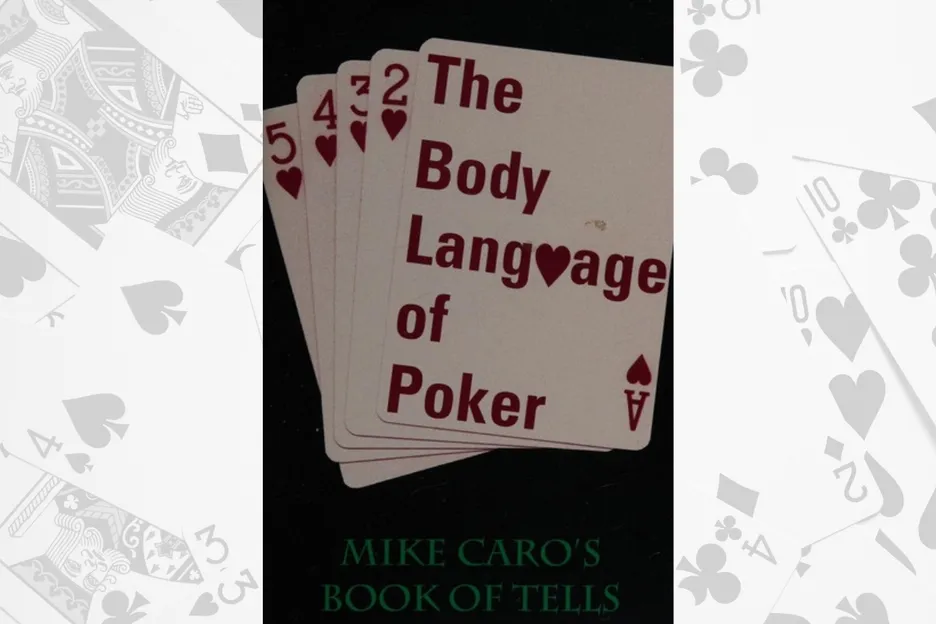
Recently I’ve been reading books on how to spot and interpret physical and verbal tells, and my mind naturally went to where it often goes: Can AI be useful for this?
Imagine if technology could watch you at the table and analyze the information you give off through your physical behavior. It could help you plug leaks you never knew you had.
Now, imagine if it could watch your opponents, too…
Imagination is all well and good, but it’s only a first step. Next, you need a prototype.
So I’m building one. Watch the video below to see it in action.
The Nik Airball prototype
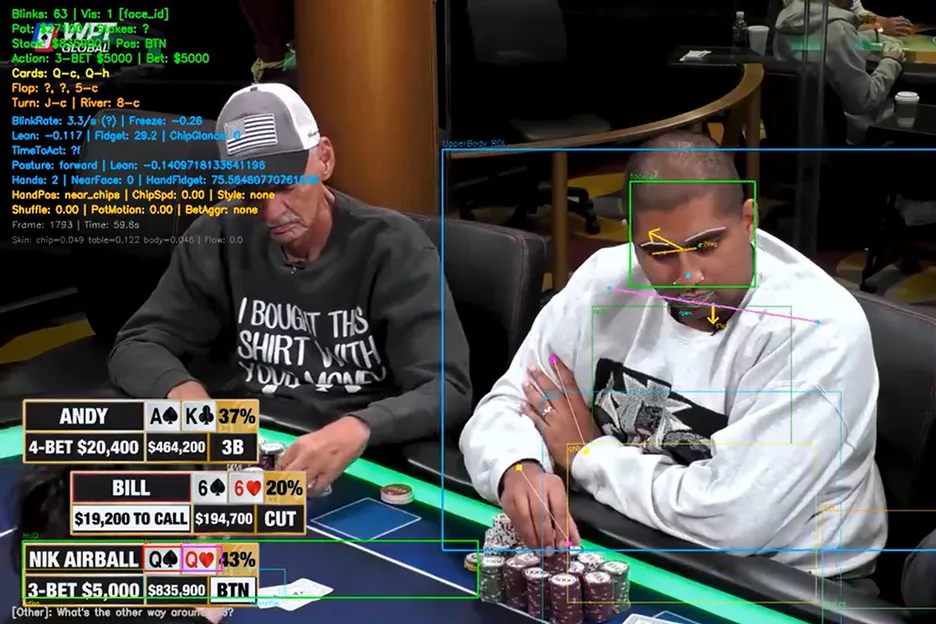
The clip above is a basic example of what I’m building. It takes footage from televised live poker streams and analyzes a player’s behavior in detail to identify their physical and verbal tells.
I started with focusing specifically on Nik Airball over at Hustler Casino Live. He plays a lot of hands, and he bluffs a lot, so I thought he’d be a good candidate for this project. But don’t worry, Nik — I’m not targeting you (not that I could afford to play in those games anyway)!
There are a few different things going on under the hood. One of them is getting the program to be able to actually watch the stream and read the information like bet sizes, how much is in the pot, what the cards are, that sort of stuff. That uses something called OCR, or Object Character Recognition.
Then the second component is having the program track all the possible metrics or tells that he could have. Things like:
- What is he doing with his hands?
- What does his mouth look like?
- Is he smiling?
- Is he frowning?
- Where are his eyes looking?
- Is he looking at his opponents?
- Symmetry of his smile (a symmetrical smile is usually more genuine)
- Blink rate
- Movement speed of the chips when he bets
- How clenched or tight his hands are
- Is he talking?
- If he is talking, what is he saying?
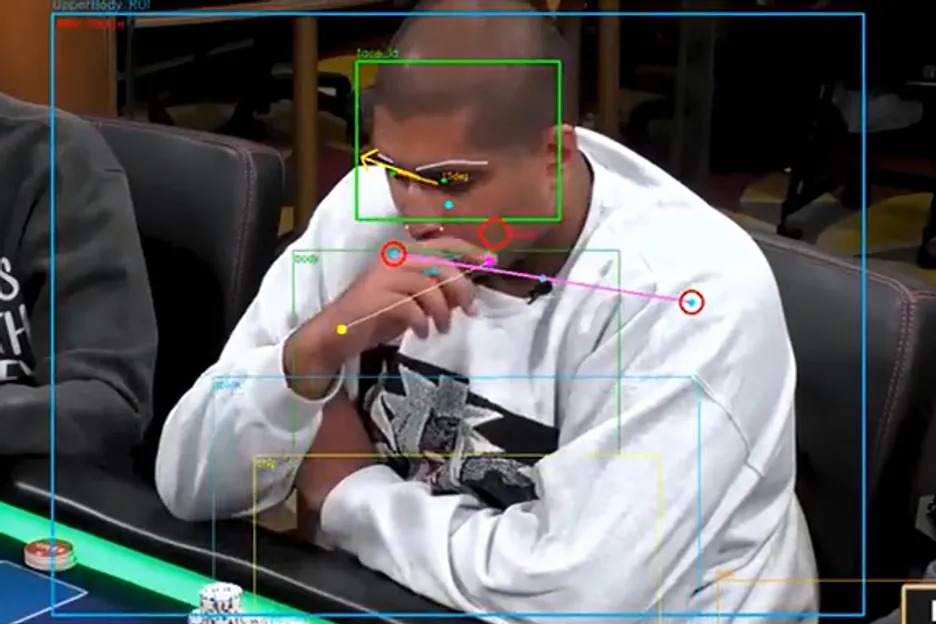
I’m getting the program to gather as much data as possible. And it’s looking to find out more than whether he’s bluffing or not. Like, does he have a really good draw, for example, or a good but not a great hand?
And then, the final component, which is the one I have left to do, is taking all that data and using AI and machine learning to be able to figure out: what are Nik's specific poker tells?
Focusing on a player like Nik Airball, who appears in a lot of streamed games, has allowed me to make real progress with the project, using a subject who has voluntarily played in front of cameras, with exposed hole cards, for many, many hours.
And while I have the skills of a professional AI engineer, this has not required a supercomputer of any kind. I’ve just been building this off my regular Apple MacBook.









Does this create a new problem, or is it an old one?
Do I expect this idea to be universally popular? No. I'd be very surprised if nobody had any issues with it.
It seems like a vast majority of AI use cases have some negative effects, or at least some potential negative uses.
And I get it. If you play poker for fun, for the love of the game, I’m not going to say that this is going to ruin the game, but it’s not going to add anything. It’s not going to make it more fun.
But I think you could put solvers in the same boat; they’ve advanced the game, they’ve made it more complex, but if you’re playing for fun, they haven’t necessarily made it more enjoyable.

People have been using tells and trying to read other poker players since day one. And then, over time, more and more third-party assistance in tell-reading has become available. There are plenty of books out there focused on this, and some big-name pros even offer courses in it.
They definitely give someone an advantage, but is it an unfair one? Not if everybody has the same access.
Of course, you could argue that if, for example, Charlie Carrell’s live tells course costs $700, not everyone does have the same access.
But apply that same reasoning to poker coaching. No one is seriously arguing that working with a poker coach is unethical or unfair, but again: you get what you pay for. The best coaches will cost more than the worst ones. Isn’t that as it should be?
I don’t think the fact that this exists — and will likely continue to get more advanced and capable — is the problem. At least, not on its own.
As I see it, there are two factors that are critically important from a game integrity point of view: consent, and real-time access.
Preparation, or cheating?
Firstly, I’m not using this to analyze anyone who hasn’t willingly appeared on a live stream, showing their hole cards for the world to see.
There are surely a lot of poker players out there who would never consider appearing on a live stream unless forced to thanks to a deep tournament run and an appearance on a featured table. If someone knows your cards and watches you play, they have an advantage, period.
When players appear on shows like HCL, it’s because they get something out of it — whether that’s as simple as a seat in a juicy game, or even a little fame to grow their brand.
Would this put people off from playing in front of cameras? I don’t think so, and neither apparently do the producers of this summer’s WSOP coverage, who have already been in touch to learn more about how they might incorporate something similar into their programming.
Filming someone without their knowledge or consent is another story, but that’s not to say it couldn’t happen. In the vlogger era, filming on your phone at the table is not uncommon. And let’s not forget that in a modern casino you’re almost certainly always on camera, all the time.
Then there’s the issue of real-time access. As I see it, using this tool to study in between games isn’t a world away from studying with solvers, looking through your player notes, using a poker coach or reading a book on tells. When you get to the table, though, you should be on your own.
So, no AI-assisted tells analysis at the felt? Of course not, but in the same way that solvers, books, cheat-sheets or coaching isn’t allowed at the table. There’s preparation, and there’s cheating.
It’s a player’s responsibility to prepare; it’s the operators’ responsibility to put up guardrails and rules to prevent cheating.
Are enough guardrails in place to stand up to the new wave of AI tools that this idea represents? Or the next one, whatever form that may take?
I don’t know; I’m not a poker operator.
But if I was, I’d start looking to hire someone like me.
What do you think about this idea? Is it crossing a line, or just another way technology is pushing the game forward? Let me know your thoughts in the comments.
Follow Luke Geel on LinkedIn.