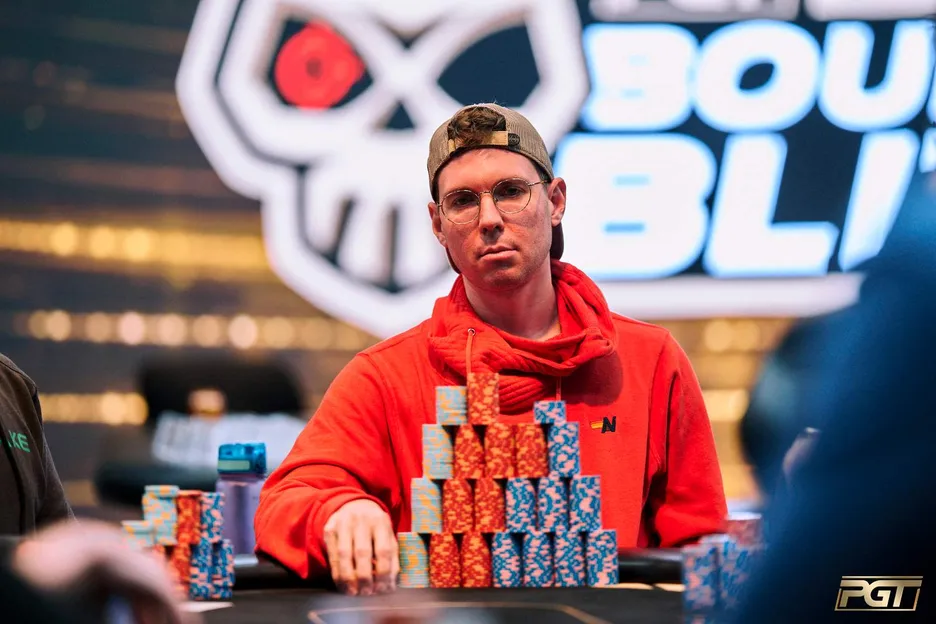


Andrew Lichtenberger had a standout summer at the WSOP in Las Vegas, capped by the birth of his first child.
Halfway through the series, Lichtenberger came agonizingly close to a second gold bracelet, finishing second to Jason Koon in the $50K High Roller and eventually closed out the summer with more than $1.8 million in cashes.
“Obviously, it was an incredible result overall,” Lichtenberger said. “We're competitors — we want to win — but it’s important to be grateful for a great outcome, and not let what might have been overshadow that. Jason has been a friend for many years and after we finished playing, I said, ‘Congrats, man, you deserve this’.”
Andrew’s summer would culminate with an even more blessed event than World Series gold: the birth of his first child — a baby girl they’ve named Sedona.
PokerOrg spoke with the proud father to get an update on his deep WSOP runs, the excitement of offering holistic coaching, and the joy of fatherhood.
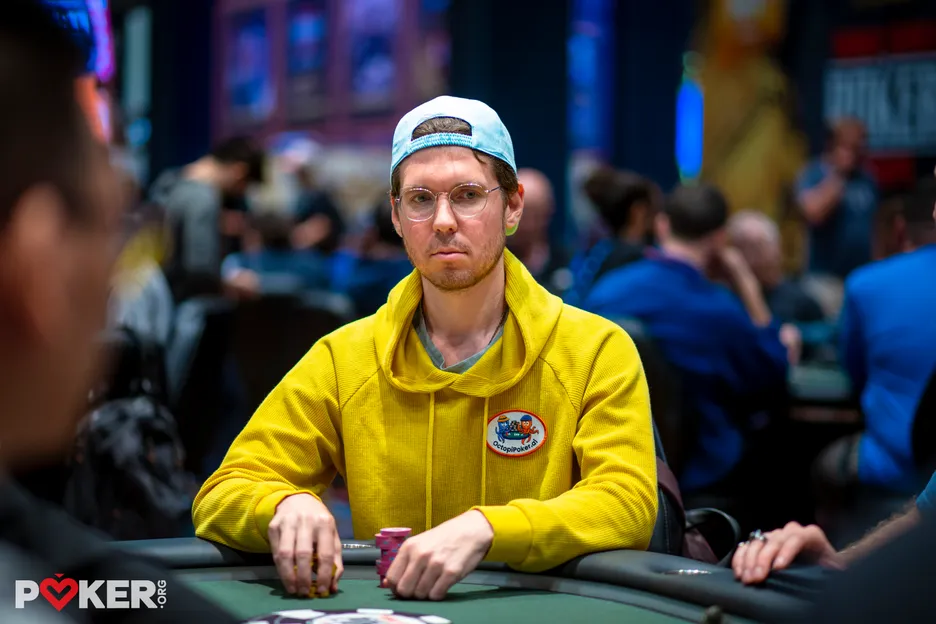
Let’s talk about your new venture, stepping out more into the public eye as a poker coach. What should players expect when working with you?
From my experience, poker is a multifaceted and multidimensional pursuit. Understanding strategy is definitely a huge part of what makes a player successful, but it's just one piece of the puzzle. The key is to take that strategy that you have or your theoretical knowledge and execute it on the performance side. I teach players how to use their intuition to their advantage. That part of this new venture is very exciting for me.
If a player were to hire you as a holistic poker coach, what kind of approach to the game should they expect from you?
I work best with players who approach poker from a holistic perspective — those who want to grow not just strategically, but also mentally and intuitively. They're interested in enhancing their connection with their intuition and how to use it more effectively at the table.
I’m always happy to share my firsthand experiences and work with people in that one-on-one setting to see how they interface with their intuition. It’s different for everyone. Sometimes it’s mental imagery, sometimes a physical cue, sometimes just a gut feeling.
How does a player begin to determine the intuition nudge from within with so many distractions around a poker table?
The trickiest part with something like this, which is not as easily quantified, is how to discern signal from noise. Right? There’s nothing worse than mistaking a bias for intuition — and paying dearly for it. I am interested in working with people who want to approach poker from that angle. I think that people who are open-minded and willing to explore new territories within their own perspective of the game will probably work best with me.
Players can download an ebook on your new website, which you wrote called Khemset: Holistic Poker Handbook. What can players expect from it?
I wrote it to reflect my coaching philosophy. It breaks the game into four key categories: theory and strategy, mindset and mental game, intuition and coherence, and finally, philosophy and metaphysics.
I'm a big believer in maintaining an internal state of coherence and being in a state of peace. If you are not experiencing a lot of inner conflict, it will allow you to hear your intuition more clearly and discern the signal from the noise. It all works together. That's the idea of a holistic system. The fourth section, philosophy and metaphysics, is where I personally derive a lot of joy and find it immensely fascinating.
Let’s get practical. Say I’m at a big final table under the lights and feeling nervous under the bright lights. How can this help me be at my best?
The first question that you want to ask yourself is: Why are you nervous? Is it because you feel like you're not meant to be there? Is it an imposter syndrome thing? Is it just a new experience, which is totally valid? It's going to be different in all cases, but at the end of the day, I think if you can just take a moment, breathe into your heart, and get present with yourself.
Be grateful for the fact that you're in a poker tournament, right? Because you enjoy poker and want to succeed. You're doing that, so that's good. It's good to just remind yourself of those simple things that will eradicate a lot of the anxiety.
Can a player get too absorbed in these thoughts and lose focus during an event?
I think it’s just being mildly introspective. Observe and be aware of anxiety. Obviously, you don't want to do a psychological deep dive in the middle of a tournament. Just be present, appreciate it, and be grateful for the experience. Enjoying it as best you can. I think that's really going to yield the highest return.
I'm not a huge fan of cramming before the exam or trying to study during a break. Once you're in the tournament, just do your best at that point. Whatever choices you want to make to improve your game, wait until the event or the series is over. Then you can spend time reflecting and improving during any of the downtime periods away from the table.
You and your wife just had a baby girl. How has this affected your life?
I’m always looking to be a better version of myself. It's motivating. It's a catalyst for being of service to others, and especially those closest to you and your family. Having a beautiful child is a really good feeling. I’d recommend it to everyone.
Follow Andrew on X and and learn more about his coaching work at LuckyChewy.com.
Feature image courtesy of PokerGO.


