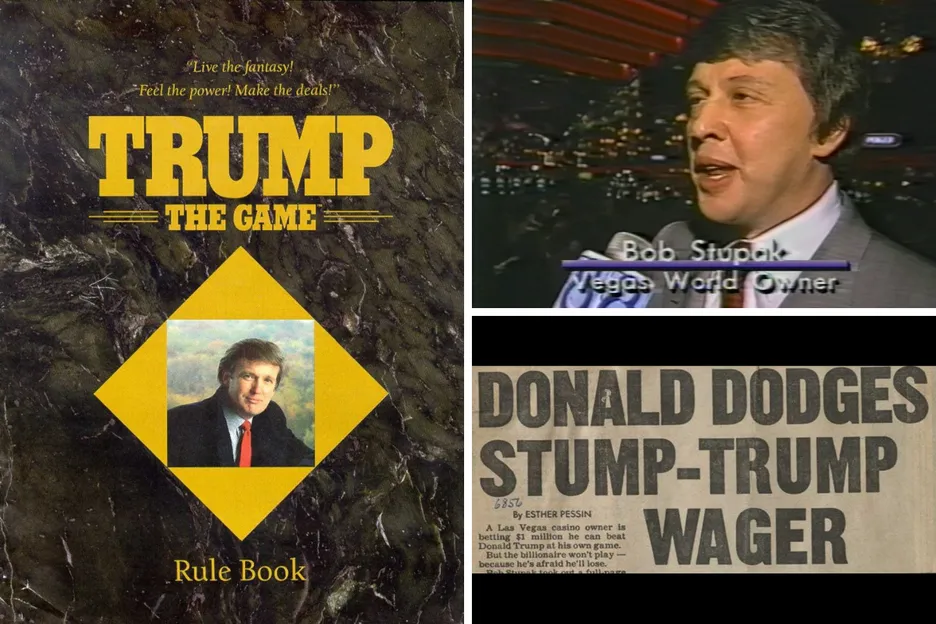


"It’s always possible to lose, even for someone who’s used to winning."
That's what Donald Trump had to say to the New York Post in 1989 when he turned down a $1,000,000 bet from Las Vegas casino owner Bob Stupak over a round of the brand-new Trump: The Game. Stupak wanted to drum up publicity by putting him to the test in a board game that Trump claimed could measure a player's financial savvy.
The camera-savvy casino builders traded free publicity over the feud throughout 1989, eventually spawning Stupak: The Ultimate Game of Skill & Chance and another $250,000 challenge later in the year. Meanwhile, Stupak was trying to buy an Atlantic City casino that Trump had his eyes on.
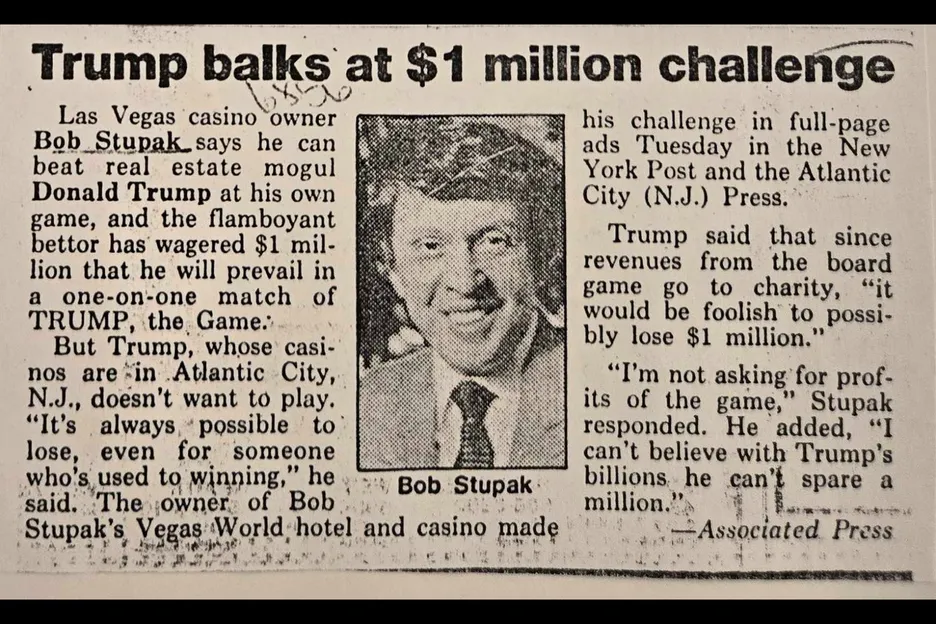
Stupak, a WSOP bracelet winner and one of Vegas history's most colorful characters, was known for this sort of thing. His Vegas World casino sat on the north end of The Strip, where Stupak used a number of creative promotions and freebies to keep the foot traffic up. Stupak would also develop the Stratosphere, our most visible financial boondoggle.
Trump, for his part, was a 42-year-old New York real estate developer who had spent the previous decade becoming brash and very famous. His empire stretched into Atlantic City throughout the 1980s, where the New Yorker was a large part of the Jersey shoreline's casino explosion. Trump would own three major properties over time, all beat up by multiple bankruptcies, and he would be long gone by the time he turned his eyes toward the presidency.
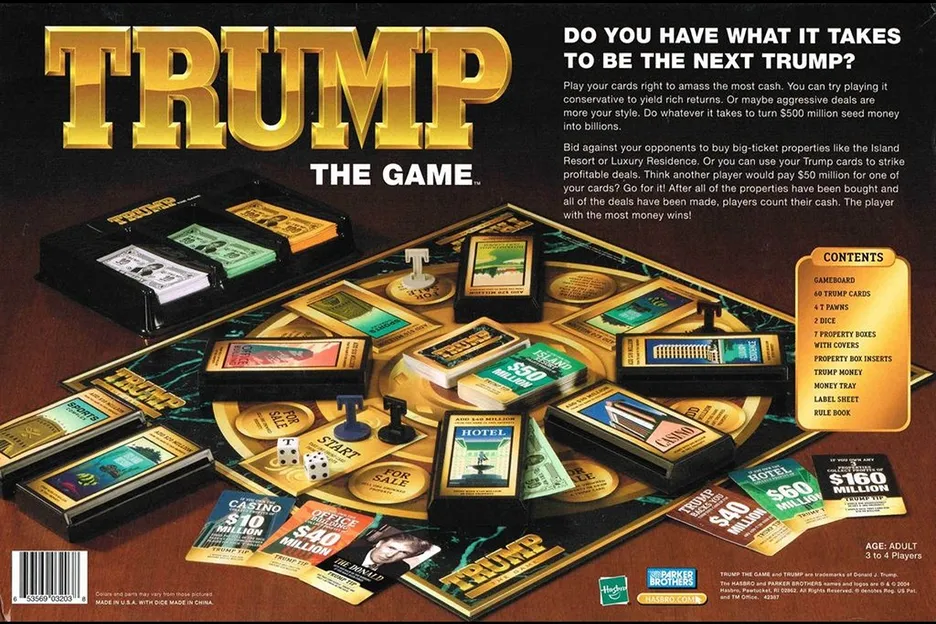
The $1,000,000 Challenge
The two larger-than-life casino moguls would clash in 1989 over the $1,000,000 board game challenge, but it was probably about a lot more than a board game. Trump was also trying to buy another casino in Atlantic City in 1989 and casino regulators were slowing him down, which gave Stupak an opportunity to stick his nose in. Stupak was also fresh off of a $1,000,000 bet on Super Bowl XXIII at the beginning of the year, a win that brought with it a wave of addictive publicity.
Trump already owned Trump Plaza and he was finishing up the construction on a complicated deal that would eventually become Trump Taj Mahal. Plaza was Atlantic City's 10th casino when it opened in May of 1984, commanding a $210 million price tag at the time. His next play would be a purchase of the failing Atlantis Casino Hotel with the intention of operating it as a hotel-only resort.
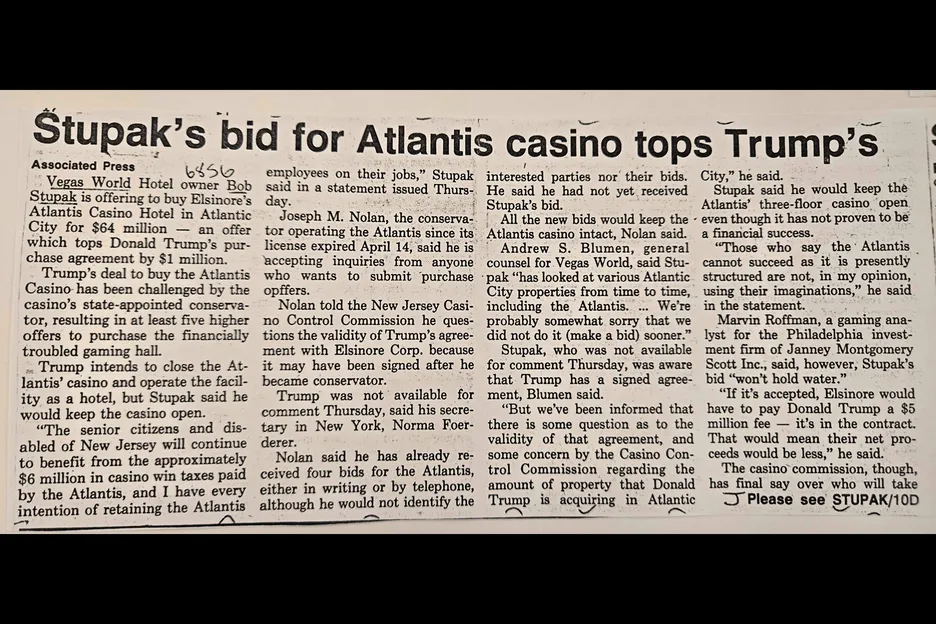
A state-appointed conservator questioned the deal and its timing, which opened the door for new offers on Atlantis. Enter Stupak, who promised $64 million and said he would keep the casino open. It was $1 million more than Trump, and one of at least five higher offers. The Trump deal would eventually hold up in court and become the Trump Regency, but it followed the dreadful fate of his other casinos and The Don was completely out of Atlantic City by 2009.
The bad blood between the two frosty developers would play out in a much more innocent arena in the fight over their respective board games. Stupak seemed to enjoy popping up wherever Trump was gaining attention, and the release of his board game was a perfect opportunity. A full-page ad in the New York Post would challenge Trump to the $1,000,000 bet on Trump: The Game.
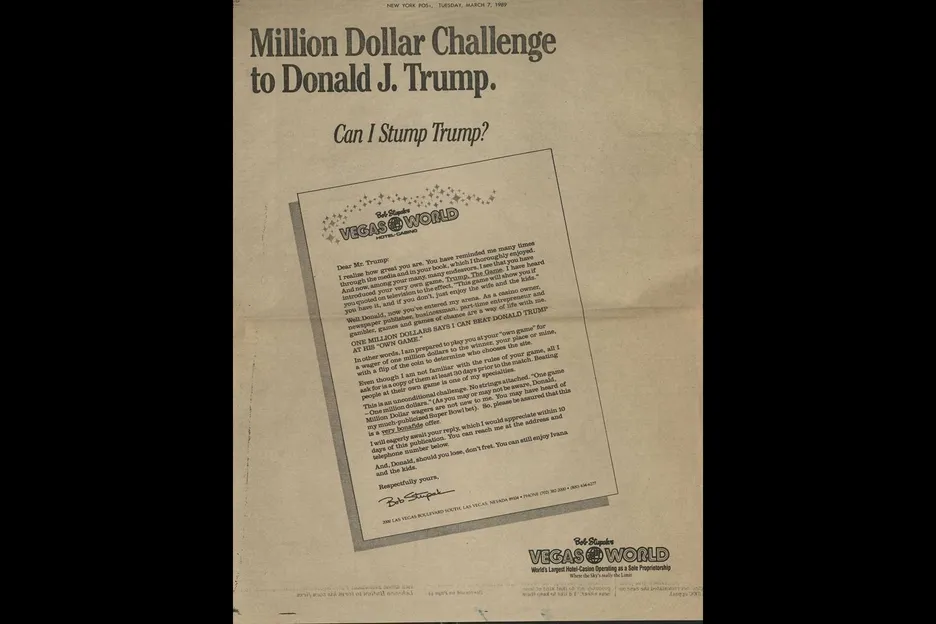
"I saw Donald Trump on Entertainment Tonight a couple of weeks ago," Stupak told ever-present local news cameras in 1989. "He said it's a game that will tell you if you have it or not. Well I thought this was an opportunity to see if he has it or not."
Trump responded with a statement.
"This is just another example of someone trying to make a splash using the Trump name. I have no intention of sitting down with someone I don't know to wager a million dollars in a game that is designed to make money for charity. To do so would be absurd."





Trump fails, Stupak releases his own game
Trump: The Game was released by Milton Bradley in May of 1989, and it sold for around $25. The concept was simple: players buy and sell properties to make money. If you have the most money at the end, you win. The game ends when someone has all of the properties.
As simple as it sounds, reviews of the era say the game was too complicated, pointing at a rulebook that is 12 pages long. It sounds remarkably dull and true to life, but the open-ended negotiation mechanics probably made for a fun business simulator. The original release failed and it was re-released when Trump's Apprentice game show swept the nation, but it failed again.
Trump's game may have gone bust, but Stupak wasn't done after his failed $1 million challenge. He would release a Stupak Game at the end of 1989.
Stupak: The Ultimate Game of Skill & Chance was nothing like Trump's game. The wizard of casinos actually made a good faith effort to bring the fun and excitement of casino gaming to your living room. It spread out as a winner-take-all competition with players moving through simplified versions of seven different casino games.
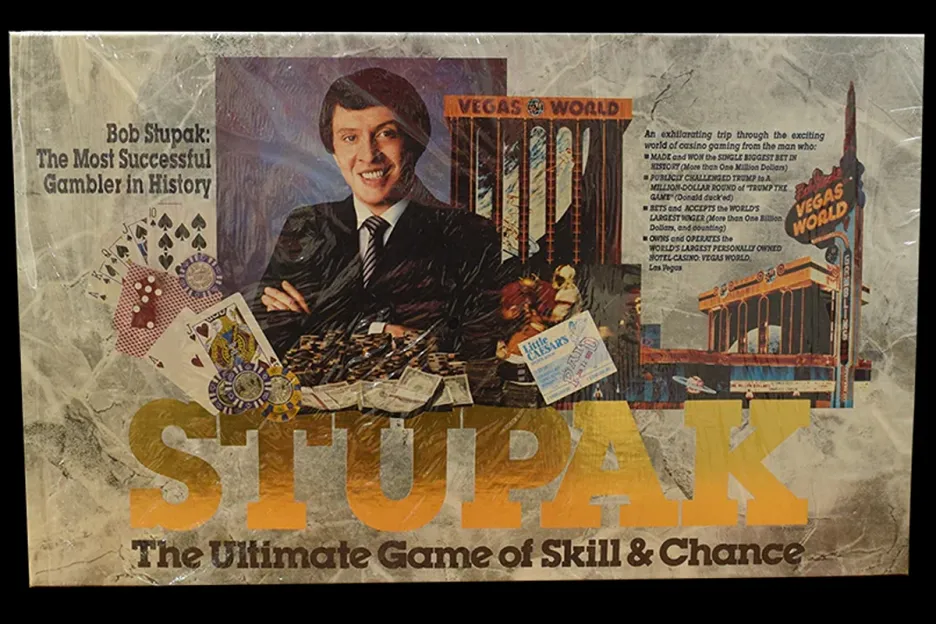
You start with $10,000 and make your way through blackjack, keno, football betting, poker, craps and roulette while players go bust along the way. In about an hour, one person has all of the money and you've got a winner. You can still find a copy at gambling collector stores in Las Vegas.
Another Trump challenge would be attached to the release of Stupak's game, this time for $250,000, and all of it was put up by Stupak himself. He would tease Trump, who had been rumored to be exploring Las Vegas for real estate development, but the future President ignored it. Trump would go on to open a tower along the Las Vegas Strip with no casino in 2008.
Press clippings obtained from the collection of Bob Stupak's Professional Papers. Special Collections and Archives, University Libraries, University of Nevada, Las Vegas. Las Vegas, Nevada.


