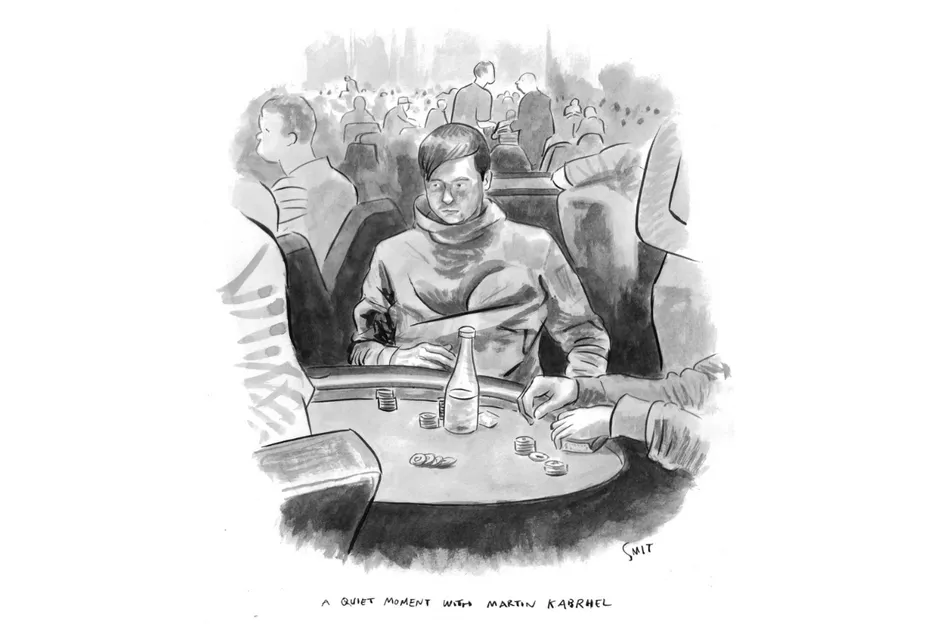


Guy Richards Smit didn't travel from NYC to Las Vegas this summer as a poker player for the love of the game, or to compete at the WSOP. He arrived as an artist curious about a world he never imagined he would explore.
He quickly discovered that sitting behind every stack of chips was a different life story among a diverse cast of characters.
While watching both the dynamics of the game and the personalities around him, he realized the world's best poker players relied on the very same skill he had spent his career developing: keen observation.
As we toured the Paris Casino ballroom together and mingled among the players, Smit confessed, “I've always enjoyed immersing myself into new worlds.”
He was immediately captivated.
Who is Guy Richards Smit?
Smit was born and raised in New York City. Early on, he was drawn to various forms of performance art: music, graphic arts, acting, stand-up comedy, and video artistry.
By the age of 14, he was part of a band that performed at the famous CBGB, the birthplace of punk rock and new wave music.
Over the next few years, Smit was involved with a student group called SOS Racism that eventually met with famous street artist Keith Haring to help the group make banners for a local anti-apartheid rally.
Smit shared with The Creative Independent in an extensive interview that Haring said one thing that inspired him on many levels: "You know guys, remember: art is for everybody."
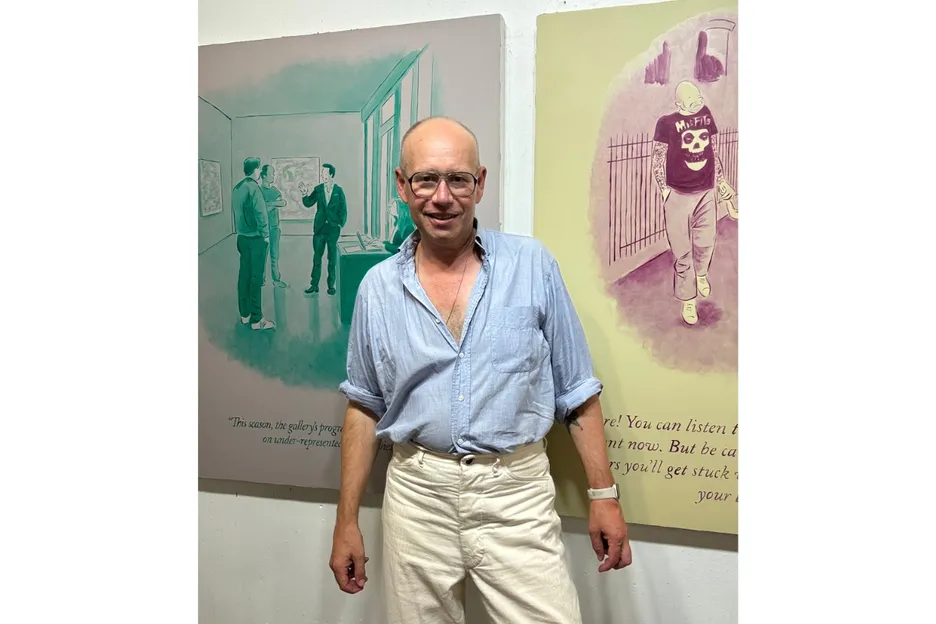
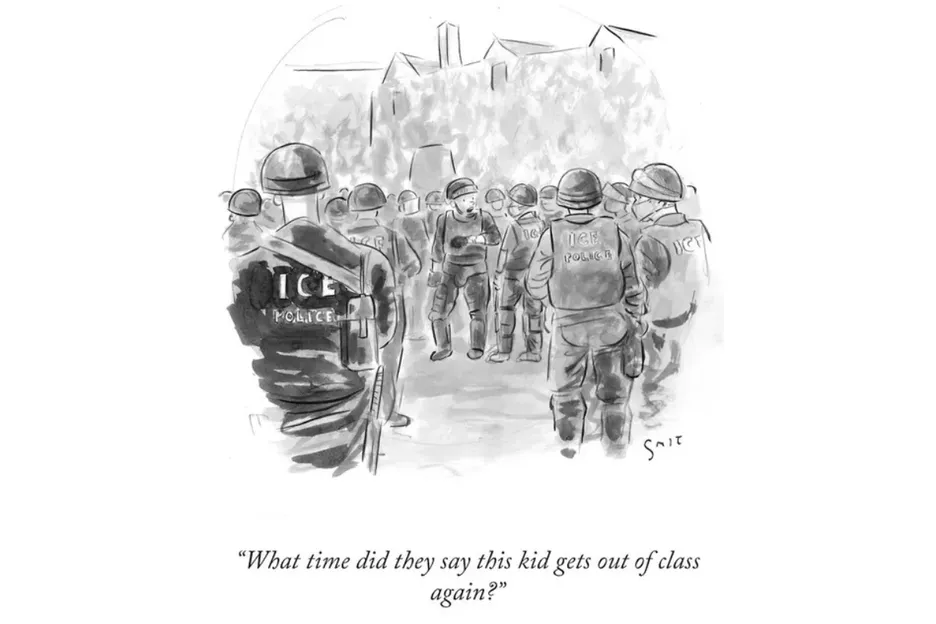
For Smit, that philosophy eventually evolved into a career built around creating gag cartoons: single-panel illustrations that distill observations of everyday life into visual punchlines.
He said the experience sparked his fascination with graphic arts.
“This whole time I’d been doing small-scale drawings that had a lot of text, and it had a lot of humorous aspects. When I look back at them now, I see they’re kind of like preliminary New Yorker cartoons.”
Smit’s work has since appeared in The New Yorker, as well as Hyperallergic and Artnet News.





The art of paying attention
For an artist whose career has been built on observing human behavior, poker proved to be one of the richest and most fascinating subjects Smit had ever encountered.
As he walked through the sea of tables during the WSOP Main Event, Smit found himself in a room filled with observers, many of whom were masters.
Every little glance, every pause, every spoken word, and every microexpression or lack thereof carried some meaning. Some were unconscious, others were carefully calculated.
And the best players understood the difference and exploited it relentlessly.
“The best art and the magic to gag cartoons is that someone paid attention,” says Smit. “The artist paid attention to some strange detail in our lives and summed it up. And I think that poker is all about paying attention.”
It's a philosophy that resonated with him immediately at the poker table. And Smit soon understood that the game's elite weren't simply better strategists – they were better observers.
It’s the same precision with which he approaches an idea for a cartoon.
“The details are what make a great gag cartoon, frankly. I spend time paying attention to things that other people don't bother paying attention to.”
Why poker grabbed him immediately
On the flip side, Smit observed many players in the WSOP Main Event were seemingly oblivious to the moment-by-moment play of each hand.
“When you're going by the tables, so many of the people don't seem to be paying any attention at all. Some players have their earphones in; some are scrolling on their phones. For me, that’s another big thing I’m fascinated with.”
He saw it as one long performance. Observation skills alone weren't enough. The elite players also knew how to manipulate what others observed.
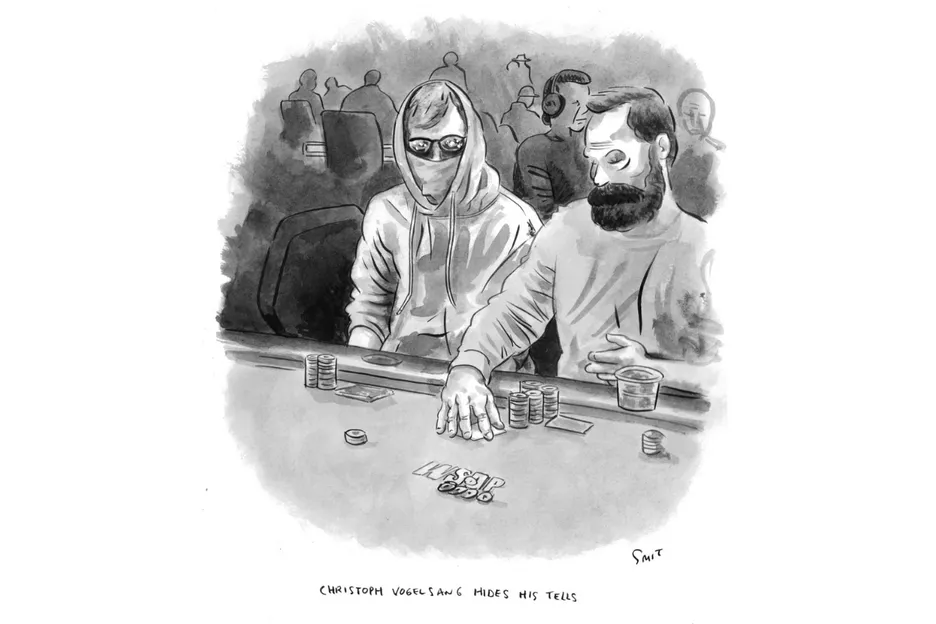
“Perhaps the players are behaving in a way that diffuses the visual aspect of their feelings. They might actually be in full subterfuge and act the opposite of what they’re really experiencing. In that respect, it's a 15-hour play each day.”
Smit observed that the game could be a pantomime of how you’re supposed to behave around people from whom you’re continually hiding your intentions.
"Poker is such a wonderfully Baroque version of that in my mind, where people are doing their best not to give any tells, and to hide everything."
Making the invisible visible
After a few days traversing the Paris ballroom's WSOP events, Smit had stopped looking at poker as a card game. He was looking at it as an artist.
The real challenge isn't drawing the players or the cards. It's translating poker's invisible psychology into a single-panel illustration.
It's a creative adventure he can't resist.
“It's not like in physical sports, where you see someone dart across the field and maybe do something fantastic in a ballgame. Poker is so psychological. And as a visual person, trying to imagine or trying to break that out into the visual is a fascinating problem for me.”
That artistic puzzle has become an obsession for the celebrated gag cartoonist.
Drawing Phil Hellmuth’s face is one thing. Capturing what he appears to be thinking and feeling then putting pencil to paper is something else entirely.
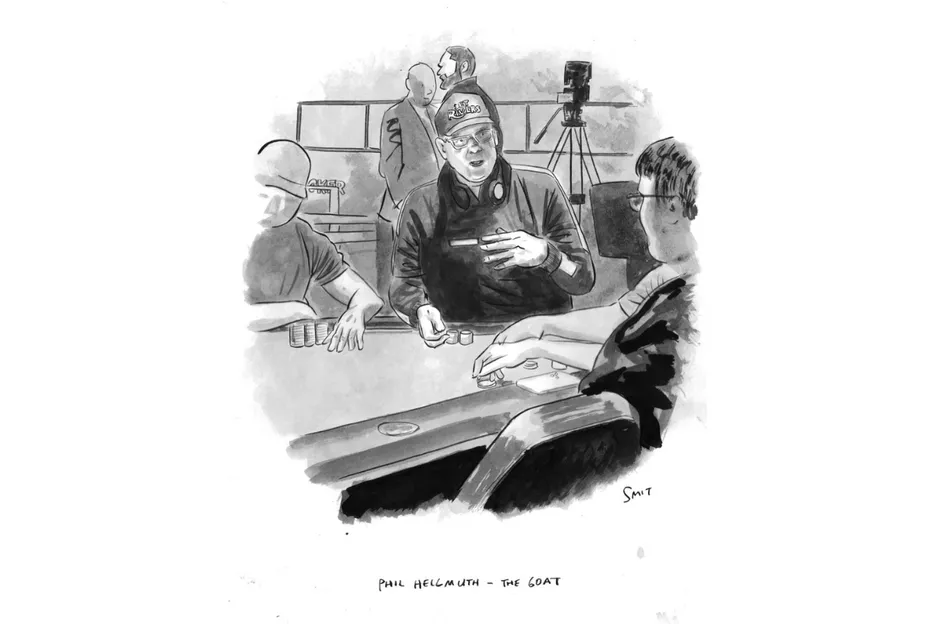
“You're not just recording a physical form and shadow on the form; you're trying to get the tension in that room, how tired a person is, how much coffee they're drinking, how much banter is forced, etc.”
That's where Smit believes the real artistry begins – where the rubber hits the road.
“You think you're good at drawing until you're trying to draw someone playing poker and express what they might be experiencing.”
Drawn to the game
In the end, Smit learned that poker players and artists weren't that different in the application of their artistry.
He discovered they had been practicing the same discipline all along, learning to see what everyone else misses. The idiom 'The devil is in the details' is more than apropos when comparing the two.
The instincts that make a great gag cartoonist – paying attention to tiny details of human behavior – are the same that make great poker players.
There's an art to playing the cards you're dealt, there's also an art to staying in the game even when you've already folded. And that's something Smit is keen to explore further, as both master and student.
“What really connects me to everything is people. I very much enjoy people, how they relate to one another. And poker is a way for people to first of all socialize, but in a very specific way.
“I still don't know how to play properly, but it turns out my studio mate is an avid poker player, and he's gonna teach me this summer.
"I’m just totally smitten. I can’t wait to learn more.”
Follow Guy on IG.
Images courtesy of Guy Richards Smit/The New Yorker.


