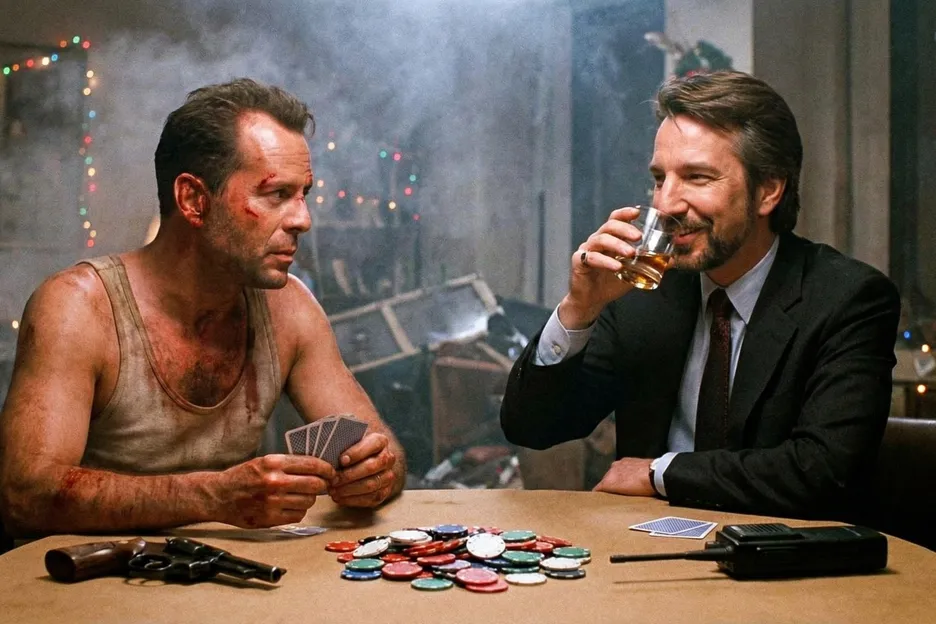


According to a recent poll by the British Board of Film Classification, only 38% of respondents consider Die Hard to be a Christmas movie.
Among those who would argue that point is the film’s star, Bruce Willis, who in 2018 stated his case that it was, rather, “a goddamn Bruce Willis movie!”
But let’s face it, does it really matter? Die Hard is an all-time classic action film… that many of us — myself included — just happen to watch every Christmas. And on this year’s annual viewing, I couldn’t help but notice it’s also a great entry point to the world of poker strategy.
Don’t believe me? Check out these 9 poker lessons Die Hard can teach, if you only look closely enough.
If you haven’t yet seen this 35-year-old classic, then beware spoilers below, but if you have, welcome to the party, pal!
Lesson 1: Have a plan, but be prepared to adapt
Die Hard is a heads-up battle between our hero, NYC cop John McClane, and the villain of the hand, Hans Gruber.
Hans has a meticulous plan that’s been worked out well in advance. He’s brought the firepower to defend his position, the technology to crack the vault and reach his goal, and an escape plan to fake his death and sneak away in the confusion. He’s not concerned when the police arrive and surround the building — that was always part of his masterplan.
But plans don’t always work; there are often unforeseen obstacles you just can’t prepare for. And sometimes they have a machine gun.
If Hans is the well-drilled Euro GTO grinder, John is the seat-of-the-pants exploitative player reacting to the situation and constantly working to expose and capitalize on weaknesses. It’s important to have a plan, but so is knowing what to do when it falls apart.
Lesson 2: If you’re going to give away information, do it for a reason
After John takes down his first terrorist (Tony), he sits the corpse on a chair and sends him back to the bad guys in the elevator, wearing a santa hat and a shirt with the message ‘Now I have a machine gun. Ho-ho-ho.’
If he hadn't done that, they might never have been sure of who or what was upstairs. John could have operated in relative secrecy and saved himself a few firefights. Probably a better strategic decision, but definitely a worse film.
Instead, he rubs the villains’ noses in his victory, tells them he is armed, and what with. It’s a memorable scene, but is it just an ego trip, or is he trying to distract the gang from their heist? Or maybe a little of both?
Every time you show your hand when you don’t need to, whether it’s revealing a bluff, a fold, or a monster, you’re giving your opponents information they didn’t have before. If you’re going to do that, make sure it’s for the right reasons.
In the end, the fact they know he’s up there and has taken out Tony causes them to divert resources to hunt him down, bringing us to our next lesson…
Lesson 3: Don’t let emotion dictate your actions
Having John loose in the building isn’t actually the catastrophe for Hans that it could be, especially once Hans retrieves the detonators he needs to blow the roof and kill the hostages.
But Hans’ most fearsome henchman, Karl, goes off-script. Why? John killed Tony, his brother. It gets personal, emotional and volatile, just when the plan requires a level head to get across the line.
If you’re going to execute a plan, don’t tilt and get distracted by trying to execute someone else.
Lesson 4: Talk strategy with like-minded friends
Whether you’re living the grind as a poker pro or climbing through an air-conditioning vent in a vest, life can be lonely sometimes.
That’s why even a lone wolf can benefit from talking to someone who knows what they’re going through, can provide some perspective, or is just there to listen.
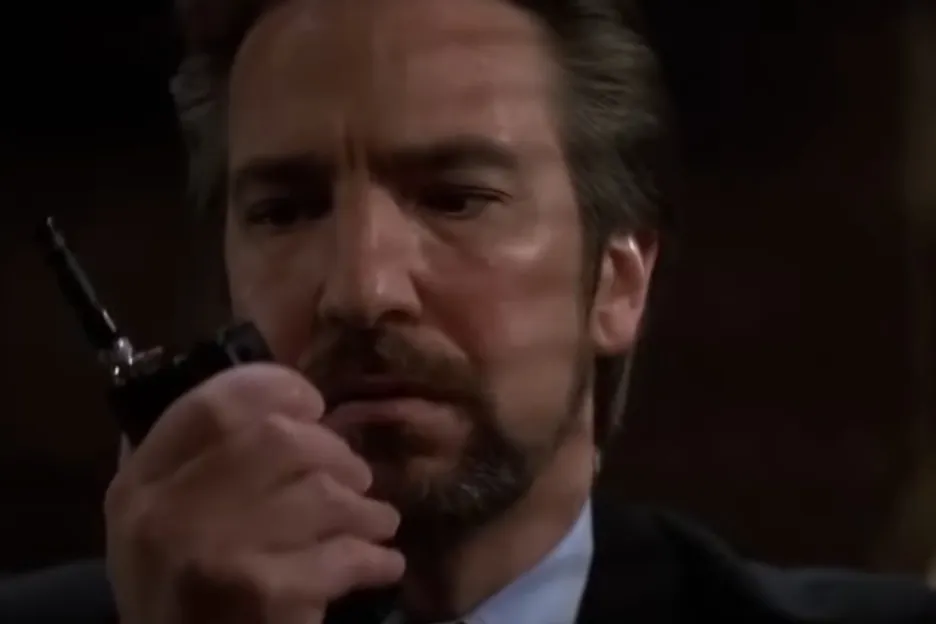
For John, that someone is Sgt. Powell, the first cop who responds to the situation at the besieged tower. Using a walkie-talkie stolen from one of the bad guys, John is able to communicate with Powell throughout the film — his only support on his one-man mission to save the day.
When things are at their worst — from a poker downswing that seems like it’ll never end, to picking shards of broken glass from the soles of your feet — it always helps to talk it out.
Lesson 5: Don’t try to bluff the wrong player
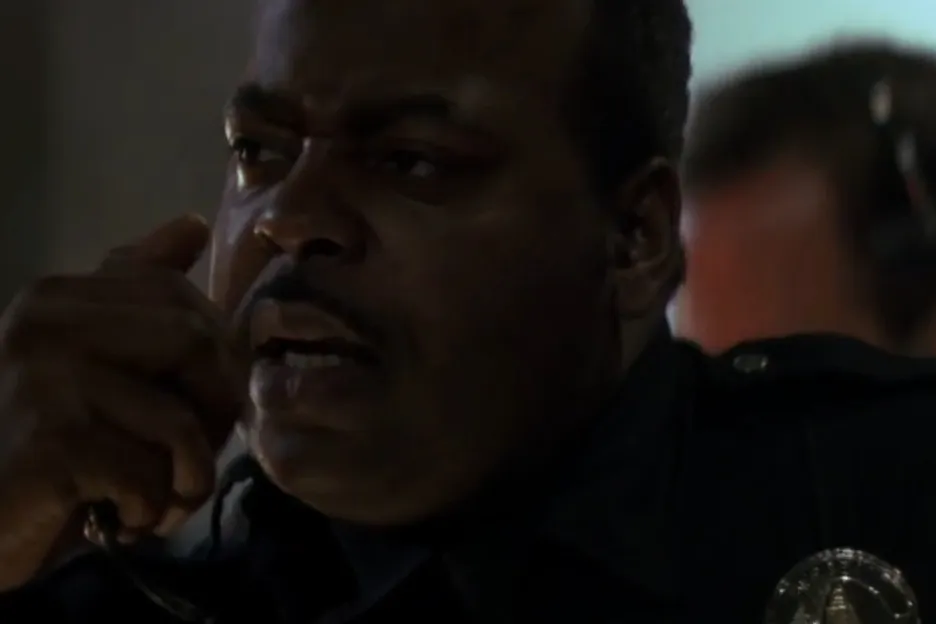
Harry Ellis, the coke-snorting corporate suit who works at Nakatomi Plaza, attempts to negotiate with Hans. He pretends he is a close friend of John’s and gets on the radio to convince John to give up the detonators the thieves need.
But Harry doesn’t realize who he’s dealing with. John refuses, imploring Harry to be honest that they’re not actually friends, given he knows Hans won’t hesitate to kill Harry if he believes it will hurt John.
Harry has no bargaining position — no fold equity — and is bluffing an opponent who holds all the power and has nothing to lose. That rarely ends well.
Lesson 6: When you’re stronger than they are, induce the bluff
One of the most memorable moments in the film comes when John and Hans first meet. John is armed, Hans is not, so Hans pretends to be an escaped hostage needing protection.
After checking him out, John hands over a pistol so Hans can protect himself, only for the bad guy to turn it straight onto our hero.
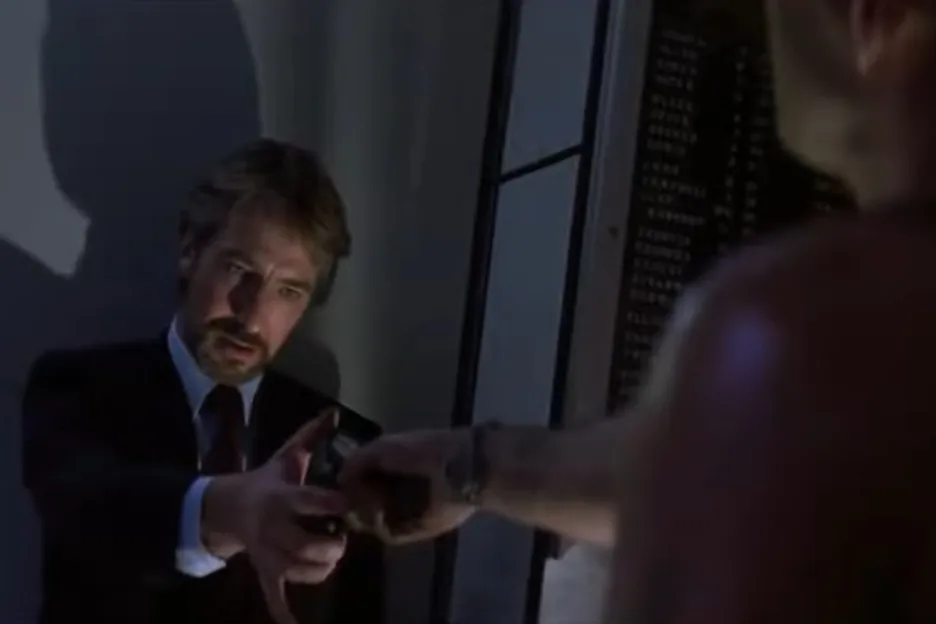
But here’s the thing: John suspected something all along, so gave Hans an unloaded gun and waited for him to reveal his true intentions.
John had all the bullets and all the power in the situation but had to give Hans enough confidence to drop his guard. As a result, John learns the truth about Hans, who is suddenly exposed, unarmed, and at the mercy of his enemy.
When you know you’ve got a lock on the hand, sometimes it’s better to just sit back and give ‘em enough rope.
Lesson 7: Find a weakness and exploit it
You should always be looking to identify your opponents’ weaknesses. Maybe they fall in love with pocket pairs, pay the wrong price for draws, or play too passively when they get tired. If you pay attention and keep your eyes open, you might just spot some key information that makes it easier to take them down.
Like, for example, noticing that the guy you’re shooting at is barefoot.
John is a seemingly unstoppable action hero, but his Achilles heel is, appropriately enough, his feet. When Hans notices his lack of footwear, he shifts his strategy. No need to fire at John when you simply need to “Schieß dem fenster” — “Shoot the glass.”
Lesson 8: Leaving one chip behind
The strategy of leaving one chip behind — or going almost all-in — is a divisive one, especially as it can potentially be used as an angle-shoot.
When not used in bad faith, the strategy gives you the chance to win the pot with a big bet or possibly fold for a pay jump if other players get all-in after you’ve acted. And who knows, that one chip could end up worth a fortune — the saying ‘a chip and a chair’ exists for a reason — if you are able to actually spin it up all the way.
By the end of Die Hard, John isn’t down to one chip, but he is down to just two bullets. Using a little deception, some table-talk and well, a gun, he manages to put both those bullets exactly where he needs them to go — into Hans and his henchman — for the ultimate comeback.
Lesson 9: Beware the short-stack ninja
In poker, as in the Nakatomi Plaza, almost winning is very different from winning. You can’t count your chips until you’ve won them, and even a tiny stack has the potential to turn the tables.
You may have them outnumbered and outgunned, but it’s not over till it’s over, and many’s the time a short stack with enough guile, craft, courage, and ingenuity has pulled victory from the jaws of almost certain defeat.
Don’t think you’re home and dry till you’re actually home and dry. Otherwise it could be “happy trails” for you.
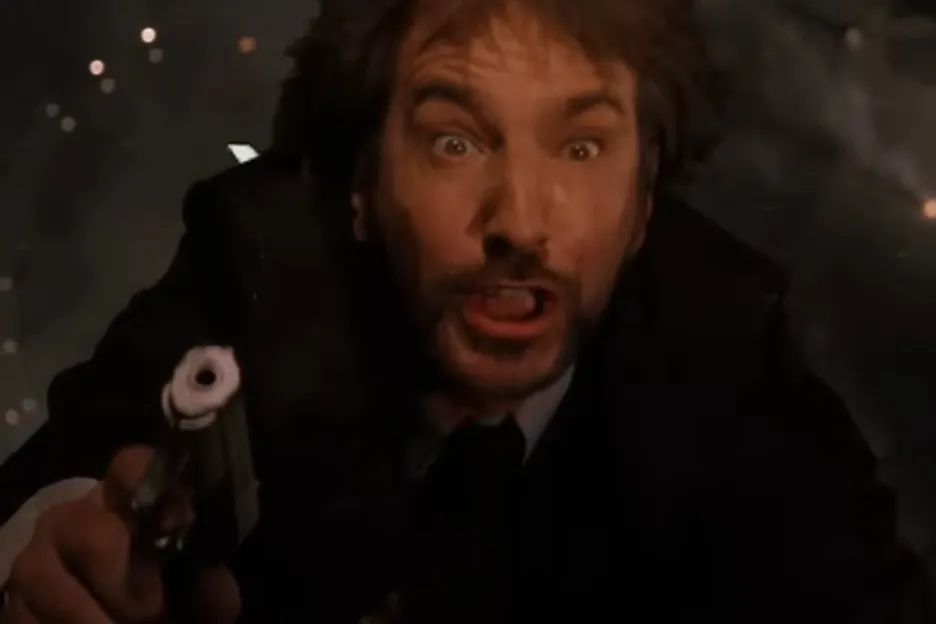
Happy Xmas and yippee kay-yay, poker lovers!
Images courtesy of Die Hard, Disney/20th Century Studios.


