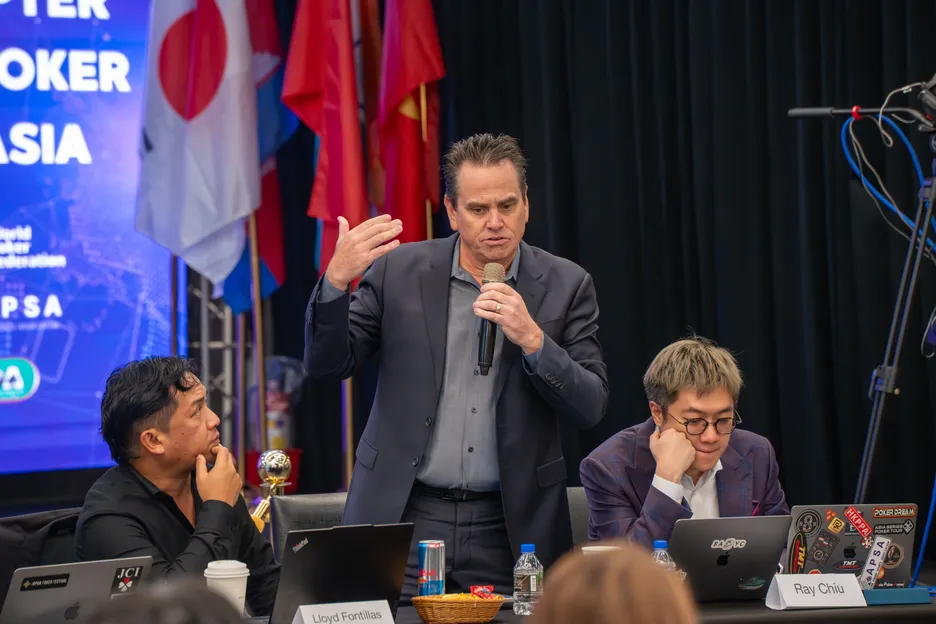


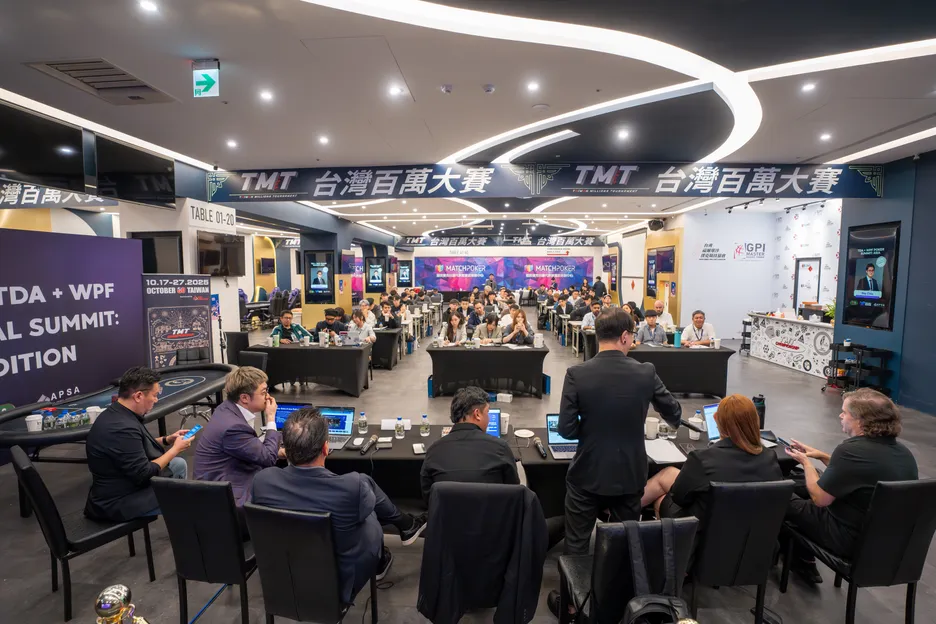
The Poker Tournament Directors Association (TDA) held its first Asia Summit last weekend in Taiwan. Held in association with the World Poker Federation (WPF) and the Asian Poker Sports Association (APSA), the event marked the first time a TDA summit has taken place beyond the borders of the USA, and outside the usual biennial timeframe (the next TDA general summit is scheduled for summer 2026).
The purpose of TDA summits is to bring together those involved in establishing and enforcing poker’s rules, to debate issues as they arise and standardise a rulebook to be used anywhere poker is played.
“Most players don’t understand how important standardized rules are,” said TDA founder Matt Savage, attending the TDA + WPF Asia Summit. “If it’s something they don’t like then they are opposed to change. I believe that if we all do it the same it’s better than getting your way. Multiple times I’ve gone against my preference on a rule in the interest of the players and standardization.”
Bringing the discussion to Asia for the first time, the intent was to learn how dynamics may vary across different regions, and help bridge any gaps between regional norms and those found closer to poker’s historical home of the USA. These discussions will inform wider debate at next summer’s TDA summit in Las Vegas.
In addition to Savage, the TDA + WPF Asia Summit was attended by noted poker officials including TDA board members Neil Johnson and Lloyd Fontillas, as well as representatives from card clubs and casinos in the region.
The ‘Kassouf question’
One subject of debate inspired by recent events at the World Series of Poker was the issue of disruptive behavior.
During the WSOP Main Event, British player Will Kassouf drew extensive criticism — and eventually received a ban from the remainder of the series — after his use of speech play, stalling and aggressive personal attacks was deemed to have crossed a line.
Discussions at the summit recognized that ‘table personality’ is a key factor in poker’s identity, but it was largely agreed that addressing potentially disruptive behavior as early as possible was an important step towards eradicating problems such as those which arose during the WSOP Main Event.
Additionally, a debate around the issue of stalling saw strong support for the use of shot clocks, to create a consistent and clear expectation on players. The World Poker Tour standard of 15 seconds preflop and 30 seconds postflop was broadly supported.









'One chip behind', technology and late registration also on the agenda
The ‘one chip behind’ tactic — moving almost all-in, with the exception of a single chip — was also discussed, with many feeling that it can be used for angle-shooting. Further work to unify the interpretation of the move is expected, as is pressure for tournament organizers to adopt a more consistent approach to the use of technology; A policy of banning phones during the final three tables of a tournament received wide support.
Late registration was also a topic for discussion, with many attendees agreeing that entering a tournament with a very short stack — for example on Day 2 — can distort the dynamics of an event in undesirable ways. Developing mechanics that reward early entry, and capping late reg around the 20bb mark, were ideas that were well received. Furthermore, many attendees raised concerns around re-entry structures, calling for a healthier balance of freezeouts and re-entry tournaments.
Matt Savage, as he often does, took to social media following the summit to canvas wider opinion on some of the issues debated.
What next?
The WPF has confirmed plans for a Latin America edition to take place later this year, with a longer term goal of reaching every continent by 2027. These discussions are designed to inform the biennial TDA summits and bring regional issues to light, so that greater standardization of the game’s rules and practices can take place on a global scale.
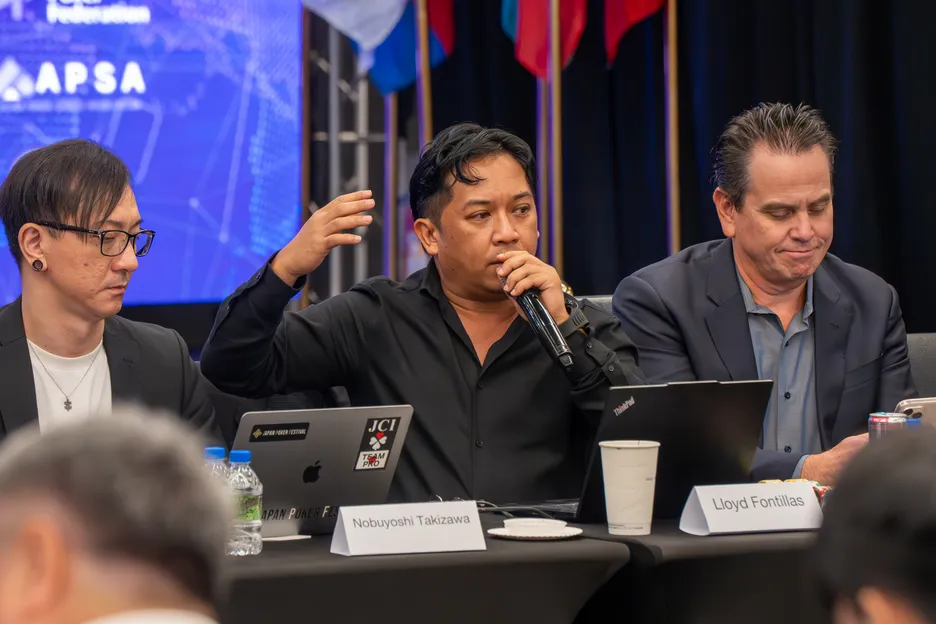
TDA board member Lloyd Fontillas summed up some of the challenges involved with pursuing this ideal.
“The biggest challenge is trying to bridge the gap between how rulings are made in Western cultures vs Asian cultures. In the USA, Europe, and other Western regions, dealers and floor staff are mentally as strong as the players, and almost everyone speaks the same language. That consistency allows verbal warnings for minor infractions to work effectively — players fully understand the message.
“But in Asia, we can’t ignore how people were brought up. There’s deep-rooted respect for elders across all Asian traditions — such as the way people bow in Japan and Korea, or the Filipino habit of adding ‘po’ at the end of sentences as a sign of respect. In Korea, it’s also customary to look away when pouring a drink for someone."
“Now throw everyone into the same poker room, where each table might have 2-4 players who can’t even communicate with each other. These cultural nuances — combined with the language barrier — often make dealers and floor staff appear ‘weaker’ in their enforcement of rules.
“So instead of just issuing verbal warnings, which can be misunderstood or missed entirely, clear penalties even for minor infractions like acting out of turn are often more effective. Players visually see what's allowed and what's not, and that helps bridge the communication and cultural gap.”
The TDA + WPF Asia Summit in Taiwan was streamed live to a concurrent audience of over a thousand and can be viewed on YouTube.


