Tournament professional Derek Kwan posted an article on X, asking about what's happening with excessive color-ups at the tables for people like me, a tournament director.
Derek was saying that tournament directors are coloring up the chips too much. He made some very good points about how that could affect a tournament and also what that can do to gameplay from a player’s perspective.
‘I’m guilty’
I will fully admit there was a time when I was one of the offenders, and it was slowing down gameplay.
My goal when coloring up is to maintain a good pace of play, to speed things up.
But it is true. If you over-color-up players, it has the opposite effect. Why? Because players are constantly making change, and that slows down play.
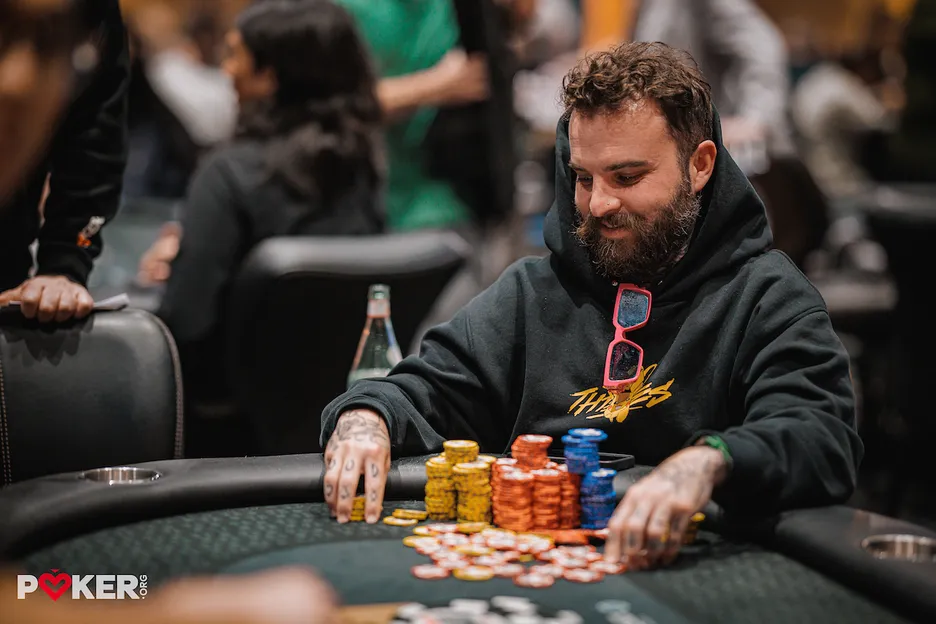









Finding the middle ground
Now I can tell you, now when I color up, I don't leave them with three racks of chips. I don't leave them with three physical chips. It is very much in the middle.
My general formula is to leave them with at least one stack of the highest-denomination chip in play.
But most players will have between 80 and 100 chips if they're doing well in the tournament after I do a color-up. You don't need all those chips.
The thread led to a post by Alex Foxen talking about how you should always be able to bet 2.1 or 2.2 big blinds and that we should do color-ups later because of this.
That post started an entirely different discussion about what should be happening in these tournaments: When should we color them up, and why?

What's best for the tournament?
I can tell you, as an operator, when you're running a tournament, there are certain things you think about. How does it benefit the casino? How does it benefit all players? How can we get as many people in an event as possible?
And way down at the bottom of the list (probably non-existent) is: how can we make Alex Foxen better at poker?
The thing is, the people who are pushing this type of agenda are saying, ‘How will this benefit me?’ As an operator, you are trying to get as many people in the building as possible.
What an operator is not trying to do is focus on what makes the professionals more professional. And it's not because we don't want that; it's because if we do the other things well enough, the professionals will be able to do that on their own.
If a player is going to present a proposal to improve tournament play, it needs to be a broader picture, and I haven’t really heard that side of this topic yet.
How does it benefit the tournament as a whole? If players can give me a reason for how this can be achieved, I am all ears. I am the first one to listen. And I am more than happy to make changes where possible for the best of everyone involved.
Justin Hammer is the Live Events Director for PokerAtlas, an online tournament director for the Texas-based poker app Hijack, and a tournament director at Thunder Valley Casino Resort. He also works as a consultant and is a minority owner of Desert Bluffs Casino in Kennewick, Washington.
For more info visit PokerAtlas.com, HijackPoker.com, and bluffs.poker. Follow Justin on X.