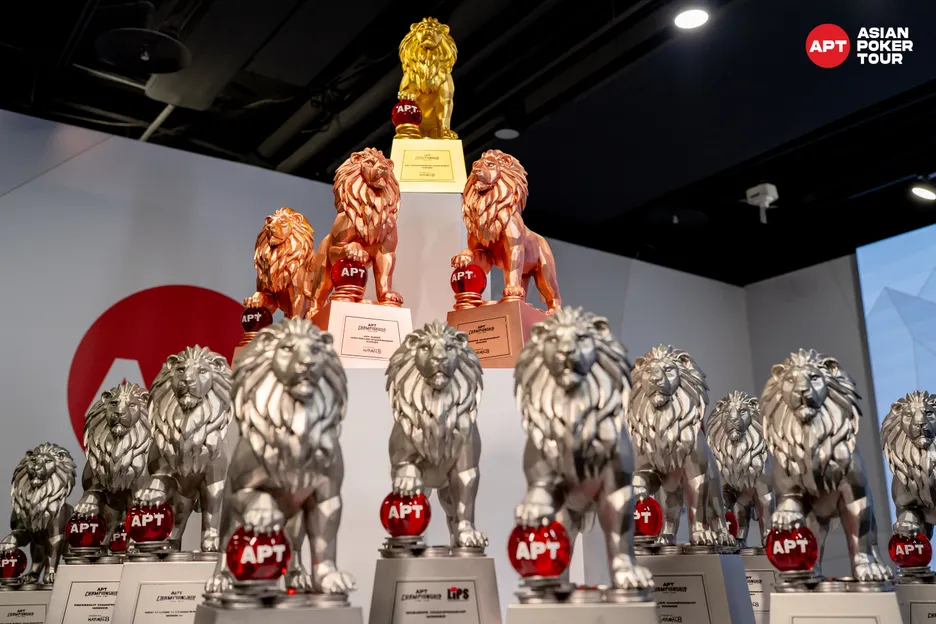


When the first Asian Poker Tour Championship finally wrapped last weekend there was plenty of cause for celebration — on both sides of the table.
For the players at the 17-day festival in Taipei there were incredible new trophies to be won, record-breaking fields and, in the Main Event, a $10K freezeout that became the biggest and richest to take place outside Las Vegas for a decade.
Over 28,000 entries across the series generated prizepools that totalled over $34 million, giving players the chance to compete for individual prizes of up to $1.2 million.
The result was the largest Asian poker festival of all-time, which naturally gives those behind the scenes their own reasons to pop the champagne, particularly given this success comes just three years into the tour’s ‘new era’.
A change of ownership in June 2022 brought about a new approach to live poker in the region — one that has been spearheaded in large part by APT President Neil Johnson and CEO Fred Leung, with whom I caught up during last week's festivities.

‘Within those 10 days, it outperformed the entire previous calendar year’
“For two months I didn't make any changes,” shares Leung as he looks back at that first year of the new era at the APT. “I didn't want to be the person to walk in and suddenly change things up. They'd had a tour that had run and lasted for a long, long period of time; there's something to be said for that legacy.”
It's a legacy that began in 2006, when Antanas ‘Tony G’ Guoga won the very first APT event, beating a field of 313 in a $5K tournament in Singapore. More stops, with more events, would follow in the ensuing years, with the tour spreading across the region to countries including Vietnam, The Philippines and Korea.
But while Leung trod carefully at first, respecting the hard work that had gone into building the tour over 16 years, it would not be long before a full rebrand was on the cards.
“We spent time analyzing, on finding the right strategy in terms of how the rebrand would look, and that probably took nine months. Eventually we decided we would do the rebrand here in Taipei.”
With increased promotion, new branding and a new leadership team, the effects appear to have been near-instant. The first Main Event of the new era, in 2023, drew 1,434 runners — a significant increase on previous years.
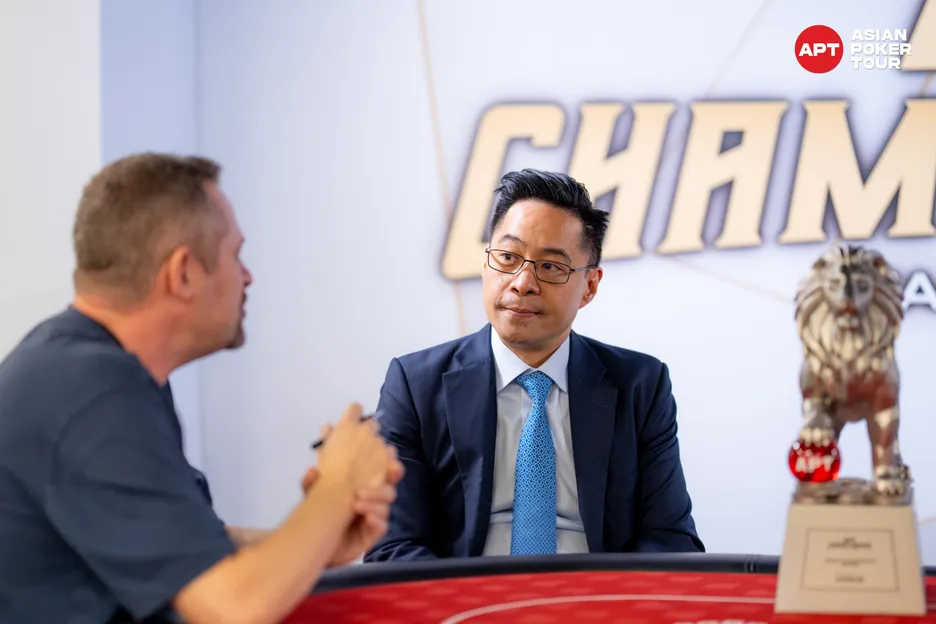
“In 2022 there were 16 APT events in the calendar year,” says Leung, “so part of the rebrand strategy was ‘less is more’ and having must-play events, so we were only doing 5 or 6 for the very first one in May of 2023.
“Within those 10 days, it outperformed the entire previous calendar year: more players, more entries, more prize money awarded than 365 days in 2022. So we knew we were on the right track.
“It was a nice result, but a lot of this was largely expected. We knew this would be the year.”








Taipei: The right place
That confidence in just where the rebranded APT would be in 2025 is what led to the creation of this year's APT Championship, an end-of-season blowout in the vein of the WPT’s own annual curtain-closer in Las Vegas.

The APT Championship set numerous new records for the tour, including:
- Most series entries: 28,265
- Largest Main Event: 671 entries
- Biggest Main Event prizepool: $6.2M
- Biggest Main Event 1st prize: $1.2M
- Most diverse field: 49 separate nations (Ultra Stack Championship)
- Biggest non-ME top prize: $600K (Superstar Championship)
- Richest non-ME tournament: High Roller Championship, $2.4M
- Richest and largest satellite: $585K (399 entries)
Buy-ins from $100 to $50K, across a surprisingly large number of diverse poker formats, contributed to a schedule with more than enough to attract poker players of all levels from across the region, and the world. And in the city of Taipei, Leung believes the new Championship has its natural host.
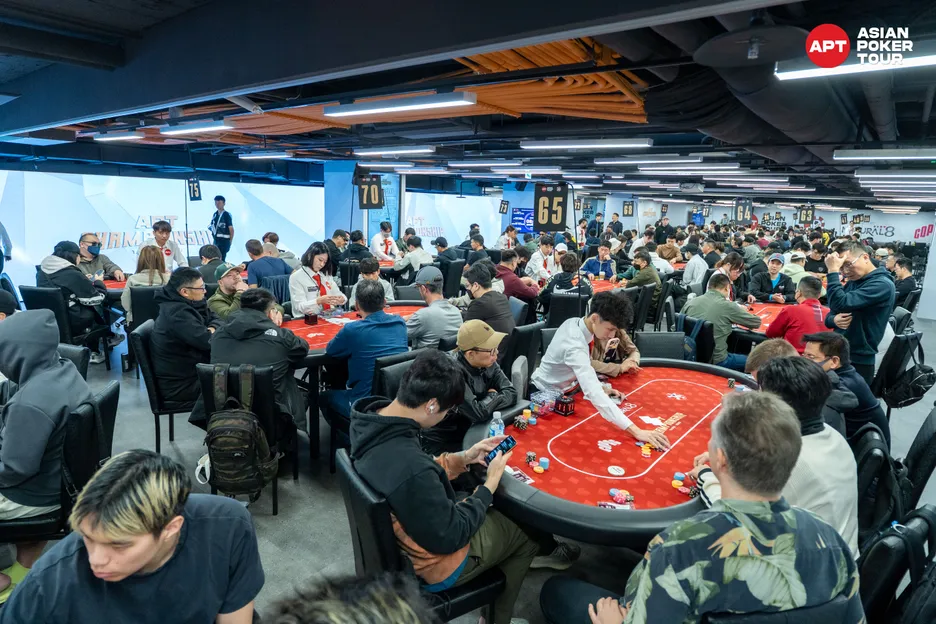
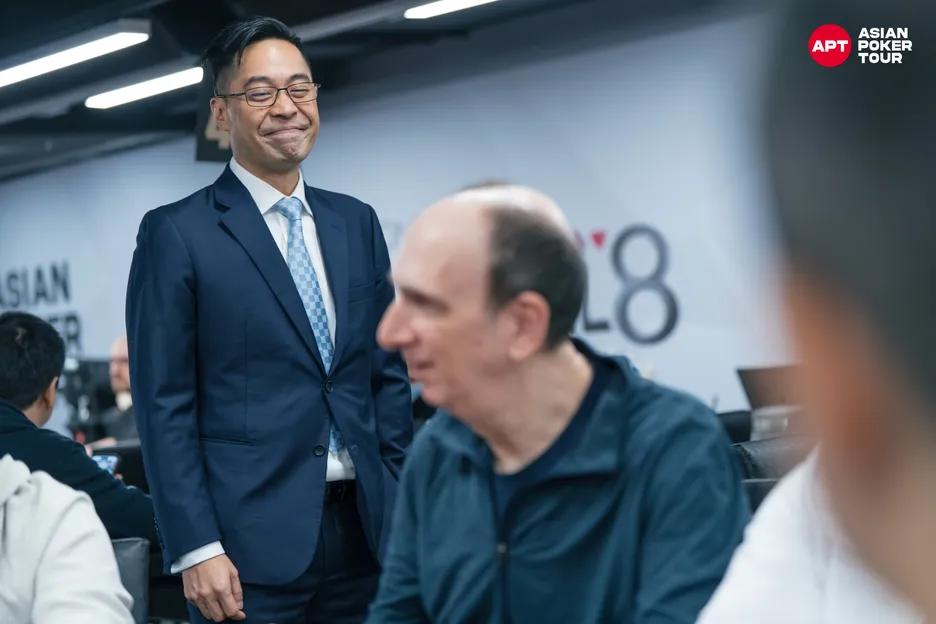
“It took something like 16 months to find the Red Space,” Leung explains, gesturing around us at the expansive tournament area, packed with 100 busy tables. “It’s not simple if we want to stay in this amazing city, and we're right in the heart of it, not out near the airport or something, so even if you're eliminated, there are many, many things to do.
“It's a very central place, so in terms of where it sits geographically within Asia, it's quite easy for everyone to get here, and Taipei is a wonderful city for food, entertainment, pretty much anything you want. With the exception of the mainland Chinese right now, it's accessible for most people, whereas some of the other countries where we operate are more complicated: Koreans cannot play in Korea, for example, and Vietnam, where we had operated before, right now is legally ambiguous.”
Another reason Taipei fits the bill so successfully is thanks to the work of David Tai of the Chinese Texas Hold’em Poker Association — a partner in the running of the APT Championship — who worked with the federal government to get tournament poker approved.
And of course another major factor in the APT’s recent rungood is down to Neil Johnson, the man who comes up with the poker variants that few other operators are prepared to offer — if they even know how they work.
Mixed game heaven
“In terms of the sheer volume and variation of tournaments, that's definitely down to Neil,” says Leung. “I personally like mixed games, but when I started in poker back in 2008 I couldn't even get a $10,000 freeroll off the ground. I couldn't find three people to sit down to play for free money. That's how hard it was.”
Looking at a schedule that includes games such as ‘Cry Me A River’, ‘Courchevel Hi/Lo’ and ‘Stairway to Seven’ indicates that times have definitely changed, but as Leung explains, spreading the joy of mixed games in Asia has been a long process.
“Somewhere around 2011, many of the foreigners asked for PLO. Everyone told me, ‘Oh, you’ll get 50 to 100 players.’ I tried it; we got 7. So the very idea of even attempting mixed games was a tough one back then."
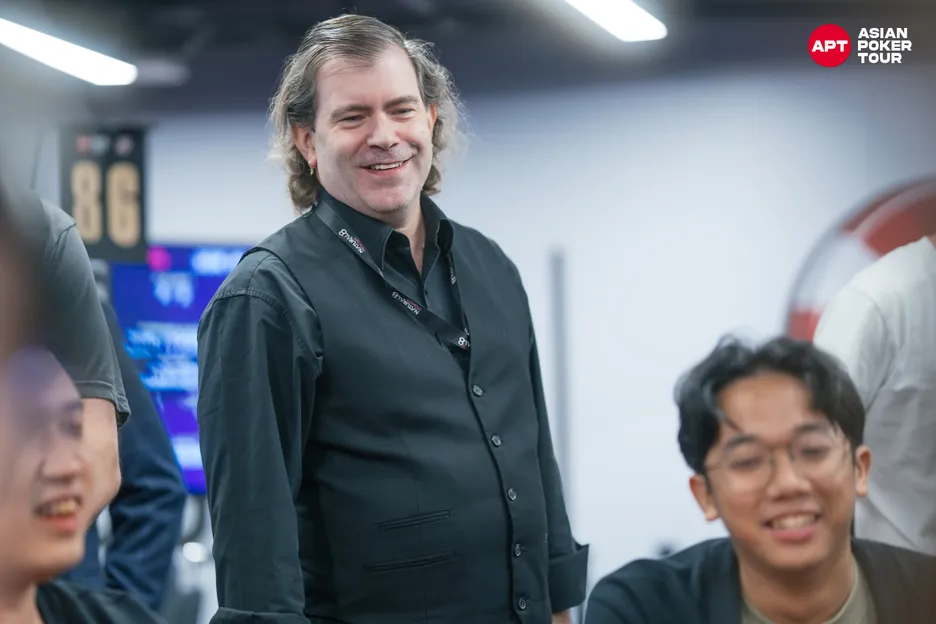
“But it's not that time anymore, and as we slowly kept increasing the number of events on the schedule, I gave Neil complete carte blanche, because there are people who love mixed games that just had nowhere to play. And because we were the first to do it, those mixed game players are following us all over the place.”
Having so many non-hold’em events on the schedule — and drawing from such a large roster of unusual games — is certainly a hallmark that is helping the APT to distinguish itself in the live poker circuit.
“Sometimes I’ll look at an event Neil’s put into the schedule and say ‘You're gonna need to tell me what this game is!’ We’ll try all types of unusual games and there are very few that don't work, but there are a lot of different considerations when it comes to putting the schedule together.
“The fact is, when I first arrived in 2022, you could run an APT poker festival with 20 to 25 tables. And now here we're already canceling events, and we have over 100 tables. So sometimes variants are intentionally put in spots where we want to have something there, but it's not going to have such a massive following that we would run out of space or it would hurt the numbers for the Main Event. We always have to protect all the key events.”
What next?
With those key events breaking records and making millionaires, it’s only natural that the levels of expectation for the future of the APT are now higher than they’ve ever been. But that’s not something that worries Leung — quite the opposite.
“Right now, while everyone's exhausted, I want them to enjoy the moment, have a little bit of fun, and then come January I’ll share my ideas for the next 3 to 5 years.
“I'm not prepared to share those plans yet because I haven't shared with the ownership or Neil or the team, largely because it's another one of those things that sounds impossible. But everyone said this was nearly impossible.
“Sometimes I come up with ideas, and Neil’s like, ‘My good God, why would we do this? We don't need the risk!’. For me that’s part of the fun, it's part of what I love about this.”
The fun resumes from January 30, 2026 in Jeju, Korea, while the dates for next year's APT Championship have already been confirmed as November 13-29 at — where else? — Red Space in Taipei, Taiwan.
Images courtesy of the APT.


