


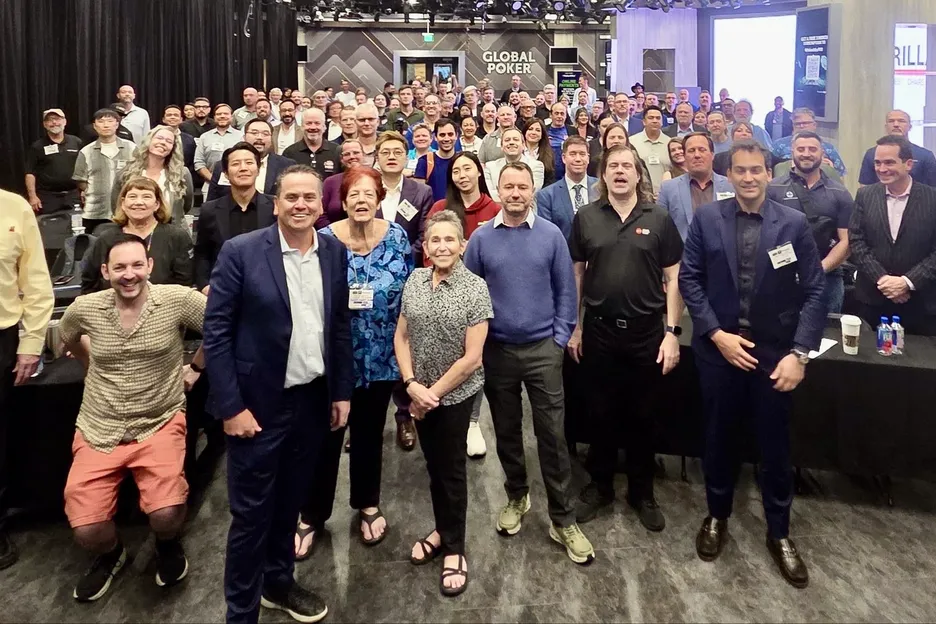
I just got back from the 25th annual TDA Summit in Las Vegas, where a bunch of tournament directors all got together. Take a wild guess what we discussed: The rules.
For those not in the know, the Tournament Directors Association was co-founded in 2001 by Matt Savage, the current Executive Director of the World Poker Tour, along with Linda Johnson, Jan Fisher, and David Lamb. Since the TDA's initial launch, it has grown to over 2,500 members across 63 countries.
The TDA’s mission is always to standardize poker tournament rules globally so every place that runs poker tournaments operates under the same protocols. The goal is simple: As a player, you should know what to expect no matter where you play.
Every year, we discuss whether existing rules should change, how they should be interpreted, and how they should be enforced. We all learn from each other and try to make the game as fair and consistent for players as possible.
I'm going to do my best to summarize the biggest changes from the summit. If you have any questions or want clarification, reach out to me on social media or reply to this video/written feature in comments below.
Player conduct and fairness
The TDA approved stronger language to restrict and penalize abusive table talk. If you're saying things you shouldn't be saying at the table, we wanted to make it much clearer what should happen in those situations.
Players creating passive action out of turn also received a rule change. Specifically in heads-up situations, if you act passively out of turn, you will no longer be allowed to take an aggressive action if the action changes.
I have to be honest — I hate this one. I think it's going to punish a lot of recreational players. But a good point was made that this is used as an angle far too often.
Another important change involves all-ins.
Players must now put in all of their chips or none of their chips when going all-in. You can no longer toss out one or two chips and declare yourself all-in. If you're moving all in, either push all your chips forward or verbally declare "All-in" so the dealer can place the All-In button.
This should eliminate a lot of confusion where someone puts out two red chips and says "All-in," and another player puts out two red chips thinking they're calling, when in reality the first player was all-in for much more.






Tournament procedure changes
The dealer button no longer belongs to a particular seat. Previously, if a player sat in Seat 4 while there was a dead button in Seat 3, many tournaments would make that player sit out. Had they been assigned Seat 3 instead, they would have received the button.
Now we'll simply slide the button to Seat 4 and deal in as many players as possible.
The TDA also reaffirmed its position on one-chip-behind virtual all-ins.
Leaving one chip behind is considered a strategic decision and will continue to be allowed. Dealers will now be instructed to clearly announce that a player still has one chip remaining, and players who intentionally hide that chip or try to manipulate the situation can be penalized.
Players who have chips in their hands or in a rack must now proceed directly to their seat. Waiting for the button to pass is no longer allowed.
Chip stacks must also now be built in stacks of 20. No more towers of random heights. The goal is to make stack sizes easier for everyone at the table to estimate.

Penalties and tournament operations
Chip penalties are now officially another tool available to tournament directors.
Instead of waiting for a player to miss blinds during a penalty, we can immediately remove chips from their stack. It will work similarly to one-hand or one-round penalties. Maybe it's one small blind. Maybe it's two and a half blinds. The exact amount depends on the situation, but it's another option we now have for penalizing players.
We also spent a lot of time discussing random table breaks. The TDA believes random table breaks are a great way to run tournaments, and table-breaking orders should no longer be posted because players at the breaking table have an incentive to stall.
Another operational change is that when the clock changes levels, dealers can immediately begin dealing at the new blind level. You no longer have to wait for a tournament director to officially announce it.

Technology, streams and mixed games
Technology was a big topic.
There aren't any official rules yet, but there's pretty universal agreement that Meta glasses are likely to be banned everywhere.
For live streams, players will now be required to show their hole cards before the flop. There had been controversy over players hiding their cards during streamed events. That should now be settled.
We also spent a lot of time working on mixed-game rules, and we'll continue working on them in the future.
The biggest change involves exposed cards on seventh street. If there's an exposed card, you immediately shuffle it back into the stub and re-deal. You don't finish dealing the remaining cards and shuffle it back afterward.
A couple of lighter topics
The debate over 'women's event' versus 'ladies event' lasted a very long time. As a man in this industry, I've decided that whatever the women want the tournament called... that's what I'll call it.
Pets at the poker table were also a topic. That discussion lasted about 20 minutes. I decided to excuse myself and not participate.
One last clarification on the big blind ante.
We actually covered this in a previous PokerOrg Hammer segment. When two players bust in the same hand, the big blind ante comes out first, and the remaining chip stack determines the finishing order — not the stack size before the cards were dealt.
The reason is simple. If I can eliminate you from the tournament, then I had the better position, and I should receive the higher finish.
Overall, it was a great summit. We had a lot of fun, and there was plenty of nerding out from tournament directors who love poker and genuinely want to make the game as great, fair, and consistent as possible.
If you have any questions, I'd be happy to answer them in the comments below or over on X.
Justin Hammer is the Live Events Director for PokerAtlas, an online tournament director for the Texas-based poker app Hijack, and a tournament director at Thunder Valley Casino Resort. He also works as a consultant and is a minority owner of Desert Bluffs Casino in Kennewick, Washington.
For more info visit PokerAtlas.com, HijackPoker.com, and bluffs.poker. Follow Justin on X.


