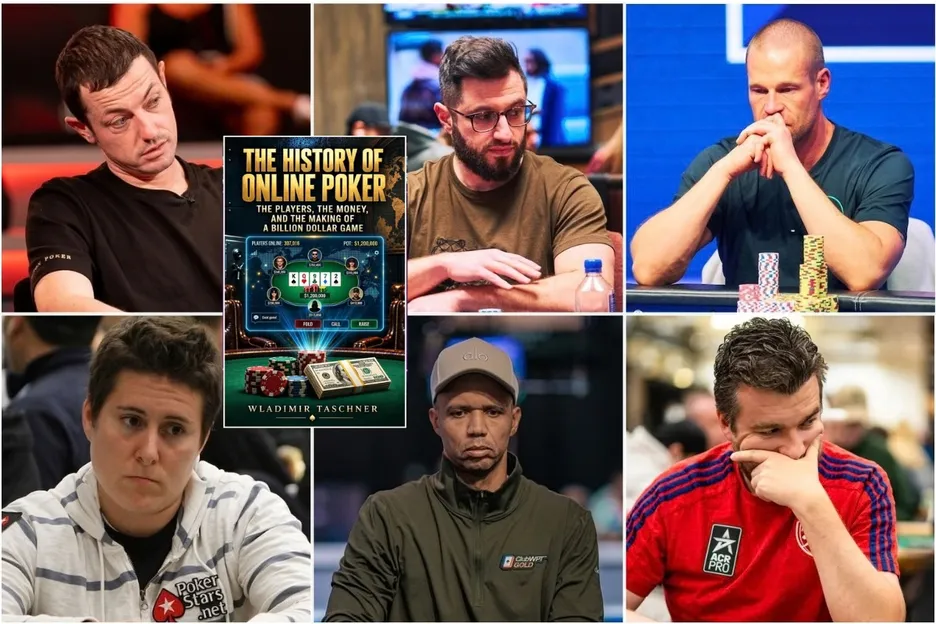


This is an extract from Wladimir Taschner's new book, 'The History of Online Poker: The Players, The Money, and the Making of a Billion Dollar Game', available now at Amazon.
The superstars of online poker
On September 14, 2008, five players sat at RailHeaven, a six-max No-Limit Hold’em cash game on Full Tilt Poker with blinds of $500 and $1,000. It was one of the highest No-Limit Hold’em structures then available online, part of the territory players called the nosebleeds.
Phil Galfond appeared as OMGClayAiken, Hac Dang as trex313, and Tom Dwan as durrrr, while David Benefield played under his own name and the fifth seat belonged to patatino.
RailHeaven was often empty, but a lineup like this could attract railbirds within minutes and produce six-figure pots in quick succession. Some came for the spectacle, while accomplished players studied unfamiliar bet sizes and every hand that reached showdown.
The confrontation between Hac Dang and patatino offered both: a routine battle between the blinds became a pot of almost $168,000. Patatino began the hand with $93,791 in the small blind, facing Hac Dang, who had $83,998.50 in the big blind. After the action folded to them, patatino completed to $1,000, Dang raised to $3,000, and patatino called the additional $2,000. On the 

 flop, patatino bet $6,000 into the $6,000 pot and Dang called.
The  paired the board on the turn, with the pot at $18,000. Patatino bet $30,000, Dang moved all in for $74,998.50, and patatino called the additional $44,998.50. With both players all-in, the
  completed the board on the river, and the pot stood at $167,997. Dang revealed
 for an ace-high straight, which beat patatino’s
 for three aces.

Patatino had made an overbet, wagering more than the existing pot, by putting $30,000 into $18,000 after the ace paired on the turn. Railbirds regarded patatino as the weaker player in this lineup and a reason the strongest regulars gathered, yet Hac Dang still moved all in with a club flush draw and, if a ten arrived, an ace-high straight.
The cards revealed the outcome but not the calculation. Did the overbet come from a hand that could fold? Would patatino choose the same size with  and three aces or with a weaker club draw, and how often did Dang expect the all-in wager itself to force a fold? Those questions made the hand useful to strong players who never intended to sit at $500/$1,000.
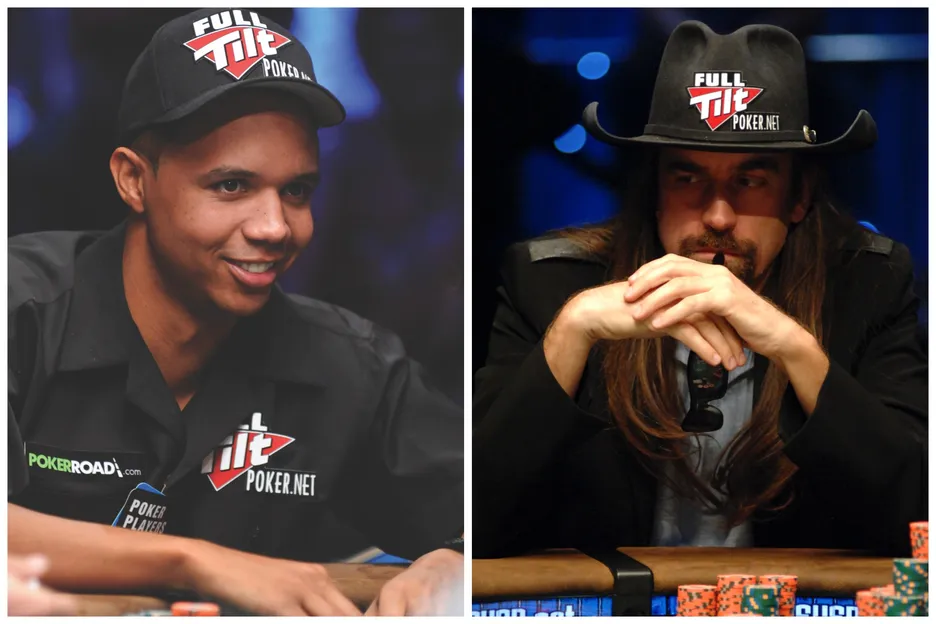
Railbird culture grew from this mixture of entertainment and study. Recreational fans, ambitious players, and online professionals opened the largest tables to see who appeared and how elite opponents handled pressure.
Even an empty RailHeaven table could hold an audience. Observers discussed the previous night in the chat, wondered whether Phil Ivey or durrrr might appear, and waited for the first famous name to be joined by another. Word then traveled through messages and forum posts, and the spectators assembled themselves.
Full Tilt Poker carried the event in real time, while Two Plus Two extended it beyond the lobby. A railbird copied the software-generated history of the hand between Hac Dang and patatino into the forum’s September high-stakes thread, where readers could reconstruct every bet after the table had closed. Other posters announced games in progress, tracked changing lineups, converted raw histories into clearer replays, and argued about major pots.
No single person performed the role of broadcaster: one observer noticed the game, another preserved a hand, and a third explained why the betting looked unusual. Through that collective work, a temporary cash game session became part of online poker history.
The rail shortened the distance between admiration and participation. A viewer could watch Ivey, durrrr, or OMGClayAiken and then return to a lower-stakes game in the same software. The distance to RailHeaven was enormous, but it existed within one lobby, and an ambitious player could imagine building a bankroll and eventually taking an open seat.
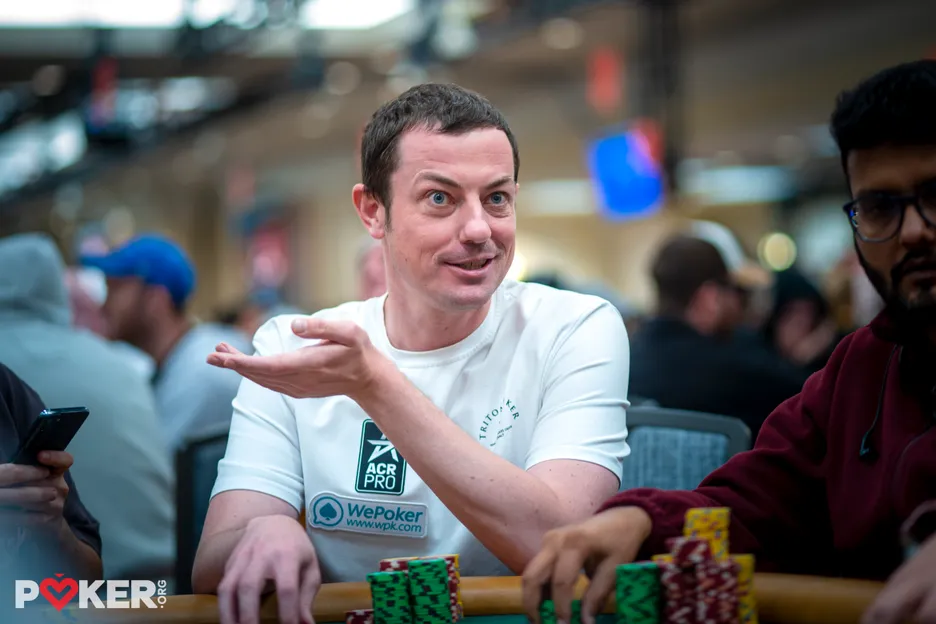
Each return to the largest games added history to an alias. By 2008, regular railbirds knew that OMGClayAiken was Galfond, trex313 was Hac Dang, and durrrr was Tom Dwan. Online poker had created a form of celebrity whose first public object was often the line of text above a digital stack.
That celebrity was not confined to nosebleed cash games. Chris Moorman, playing as Moorman1 on PokerStars and MoormanI on Full Tilt Poker, built recognition through volume and repeated tournament runs. In the 2009 Card Player Online Player of the Year race, he recorded 64 qualifying cashes, 29 final tables, four victories, and $957,710 in tracked winnings.
In January 2011 he completed a record eleventh PocketFives Triple Crown, which required victories on three major online poker sites within seven days. Cash game stars returned to the same public tables. Moorman returned to final tables across platforms.
Vanessa Selbst joined online cash games, coaching, and major live tournaments in one career. As fslexcduck, she established her reputation online and became a respected DeucesCracked coach. In 2008 she won a World Series of Poker bracelet in Pot-Limit Omaha, and in 2010 she won the North American Poker Tour Main Event at Mohegan Sun for $750,000.
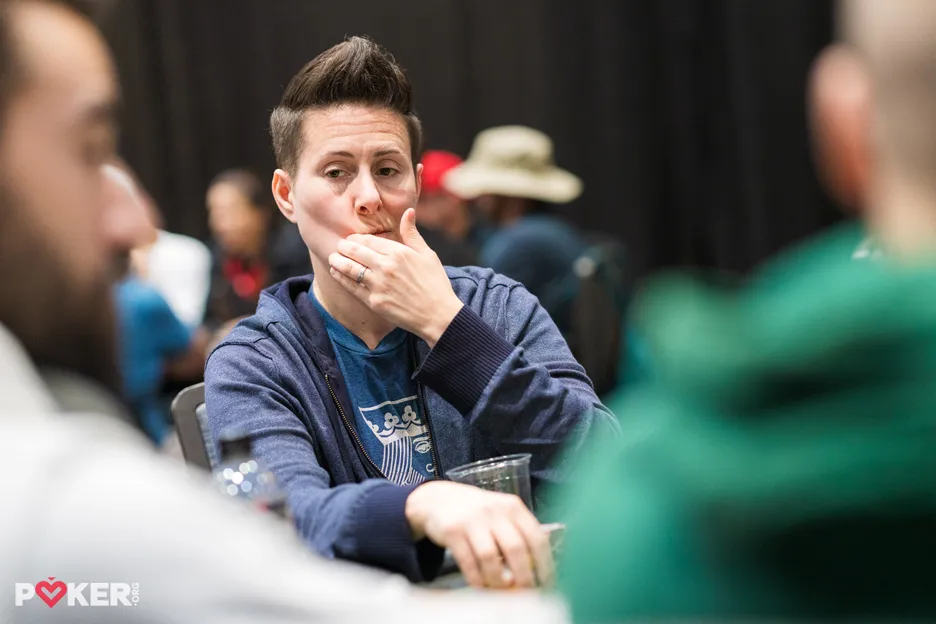
She defended that title in April 2011 for $450,000, becoming the first player to win the same stop of a PokerStars-sponsored tour in consecutive years. Her prominence also exposed how overwhelmingly male the public mythology of online poker remained.
Long before RailHeaven, screen names had begun to travel ahead of their owners. Erik Sagström moved from an Internet Relay Chat game to Paradise Poker, where Erik123 and later The Salmon became feared in heads-up and short-handed cash games. On UltimateBet, Prahlad Friedman drew spectators as Mahatma. One of his best-known heads-up opponents, Taylor Caby, played as Green Plastic and later helped turn the cycle of playing, reviewing, and adjusting into CardRunners.
European sites produced their own recognizable aliases. Johnny Lodden rose from small Limit Hold’em games to $200/$400 heads-up No-Limit Hold’em as bad_ip, where Patrik Antonius, playing as I_Knockout_U, became one of the few rivals he regarded as an equal. Sami Kelopuro’s climb was faster still: starting with deposits of roughly €30 in late 2005, he reached Full Tilt Poker’s $500/$1,000 games as LarsLuzak by the autumn of 2008. Kelopuro recalled that the same 10 to 20 regulars met repeatedly and that a single day could move his result by about $1 million in either direction.
Ben Tollerene represented the increasing demand for range across games. Known as Bttech86 on Full Tilt Poker and Ben86 on PokerStars, he climbed through No-Limit Hold’em after discovering Two Plus Two in late 2006 and learned Pot-Limit Omaha as he became established at higher stakes.
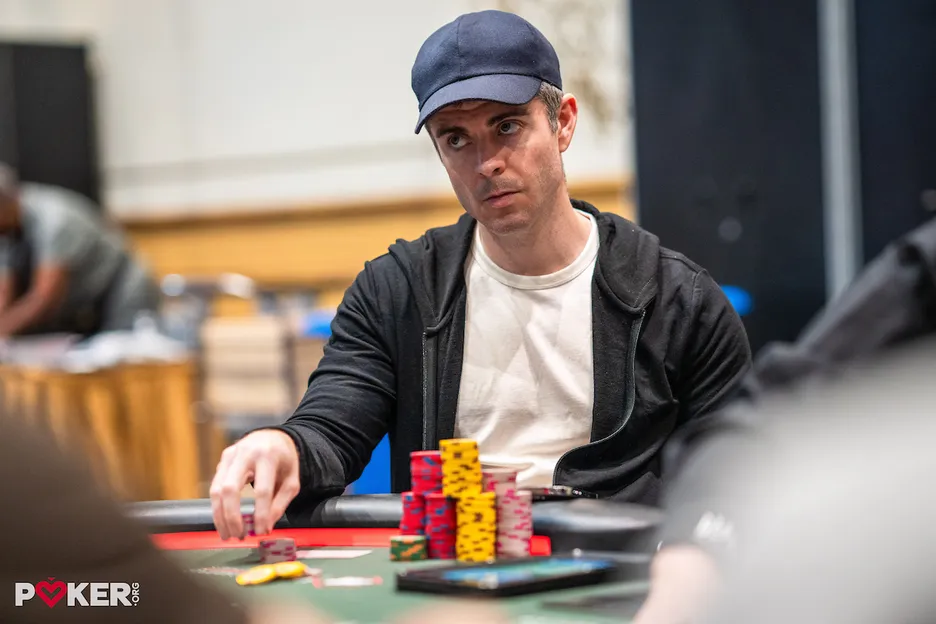
By 2010 he was playing mostly Omaha but still waited at empty heads-up No-Limit Hold’em tables and sought HA, the Hold’em-and-Omaha rotation. The largest games increasingly rewarded players who could move between the variant that had powered the boom and the one filling many of its most expensive tables.
Full Tilt Poker concentrated this changing cast more effectively than any other operator. Its public lobby brought Phil Ivey, Gus Hansen, John Juanda, Antonius, and David Benyamine into recurring games with Dwan, Galfond, the Dang brothers, Benefield, Townsend, Cole South, and other online specialists.
RailHeaven occupied the upper edge at $500/$1,000 No-Limit Hold’em, while other named tables offered Pot-Limit Omaha, capped No-Limit Hold’em, and mixed games. Ivey arrived with World Series of Poker and World Poker Tour authority. Benyamine brought experience from Paris, Las Vegas, and major mixed games. Hansen brought television fame and an appetite for action, and Juanda arrived with achievements across variants.
Their presence made the tables a genuine contest between established live reputations and players formed by the faster rhythm of the internet.
The History of Online Poker: The Players, the Money, and the Making of a Billion Dollar Game by Wladimir Taschner is available now at Amazon. Read the PokerOrg review below.