


Poker in India was dealt a devastating blow last month with the unexpected and sudden introduction of the Promotion and Regulation of Online Gaming Act, a government bill designed to shut down online real money gaming.
With no provision for poker as a game of skill, rather than chance, online poker has been grouped together with various casino games, and as a result faces a bleak future in the country.
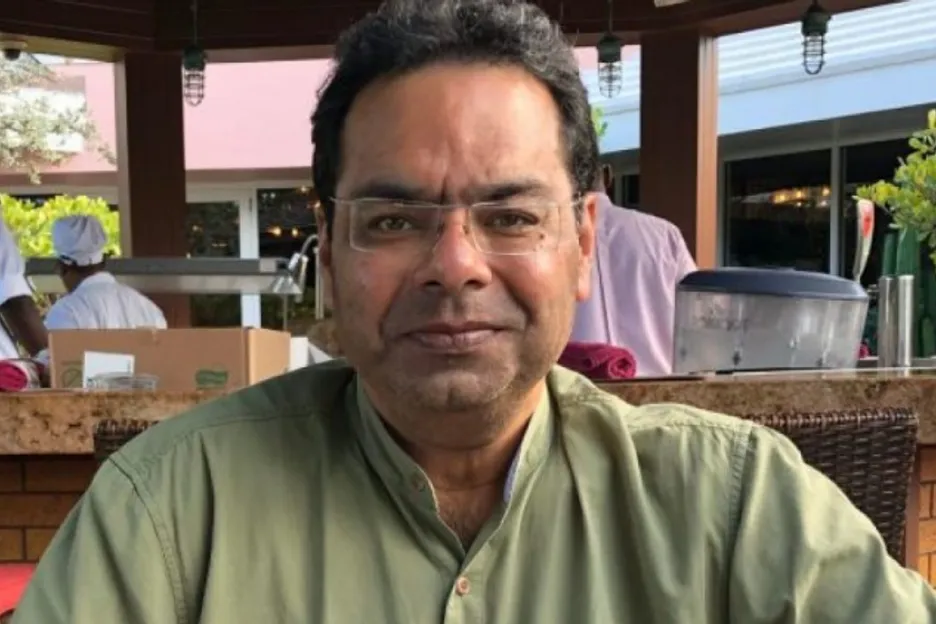
Upon the announcement of the act, we spoke with India-based PokerOrg Player Advisory member Nikhil Segel. With the political gears still turning, we caught up with Segel for an update on what’s happening with the bill.
‘Most companies are going to roll over’
Segel didn’t see much coming to slow the bill down when it was announced and, as anticipated, it has quickly gathered momentum. What has surprised him, though, is the lack of protest shown by the industry’s largest operators.
“As we expected, the process of it getting ratified and approved by the upper house and by the President was pushed through,” says Segel. “But there was an oddity: the big real money gaming sites started shutting down immediately, accepting no more deposits, without even waiting for the President's approval notification in the Gazette. They all said, ‘We're going to shut real money gaming, and you can start withdrawing’.”
Real money gaming (RMG) has been big business in India in recent years, as it has in much of the world. As an example, until the bill’s announcement the Indian national cricket team uniform was sponsored by Dream 11, a major player in the Indian RMG market. Now, with the bill’s effects already being felt, that sponsorship has come to an abrupt end.
The team will play the 2025 Asia Cup, starting next week, without a sponsor in place. Segel is surprised the biggest players in the country’s RMG industry have acquiesced so quickly and easily.
“In India, what happens is that there is a Gazette notification which says that, from such date, real money gaming will be banned,” he explains. “The Gazette notification had come out without a date, but still they panicked and shut down.

“A lot of us assumed that the ‘big boys’, such as Dream 11, PokerBaazi and so on would be the ones driving the appeals, but very quickly the promoter and founder of Dream 11 came out and said, ‘No, we are accepting this judgment, and we have a vertical for esports. We're going to develop that. We are not appealing it’.”
While the signals from the industry’s biggest companies have not suggested confidence in legally contesting the bill, some smaller brands — including the rummy and poker platform A23 — have taken action in the states of Karnataka, Delhi and Madhya Pradesh.
“Three small brands, including A23, have launched appeals in three different high courts. They’re appealing on three fronts: that games of skill should be differentiated from games of chance, that these are matters for the individual states and not the central government, and also a constitutionally protected ‘right to a profession’.
“The government has approached the Supreme Court with an appeal to have all the cases amalgamated, so as not to have to fight multiple cases in multiple states. That hearing will take place next week.”
As a poker lover based in India, Segel’s view of the way the bill has progressed does not fill him with optimism.
“I feel there is a sense of giving up,” he says. “I’m getting a sense that most companies are going to roll over.”
A second measure to block online poker
With appeals lodged, there remains a glimmer of hope that the Supreme Court may be swayed. But in the meantime another significant hurdle has been erected to further hamper online poker’s chances of success in India.
And it relates to one of life’s great, unavoidable truths: Taxes.
Goods and service tax (GST) is applied to purchases in the country, in a similar fashion to sales tax in the US or value-added tax in the UK. When online poker first came to India it was subject to 18% GST, later raised to 28%. Two days ago, the GST Council met and added RMG to a new ‘sin tax’ bracket of 40%.
Items falling into this bracket are usually the likes of tobacco, luxury cars or high-end watches. Now, you can add online gaming deposits to that list.
“If anyone were to offer real money gaming, it would be illegal, but also subject to a 40% tax on deposits,” explains Segel. ”Anyone opening a poker room would not only be a criminal for running the illegal room, they would also be liable for a GST demand equal to 40% of whatever was deposited, plus penalties for late payment.
“They’re just trying to sew up any potential loopholes to really make it watertight.”
Casino raids
India’s state-based laws allow for legal brick-and-mortar casinos — and/or card rooms — in certain regions, but these have not been immune to the strong anti-gambling tone being struck by the governing party.
A number of searches and raids by the Enforcement Directorate of 30 such establishments, including five casinos in Goa, took place on the day following the announcement of the act, amid allegations of financial irregularities.
It all seems designed to shape the narrative of a government coming down hard on gambling, an activity judged by many as morally questionable, but one with which the country has a long history — both fully legal and less so.
From the days of matka gambling — a form of ‘numbers racket’ taking bets on the closing price of cotton — to single-number lotteries and more, gambling has long been a facet of Indian culture. And Segel argues that, as official avenues are closed, the natural effect is a greater number of people choosing less official places to play. In the case of poker, this means unregulated and potentially unsafe ‘gray market sites’.
“Those gray sites are still there, they're not subject to any of these penalties. Because of a lack of regulation, by criminalizing the act of providing the service, they're forcing people to go to gray sites.
“I expect in the next 6 to 8 months we’re going to start hearing the horror stories of people who are losing money and driven to extremes because they were playing on a gray site.”
What happens next?
With the appeals — or, likely, a unified appeal — due to hit the Supreme Court, there remains a chance the bill could be amended. But Segel doesn’t expect that to happen. And even if it does, the tax issue would remain a serious problem.
“I personally feel that they [the Supreme Court] are just gonna say, ‘Shut up, get out, it's over. We have nothing to do because it's a law, it's not against the Constitution, yadda yadda yadda, bye-bye’.
“Do I have that 1% hope? Yeah, but say we get a stay. What happens then? Do these sites come back with 40% GST? They can't operate under those conditions, they'll lose money.”
The effects of the bill go far beyond sponsors for cricket teams, or being able to play your favorite card games online.
“Not only is it removing money [from the economy], it's removing jobs, it's removing livelihoods,” says Segel. “And those players who only know poker are going to move to gray sites, there will be less protection for them, and all the problems the government has said it is trying to address will get worse. Then people will say ‘Oh, see, the government was right, this is evil’.”
While hopes for a resolution to the situation that will please India’s poker players remain slim, Segel is not wholly without optimism.
“There’s a wonderful Indian word, ‘jugaad’: it means a resourceful, creative kind of ingenuity, using what little you have to get a job done.
“I'm very hopeful that that jugaad nature that we have will make people find a way to fit this very square real money gaming peg into the round esports gaming hole, and something will come up where we will be playing some form of poker, which is still lucrative for the player, but doesn't impact the legality.
“India's the land of loopholes.”


