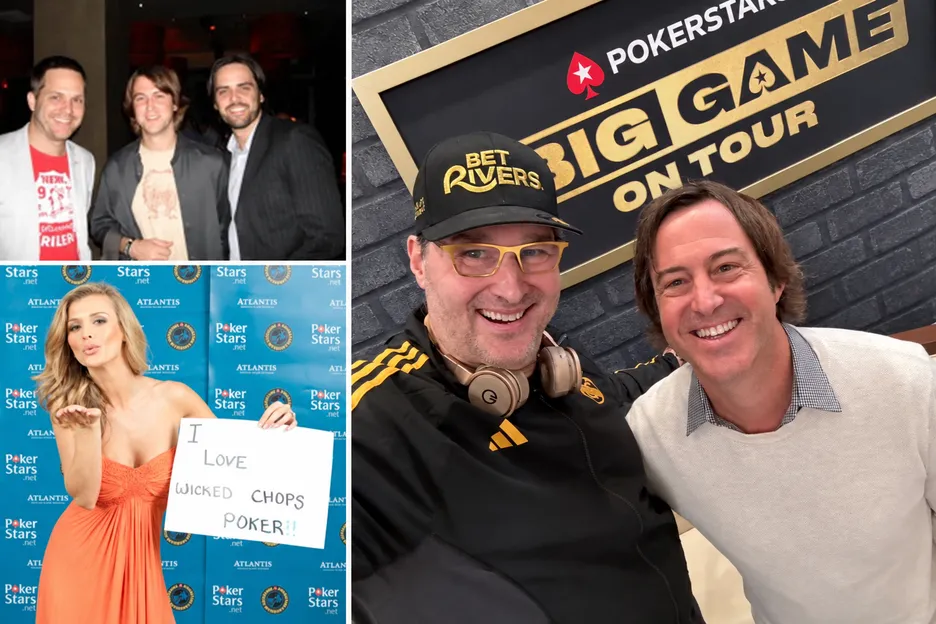


The men behind Wicked Chops Poker nearly killed poker star Erick Lindgren during a golf prop bet. Poker Hall of Famer Amarillo Slim stalked them all over the WSOP looking for some Texas-style revenge. Model Anna Benson said, "Wicked Chops Poker are nobodies...the site is garbage," but Joanna Krupa had their backs. Oh, and at one point, the worldwide legion of Nickelback fans wanted Wicked Chops' heads on a platter.
Steve "Chops" Preiss was there for the whole wild ride. Alongside Colin and Brian Cooley (the Wicked half of the operation), the Wicked Chops crew created a product that was part TMZ, part MAXIM magazine, and 110% in-your-face boom-era poker. Along the way, they picked their enemies carefully (if not always wisely) and became one of the most innovative poker media companies of the time.
Since then, Preiss has proven himself to be more than an expert media innovator. He's held top-level positions in the world's top online poker companies and knows more about the poker industry than a lot of people in the industry would probably like.
For this Inside the Boom interview, we asked Preiss to take us back to the poker boom era to explain how a group of buddies (who wryly referred to themselves as 'Entities') turned themselves from poker fans into some of the most influential content creators of the time. Along the way, we learned how they ambushed one of poker's most notorious villains and how there's still a chance of an Erick Lindgren Death March reunion.
Nickelback rage and a phone call from Amarillo
You were as inside poker as anybody during those boom years. What would somebody who only saw the ESPN version never understand about what you saw?
The biggest thing that stood out to me early on was the scale of the WSOP. ESPN and 441 during those boom years did an amazing job of capturing the narratives and excitement around the game. But to truly understand the size and scope of the WSOP, you had to actually physically be there. Those early years with 'Pokerpalooza,' the parties, and the celebrities–it’s hard to wrap your head around. You physically had to be there to appreciate the scale of it.
Another part most people wouldn’t grasp was the access to players and celebrities at the time. The WIcked+ guys started in band and music festival PR. That industry can have serious roadblocks when it comes to access. This industry truly didn’t. The most popular players like Phil Hellmuth and Daniel Negreanu were always making time for fans and for interviews. And celebrities were everywhere and easy to interact with as well.
I remember Wil Wheaton commenting on a joke I wrote and just being floored. Or Dr. Jerry Buss taking me around his home and giving me the best career advice I ever got, fundamentally changing my career. Or directing a video where Jason Alexander is laughing reading my words. Planning a Girls on the Rail with Brad Garrett’s girlfriend that he was genuinely appreciative we did for her. We often thought, “This is actually happening. Wow.” And it could all only exist in the world of poker.
That also created some odd feuds too. In one of our early big posts we ragged on Nickelback, and it hit a fan forum, and we were getting all sorts of hate. Anna Benson and some others didn’t take to us. But we were ok with that.
Don’t get me wrong, there was a seedy underbelly that didn’t get covered much in glossy WSOP or WPT vignettes, but the fun and good always outweighed the bad.

So, I’ve heard Amarillo Slim tried to kill you. That feels like a story I should ask you to tell. So tell it, if you can.
Damn, Brad, speaking of underbellies!
Yeah that was an interesting one. I wouldn’t say he openly tried to murder me, but he definitely tried to menace.
Not going to kick a dead man, but as you know, Slim pled guilty to something that would’ve landed him in the Epstein Files. And we called him out on that every time we wrote his name.
He didn’t like that.
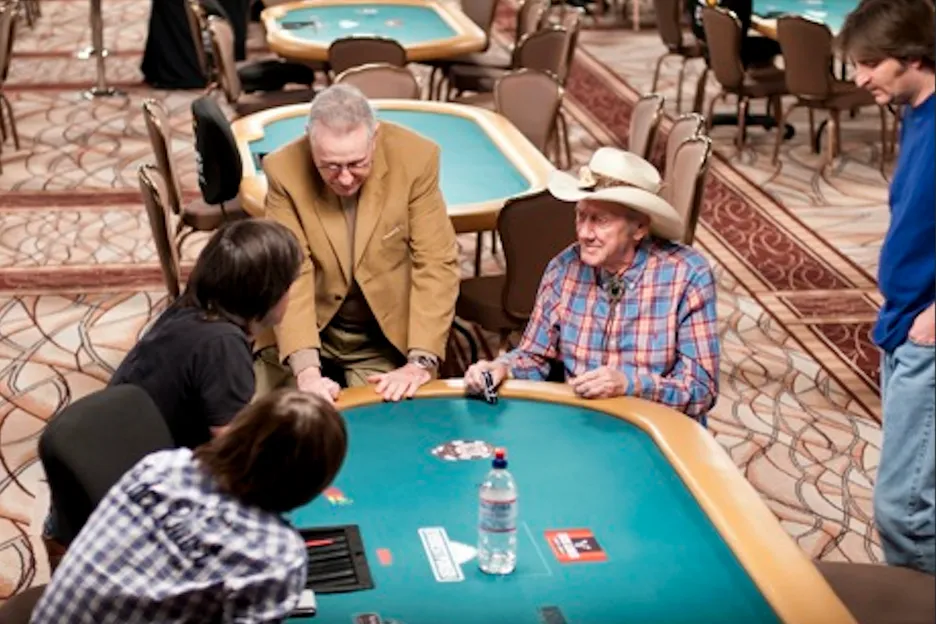
This is the summer of 2008, I believe. Slim was around the WSOP doing a bit of an image rehabilitation tour. We possibly wrote something snarky about that while calling out what he pled guilty to doing. I’m driving home, my phone on 1%, and his lawyer is calling me. I’m not really sure what he was trying to accomplish. It was a fanboy lawyer.
But my phone dies. I get home, kiss my daughter, plug my phone in, and I see a voicemail from 'Amarrillo, TX.'
I’m like, “No fucking way…”
I listen to the voicemail. It’s freaking Amarillo Slim. Inviting me to talk. In his hotel room at the Bellagio. In a very menacing way.
There was less than a 0% chance I was going to do that. However, while my phone had died, Slim goes walking through media row at the WSOP holding my mispelled name on a piece of paper asking everyone where I was.
Paul Oresteen with BLUFF kind of sniffed out something was weird and told him that I was basically never on site. If you’re reading this, well done, Paul.
Unfortunately, somebody pointed to the Cooley brothers as being Entities with me, so he corners them to talk.
Oh, I left out the part where he had two goon stooges with him. Strapped.
God love them, the Cooleys talked Slim off the ledge. I think we agreed to stop referring to him as what he pled guilty to, and we just stopped writing about him at all. I laid low from the WSOP a couple days and never heard a peep from him again.









Ballsy from the beginning
Okay. Go back to the beginning. How in the hell did Wicked Chops become a thing?
What inspired Wicked Chops is what you’re doing with these poker boom stories: a desire to create great content. In early in 2004, we started this 'Wicked Wednesday' home game in the Wicked+ office in Atlanta. Just a bunch of us in our 20s and early 30s who loved the game and the camaraderie.
Like everyone during the early boom years, we were consuming as much content as we could find. It was slim pickings, though. You had ESPN Page 2 Jackpot Jay, Poker Pages, Card Player, some others. So we gravitated to the great content on blogs. Sites like Tao of Poker, Guinness and Poker, Pokerati, F-Train and the PartyPoker and PokerStars blogs.
The boom was just taking off, and it felt like poker was the pinnacle of the cultural zeitgeist. BLUFF hadn’t launched yet, and there was a void for that more pop culture, celebrity side of the game. Poker was literally the hottest thing going culturally, so let’s try to capture that feeling. On the side for fun, we decided to launch Wicked Chops--Wicked being the PR agency with the Cooley brothers, and Chops being my nickname since high school.
It was slow going to find an audience. For about a year our best days would see around 500 uniques. Then something just popped. After about a year, traffic grew rapidly month-over-month. By the 2006 WSOP we were doing over 250,000 uniques a month, and it kept growing from there.
For one of our last ever articles, I calculated we had over 5,300 posts, written over 1,493,000 words, and had over 22,000,000 uniques. And those uniques were all over the spectrum from general poker terminology to 'Shannon Elizabeth Dancing with the Stars' to--Ted Lasso star!--Keeley Hazell, to Erick Lindgren prop bets and Tom Dwan bracelet bets.
You guys looked at the WSOP very differently from almost everybody else covering it. You all were already professionals and, at least in my opinion, much more, I dunno, upstanding citizens than what your website published. I recognize I’m asking this 20 years removed from it all, but how much of it was an act?
You’re one of the gold standards as far as 'voice' in the industry goes. Why? Because you are consistent with a standard of quality.
We created a distinct voice, too. There was so much content launching online at the time we had to cut through the clutter. But that voice was also very authentic to us. I’d compare it to Stephen Colbert’s 'Colbert Report.' He came across as a blustery Republican but was kind of making fun of that mentality, too. So it was a little bit of that mixed with some CM Punk breaking down the 4th wall and letting people in on the act.
But to your point, when we launched this, the Cooleys ran a successful PR company. I was doing brand marketing for a Fortune 250 company. We had professional jobs. So, while being full-on, full-time poker degens was certainly an “act,” the content and voice was always authentic to us.
You created this deliberately obnoxious, irreverent voice, but underneath it you were often surprisingly well-sourced and more relevant than the rest of the 'so-called poker media.' How did you manage that? Also, at what point did you decide to start using the phrase 'so-called poker media?'
Being able to break stories was a function of a few things.
We all had gotten jobs around the industry by 2006. So, while we were doing Wicked Chops and never hid that, we were more in the industry trenches maybe than other outlets. Wicked+ had a an operator as a client along with some other adjacent brands. I was working out of Poker Royalty and managing projects like RawVegas which did a ton of poker content.
Second, we never really did affiliate business on the site. Since we were working in the industry, we didn’t push one brand over another on the site. That oddly gave us a more independent voice. We could be equally critical or equally impressed with any brand’s actions. There was this crazy period around the 2006 WSOP Main Event where Wicked+ was the PR firm of record for Bodog, and we were being critical of the Jamie Gold-Crispin Leyser situation and partly-critical of Bodog. Gold was a Bodog pro. Which looking back was pretty ballsy. But it was honest, and I remember even Calvin Ayre emailing me at the time actually liking the content.
And, importantly, we never wrote something that we didn’t believe to be accurate or wouldn’t stand behind. We didn’t pull punches. But we didn’t make things up or assume either. I think, partly because we were in the industry, it forced us to raise our standard for so-called poker journalism. We had to get it right because we were doing deals with so many companies.
As for 'so-called poker media,' that goes back to the breaking of the 4th wall. Everyone was shilling to some degree--no different than NBA media or political media--and that was a wink at that dichotomy.
Girls on the Rail and a prop bet death march
Okay…Girls on the Rail. It had to be among the most popular sections in Wicked Chops. The entire site was very much a product of its era. It seemed to be deliberately politically incorrect, juvenile, and often built around sex and women as part of the joke. When you look back at that material now, what still makes you laugh, what makes you cringe, and what would you do differently?
The whole GotR thing came about as an accident. We had gotten this super lens for a camera for the WSOP. Entity Colin was taking a photo with this mega-lens, and the player he was snapping was out of focus but a girl sweating him was totally in focus. And he posted it with a funny caption like, “X player among the chip leaders in Event 21…” with the player out of focus and the girl in focus, and it immediately became a thing. Almost instantly. Genius in its simplicity.
And like how breaking stories became its own self-perpetuating engine, so did the GotR pics. By the second or third year we were getting asked almost daily by girls who wanted to be in them. It extended to players as well. I remember one afternoon drinking some wine with Jennifer Tily at that Wine Cellar in the Rio and talking about GotR, and she’s like, “This would be fun let’s do a GotR shoot.” So the other Wicked Chops Entity, Gluten Free Charles, grabs the camera and we had a Jen Tilly GotR shoot.
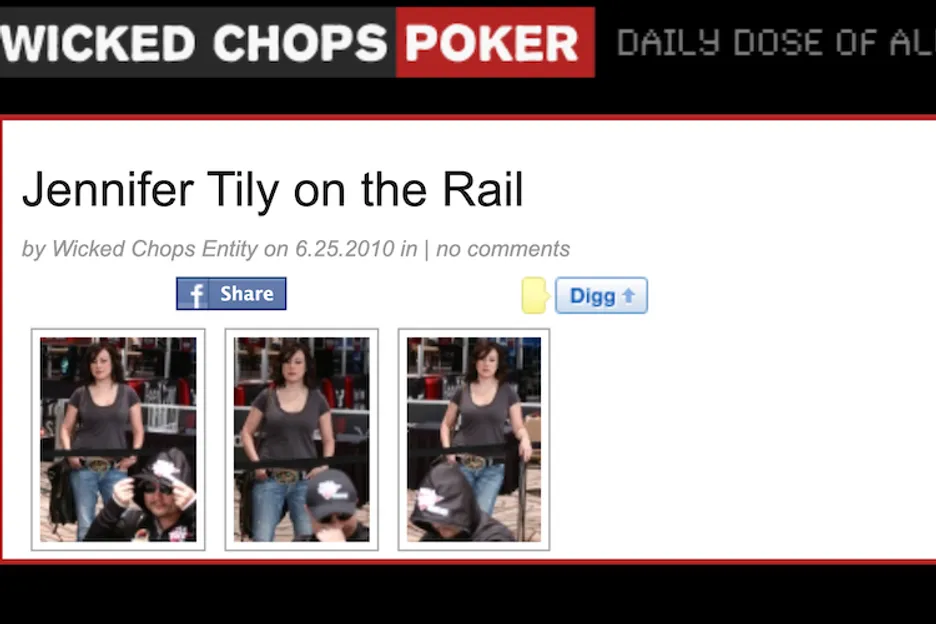
The way I view some of it was like MAXIM at the time. A guy I graduated high school with, Charles Coxe, was one of the founders and co-editors of it, and I had followed that model closely. You get people to buy it with the cover photos, but the content inside was actually really smart. Same model here, just focused on the poker industry.
There was definitely an era starting around 2013-14 until recently that the world shifted too. Humor shifted. But by then we were ready to wind the site down anyway. The site was a time capsule of a specific era. When that era was over and our careers within the industry became more serious, we simply moved on.
The Erick Lindgren golf bet became one of those stories that seemed to embody the excess of the poker boom. It had huge money, ridiculous physical punishment, and everybody watching to see whether someone would actually survive it. How did that ever happen?
I got a call from a drunken Gavin Smith at 5:30am. My daughter was 10 days old and had colic, so I was already up and answered. He walked me through this escalating prop bet that evolved over drinks with Edog.
This was the dead heat of the summer, and temps were hitting around 112-115. The bet was Erick had to golf four rounds back-to-back-to-back-to-back, carrying his bags, and shoot under 100 each round, all in one day.
All the big pros, Phil Ivey included, put money down. I think the actual number wagered was much higher than what was in the video or news reports.
I was overseeing RawVegas at the time, so I called my main producer Eric Newby, and he got a crew and was at Bears Best golf course by like 6:45am.
I talked to Erick a few weeks ago. Next year is the 20th anniversary of that prop bet, and maybe it’s something we’re gonna run back in 2027.
Ambushing Russ Hamilton and an Epic failure
You started doing video at a time when online video was still primitive and expensive. What did that let you capture about the WSOP that writing couldn’t, and how much of what poker media does now were you guys already experimenting with twenty years ago?
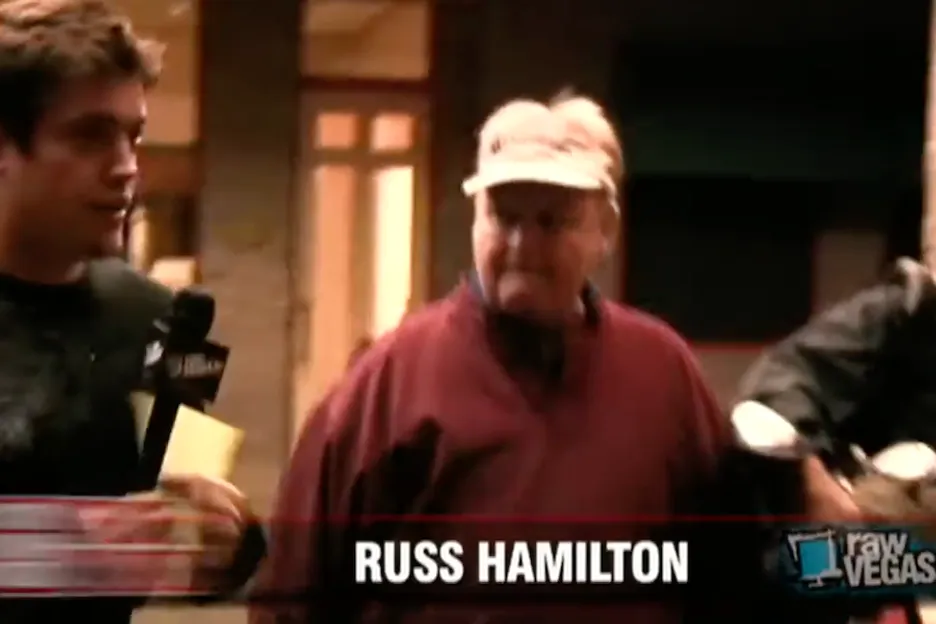
We had the luxury of having RawVegas as a partner which let us be on the ground with video. So, we were doing Daniel’s initial video blogs--and Hellmuth, David Williams, and Patrik Antonius among others)--a Prop Bets show with Gavin Smith and Joe Sebok, and we had our own branded Wicked Chops show that covered all the crazy stories going on at the time. Like Vinnie Vinh’s chair cashing two events. Or when we ambushed Russ Hamilton during the UB super-user scandal. 60 Minutes even licensed that footage from us.
The way that whole thing came down and what me, Balsbaugh and others did to capture it was among the funniest things that happened to me during those boom years. It’s ridiculous to think that two grown ass men running businesses hiding in an Escalade at TPC Summerlin for hours waiting to ask Russ why he--allegedly--did what he did.
But the three things I look back at now that feel ahead of their time though were This Week in Poker, Poker2Nite, and pitching a 'College Game Day' style daily WSOP show in 2009.
This Week in Poker was on Jason Calacanis’ network. Those shows are basically the model for every podcast or YouTube commentary show you see today. But this was 2010 and 2011. We launched it at the WSOP with Jennifer Tily as our first guest. We had to figure out how to stream live, use the switcher, all of that. We moved it into a Santa Monica studio after that, and followed the Kevin Pollak Talk Show which was great as he was a huge poker guy, too.
We took over writing and producing for Poker2Nite after PokerStars hired Joe Stapleton, who had been the first season’s writer. We tried to make almost every segment something that would be shareable on social media. That was a new strategy at the time. Nothing groundbreaking or that we invented, but something nobody was really doing in the industry then either.
The College Game Day for the WSOP was part of a RawVegas pitch to Jeffrey Pollack I believe in 2009. It included taking over live reporting and developing an app for people to update their chip counts. We even did some basic dev work. I don’t recall why that didn’t progress. Probably PokerNews outbid us. Damn you, Caldwell and Tony G!
The poker media have a long tradition of burying stories that make poker players or operators look bad. Did Wicked Chops get all the stories before everybody else did, or did you just choose to report them when other outlets wouldn’t?
It’s hard to know if other outlets had stories that we had and simply decided to not write about them or not. What I do know is we got fed a steady stream of news from sources all over, we vetted the information, and even had a unique way of verifying the information. There were certainly outlets or independents who did great working breaking stories too. Haley Hintze comes to mind.
But one thing we learned very early was once you 'become something,' that quickly becomes this self-perpetuating engine. We broke stories others didn’t, so then sources would come to leak stuff for us to break.
I hope that was also because operators or executives knew we’d be honest with that information as well. Only one major story we consistently broke news on was agenda-based for us--Epic Poker--and it was for good reason, because they tried to steal our brand. Everything else, we just presented the information as factually as possible and with an as honest as possible opinion on it.
Speaking of Jeffrey Pollack and Epic, I remember Epic Poker, but only barely. My guess is most people today have never heard of it. I know you were involved. Tell me how much and how it went sideways.
I kind of laughed out loud at “most people today have never heard of it.” Was that intentional? Just humor me and say yes.
Yeah, when the aforementioned Jeffrey Pollack left the WSOP, he created this new tour called Epic Poker with Annie Duke and some guys who cashed out when YouBet sold to Churchill Downs.
Pollack approached me early on in the project, and I was going to be a consultant with the Cooley brothers.
What started as a healthy consulting contract eventually whittled down to just being a $50,0000 web development contract. All good. But buried deep in the contract in a one-off paragraph was something to the effect of “everything you have created in the industry in the past, with Federated Sports+Gaming, and in the future is our property in perpetuity.”
I quickly googled 'perpetuity,' saw that it meant forever, and called the Cooleys. They were having lunch with Pollack and Duke in LA at that time. At that lunch--not kidding--after 30 minutes into a discussion about "The Social Network" and how Mark Zuckerberg screwed over Eduardo Saverin, they tell the Cooleys they were naming the tour the Wicked Poker League.
We came to find out they had bought 99 variations of Wicked Chops Poker domains the day before they delivered the contract to us.
Now, those who know me well know I have a relentlessly spiteful side to anyone who tries to screw me or people I care about over. I went full-on Keyser Soze. Ruined ad deals. Dropped stories to the Las Vegas Review-Journal that may or may not have had an adverse effect on them.
While they had a business model that never stood a chance--essentially using a TV program to drive traffic to a Zynga-like app--anything we did to help push that business over a cliff sooner, so be it. I felt terrible for the vendors they stiffed, but that was a business that was never going to have a happy ending anyway.
You seemed to have your finger on the pulse of the boom moment in a way that a lot of us didn’t. You were deliberately different at a time when a lot of the media just wanted to be accepted. Was that by design?
I’ve always believed it's good to zig when everyone else zags. It was definitely a conscious decision. But it was very authentic to us as well.
But we worked hard to build good relationships where people could trust us with treating information properly, too. It had just as much to do with our business interests as any level of journalistic integrity.
For example, I’d meet Howard Lederer at this Coffee Bean off Town Center in Vegas once a quarter or so. He’d show me the new Full Tilt ads and we’d trade info. And we had strong relationships with players and brands, and they’d share information that would be weaved in our articles. Wicked Chops just kind of became this extension of the industry.
Having said that, we also totally geeked out on things like the old 2+2 forum, Neverwin and others. Pre-social media, that was the best place to see what the core of the industry was feeling. Plus, there was some brilliant content out there. SrslySirius’ raps and some of the meme threads like TJ Cookier or that Siril guy at Bellagio. And the drama bombs. It was such a fun era ,and we’d cover that content, too. Tip of the cap to Kevmath there for making NVG so well curated.
And as a three-and-eventually-four-man crew as Charles Simmons’ role grew with us, we couldn’t do chip counts and hand coverage the way PokerNews, Poker Pages, or Poker Wire were doing.
So we zigged.
Jess Welman called you out as one of the people who first really saw her at the WSOP. It was probably the biggest tell that you and the Cooley boys were actually alright guys. Tell me that story.
Game respects game. Jess is a truthful, smart, and honest voice with a ton of credibility. So bringing her onto This Week in Poker to deliver news made all the sense in the world. She deserved it. I think in her interview she said something about getting overlooked. And that was a real thing in the industry at the time. A really dumb thing.
By that time we all were established on the industry side of the business. And we had been given opportunities by people who saw something in us. I owe my entire career in this industry to Brian Balsbaugh and Poker Royalty. He liked our content. We clicked. And he gave me a shot in the industry.
John Caldwell at PokerNews did the same. I mentioned Dr. Buss earlier. He’d talk business with me and gave me advice that shaped my career. Later on, Negreanu vouched for me to come to GG. Then Michael Kim at GG elevated me and gave me a shot to really help grow that business which changed my career again. I’m beyond grateful for all of that help along the way.
It’s one thing I’ve appreciated about the industry–the way people open doors for you. Jess earned that opportunity, and we always wanted to pay what we had received forward. I still do. I’m always open to give advice, or mentor, or note to someone when they create something good and different. If people hadn’t done that for me, I wouldn’t have gotten to where I did.
C-Suite Chops and the future of poker
It’s always amazed me that someone who made his bones goofing on the industry went on to be such an integral part of the industry. Has seeing the business from the operator side changed your opinion of anything Wicked Chops used to criticize? Or has it convinced you that you were even more right than you realized?
Definitely the latter.
Again, it just comes down to authenticity and honesty. If a company was doing something worth criticizing, we did. But we celebrated anything we felt like was 'good for poker' which most operators truly wanted, too.
On the operator side of things, I remember seeing some of our initiatives at GG just get shredded by the media or social media. While everything we were doing truly had the intent of 'what’s good for the players or good for the game,' the rollout sometimes got bungled. Or details would get leaked to Anuj at Poker Fuse so we would adjust on the fly and maybe not stick the landing.
People are smart. They can sniff out when something doesn’t feel right and call it out. That’s all we did.
At PokerStars it was the same. They had different challenges due to their ownership than some other operators, but everyone there truly wanted what is best for the players and the game. Some of the most decent people I’ve worked with in this industry are or were there. They just have different challenges than other operators.
But point is, the criticisms are often fair, especially in an information vacuum. Nobody ever improves if everyone just keeps telling you how great you are all the time.
Today’s WSOP is a different world from where it was 20-something years ago when we were experimenting with how to cover it. Is there anything you learned back then that could help the people trying to cover it now?
The game and industry has matured. And because everyone is good now, the more mainstream characters, the crazy screamers or the Everyman like Dennis Phillips and Darvin Moon don’t come out and play the Main Event like how they qualified in the past. So, that makes it a bit more challenging.
However, I think some tenets never change. The main thing I always say is be genuine and honest in the content you create. People respond to that. But I also think the media has evolved a lot and does provide a good representation of the narratives that matter. Go read some Lance Bradley (shout out to his old Poker Biz, an early model for WCP Insider), Chad Holloway, Jeff Walsh, Michael Gentile, and dare I say, Brad Willis, among many others. There is a lot of good content out there today.
But for specific advice I’ll say something that I told someone writing a book a few years back: just be brutally honest. There’s never been an article or book or show that blew up into something cherished that went half-measure.
We ended up sitting next to each other a couple years back on a flight back to Atlanta from Vegas. We talked about some stuff that might or might not happen. It seems like that was a decade ago. It’s hard to know where the industry is going. In your mind, what’s next for the industry and poker media?
The industry has settled into a rut. The last true great disruption came early in my time at GG. We had this perfect storm of situations–COVID hit and online poker surged, Flutter acquired PokerStars and they were going through that transition, and there was not going to be a WSOP that summer due to the pandemic.
Those factors created an opportunity to bring the WSOP online in a way it hadn’t been done before, and GG with Daniel Negreanu and the WSOP became a force. It was lightning in a bottle. The devs at GG had created this incredible product for six years, and then factors emerged that led people to it en masse and all that hard work paid off.
But that was over six years ago.
The only thing that’s really happened since is increased regulations that have made it harder for operating at a global scale, or even a larger geographic scale. It’s unfortunate because ultimately it hurts both the companies and their ability to grow the game, and players as it shrinks liquidity pools. There’s got to be a middle ground with tax and regulations that still provides required protections, KYC, and other consumer-focused safeguards. Obviously 20+ years ago the pendulum was far too loose. But it’s swung to be far too restrictive now.
And again, I’m all for regulations. It’s what’s best for the consumer. But when those regulations open the door for off-shore operators to fill a massive void, that’s bad for properly regulated operators and consumers.
And the U.S. is a mess. Regulation has progressed at a snail’s pace. It makes no sense. In states like California you have too many competing factions to agree on something that would be massively embraced by the poker community. Pre-Black Friday, California basically accounted for 50-60% of U.S. revenue. Today if you want to play online, you have to look at off-shore sites.
When I was at Churchill Downs in 2014-15, I spent a lot of time in Sacramento working on online poker bill passage. Before Churchill pulled the plug on BLUFF and poker, I was talking to Eric Hollreiser, who was then PokerStars's PR and Jeff Haas at Party at the time about forming a coalition to lobby for online poker. We can fight it out later. But let’s at least get a chance to fight. I’d still like to see something like that happen. Even if you keep California on the sidelines, it wouldn’t take much from some combination of states like Florida, Texas, New York, Georgia, and Illinois joining the shared liquidity pool and growing poker in the US.
As for poker media, I really like the direction things are evolving. I think you’ve seen PokerNews expand the type of coverage they do, adopt a different tone over the years, and it works well. And their live reporting is the best in the business.
I really like how you guys at PokerOrg have approached content creation. It’s a good mix of news, videos, and fun stuff like fantasy and Instant Live.
And then you have voices like Joey Ingram who is like an evolutionary step of what we were doing with Wicked Chops. Unique, cool voices like him keep emerging. But the 'media' I think that keeps finding new audiences are the content creators. Negreanu is both the godfather and GOAT there. But so many great new voices too.
I liked what the Next Gen guys were doing so much I signed them at PokerStars. I was blown away when Greg Goes All In arrived. That was such a great new voice. We signed him at GG. Same with the hilarious Caitlin Comeskey--signed her, too. When I talk to younger players, these creators are who they’re watching and where they’re getting their content fix, like what NVG on 2+2 was for us over 20 years ago.
What direction would you most like to see the industry grow to recapture the boom years?
Those early boom years was lightning in a bottle and impossible to replicate. But that doesn’t mean poker can’t become culturally relevant again. Just look at sports betting and prediction markets. That energy is similar to our boom years.
From regulated real money, unregulated real money, social poker, live events and home games, more people play now than 20 years ago. But you’d never know it.
I’ve noticed a shift in more outlets and creators producing 'mainstream' focused content, which is the right idea. But it can’t be one-offs. And it truly has to have mainstream appeal. A great example of this was GG’s Game of Gold. Great concept. Really well-executed. But ultimately it was the greatest poker show for hardcore fans only. It was too heavy on the poker, less on the personalities, which limited its reach.
At PokerStars I rebooted the Big Game and brought in some new faces like Gronk. Again, good start. But that kind of investment can’t be with just one show.
Enough celebrities play where this shouldn’t be a problem. You’ve got Elle Fanning talking about playing poker against Timothy Chalamet on red carpets. I know many high-profile politicians and athletes who play. And when people find out what I do for a living, it never ceases to amaze me that they either play now or watch content.
The audience is there. The investment in content to make it culturally relevant again is not.
But regulations and the economics today make it very, very challenging to create that culturally relevant content en masse. The ideas are there. And I’ve personally tried to get some exciting projects off the ground. The ability to finance those ideas consistently is not. If that dynamic can shift from taxation and regulation to concerted regulatory and content efforts, you’d finally see Boom 2.0.
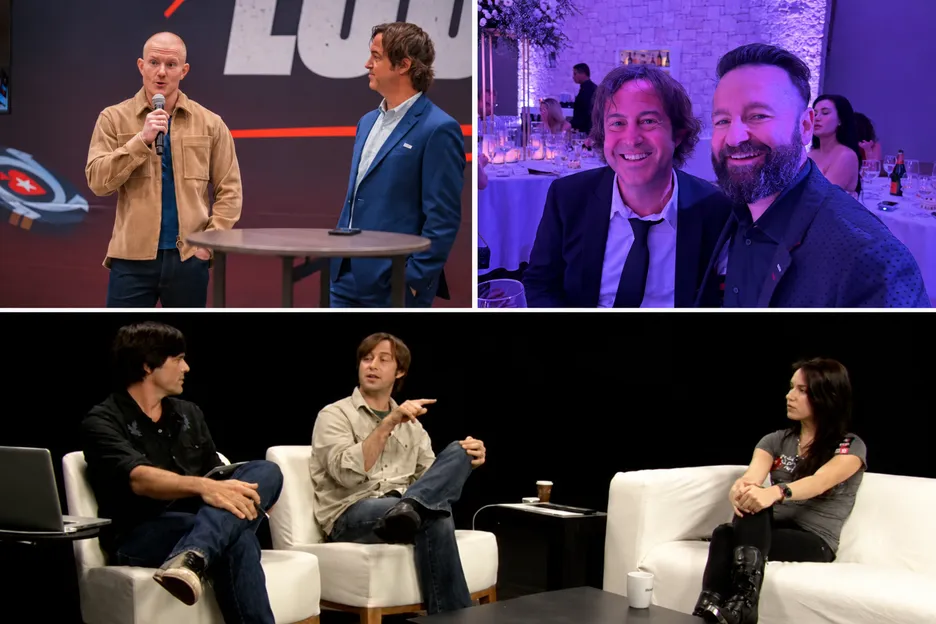
Photos provided by Steve Preiss