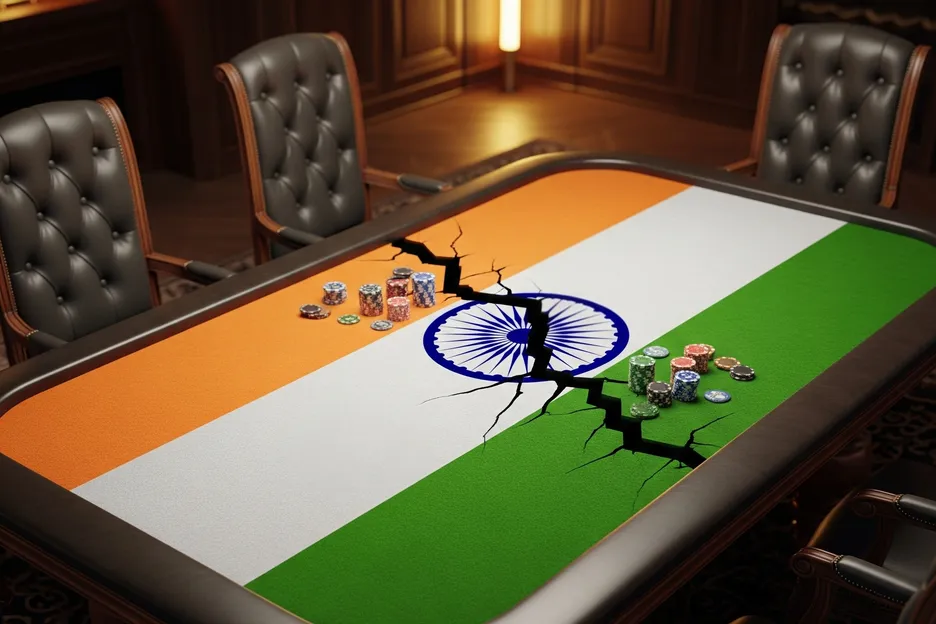


A new government bill, titled The Promotion and Regulation of Online Gaming Bill 2025, has been announced in India this week which has the potential to destroy online poker in the country.
The bill, which aims to prohibit ‘the offering, operation, facilitation, advertisement, promotion and participation in online money games through any computer resource, mobile device or the internet’ appears to be analogous to 2011’s infamous ‘Black Friday’ in the USA, when the shutters abruptly came down on online poker operators in a move by the federal government.
Indian government minister Ashwini Vaishnaw explains the bill in this X thread, below.
India’s governmental structure is similar to that of the USA, with a central federal government and various states, with decisions over gambling and gaming regulations previously made at the state level.
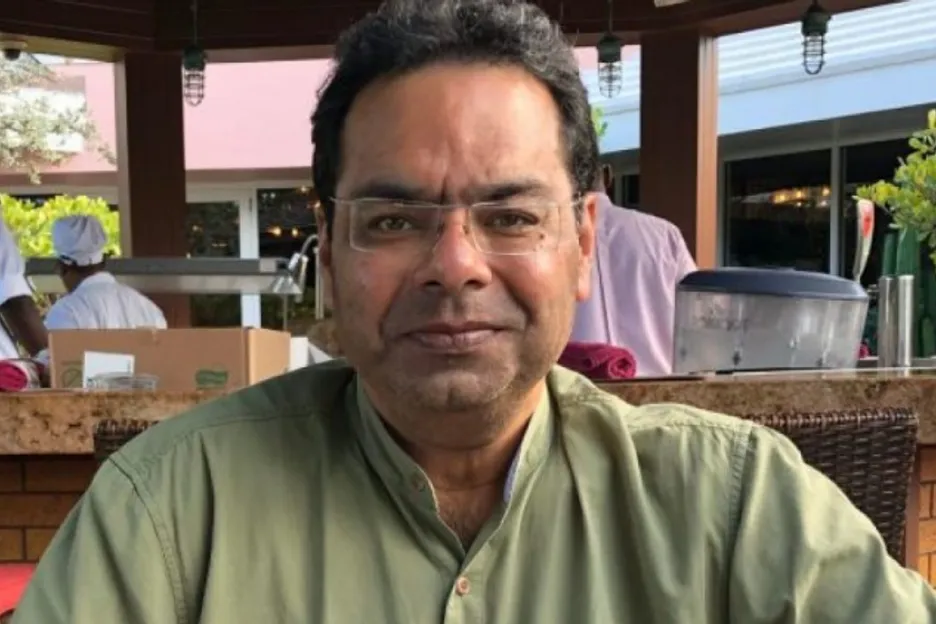
PokerOrg reached out to Nikhil Segel, India-based poker player and member of our Player Advisory Board, to learn more about what this could mean for poker players in the country.
‘We’re looking for a one-outer’
First off, Segel has few doubts the bill will pass. “One of the analogies used by most of the poker community is: we're looking for a one-outer.
“It's going to be passed, it then goes to a select committee which will probably push it through, it then goes to the president for ratification, it gets ratified and they come out with a Gazette. And then maybe in 3 to 6 months, or even earlier, we won't have online real money gaming anymore.”

An aspect of the bill which has drawn ire from much of the country’s poker community is the way skill games such as poker and rummy — a much more popular online card game in India — have been lumped in with all other online gaming such as casino games and slots.
“Players are upset,” says Segel, “because obviously it makes no sense to us that something that's been categorized as a game of skill, that’s taught at MIT, that’s a game which has a lot of intellectual value, is going to see its players told ‘Hey, no, you're gambling, so we're going to just blanket ban you’.”
Poker’s status as a skill-based game, distinct from luck-based activities, has been a well-argued case in many jurisdictions around the world, and for many appears to be beyond question. There are no professionals in the luck-based game of roulette, for example, while the ranks of poker pros sustain many skilled players including the likes of India’s own Nikita Luther, Ankit Ahuja and Santhosh Suvarna, winner of the $250K Super High Roller at the 2024 World Series of Poker.

Last year also saw poker classified as a mind sport by the International Mind Sports Association, while only last month the Thai government came to the same conclusion, granting poker sporting status in a country where most forms of gambling are prohibited.
Segel explains that the Indian government’s apparent uninformed approach to poker’s intellectual aspects is one which can often be seen among many of the country’s players themselves.
“With the marketing of online gaming sites in India, a lot of the targeting was to smaller cities, smaller towns, villages. Some people are not as educated, they don't understand that it's a game of skill, they treat it like a game of gambling.
“And as with gambling, there are the same problems where people will take loans to play poker, or to play rummy, or to do whatever gambling they're doing, because to their mind it's gambling. We need to resolve that.”
Education is a clear route to the public gaining a better understanding of poker’s status as a skill-based game, but prohibition appears to many to be a faster, more populist route to dealing with the social problems associated with gambling in general.








‘Anybody who facilitates the financial transaction is equally guilty’
So, would prohibition solve these problems? Not likely, according to Segel.
“In the past you’ve had the ‘white’ sites, which are absolutely legal, then ‘semi-gray’ sites, and then there's a whole lot of totally ‘gray’ sites, which a lot of people are playing on. This act will push people onto those sites.
“People who want to play poker and only have a skill at poker, who from the time they were in college, have only played poker, have never had a job, they’re not suddenly going to go out looking for a job. They're just going to say, ‘Hey, I know how to play, that's all I know. There's a ‘gray’ site, I need to do some dodgy financial transactions and get onto that site’.
“And that, to me, is even more worrisome, because if we had problems with real money gaming on the ‘white’ sites, God help us on the ‘gray’ ones.”
That many of India’s ‘gray’ sites use the agent/club model, where players are managed by agents who facilitate deposits and withdrawals, will also see those agents criminalized under the new bill.
“The unfortunate reality that I am being faced with is that, as a community leader, I have to warn those who are agents for ‘gray’ sites as well as their players. Because one part of the law which is scary, is that anybody who facilitates the financial transaction is equally guilty.
“So, for an agent who is helping with transactions, so players can have money on the site and sell their winnings, the truth is that he is going to be as culpable.”
An existential threat?
While the analogy with the Black Friday may be helpful in one sense, India’s impending bill may have far more serious repercussions than those experienced in the USA.
It took several years, but online poker gradually reappeared in the USA on a state-by-state level, while live poker in the country is arguably healthier than ever. Segel argues that the situation is dramatically different in India, and that the closure of online poker could in fact prove to be an existential crisis for the local game.
“You can think of it like Black Friday but without the very strong historical background of live poker,” Segel says, when the two countries are compared. “In the US there was this huge culture of live poker, then online poker came up, and then one day they shut online poker down. But their live poker was so strong that it just picked up the slack. That impetus continued, even though they were not allowed to play online; America continued to produce top quality poker players, because everywhere you went, there was a casino.”
The situation in India is very different, says Segel. “We've had a tradition of three-card poker, which is played at home on Diwali, but it's very different. Nobody is sitting there going, ‘Hey, I'm gonna be playing poker because I play in my home game, and then I go to play live, and then I come online’. In India that scenario is absolutely inverted: You come online, you start playing, and you realize you love the game. And then, maybe 1 in 20,000 players will say, ‘I will go play live’.
“In America you’ve got this live community, which basically keeps that flame burning. If online poker is banned in India, in three or four years poker as a sport will go back to being a small niche of people who are exposed to the west. It will set poker in India back 15 years or more.”
What can be done?
If there is an answer to this problem, Segel sees it as a situation where both players and operators need to come forward.
“We need to petition the government, we need to create as much of a noise as we can, we need to get the media involved, we need to ensure that the government hears us, that there is a difference between skill and gambling, and that we, as a community, need to fight this.
“And the operators need to litigate, need to form cooperatives to go in and push back with the government, whether it's through litigation, lobbying, whatever format it takes.”
If this struggle resonates with you as a poker player, add your voice to the petition below.


