Every poker player has leaks. Whether you’re Phil Hellmuth going for a record 18 bracelets or a weekend grinder looking for your first WSOP Circuit ring, there are always spots in your game you can fix if you’re willing to seek them out and put in the work.
The trick is identifying the mistakes that keep costing you money without throwing the baby out with the bathwater.
For many players, that’s where things get complicated.
Solvers can be very intimidating from the get go. The math looks daunting, and the strategies seem very overwhelming at times.
The truth is, many players fear becoming a GTO robot and abandon the deeper solver work and return to trusting their instincts and playing a guessing game at the table.
Find the leaks in your game
But what if just 15 minutes of focused solver work a day could expose some of the biggest leaks in your game? That's the million dollar question to ask yourself when it comes to investing in the growth of your poker game, whether your a seasoned pro or recreational player.
Octopi Poker’s new training course, My First Solver, aims to make that process far less intimidating. The course is built for tournament players who are new to solver study, or who have tried before and given up. And as instructor Matt Hunt explains, studying with a solver doesn’t mean surrendering your intuition or turning yourself into a robot.

PokerOrg spoke with Hunt about how players can use solver tools more effectively, and how even recreational players can quickly identify the low-hanging fruit that may be costing them EV every time they sit down.









Operate from a strong foundation in theory
How did your approach to studying poker evolve once solvers became more widely available?
Once solvers became more widespread and accessible, I really gravitated toward them. I liked the idea of having a foundation or a theoretical baseline to operate from.
What had you based your approach on previously?
In the early years of my career, I felt like a lot of my game was going back and forth between different strategies.
I would play really loose and aggressive for a while, then change it up a bit. But I wasn’t really grounded in what the foundational approach was that I was going to use.
What changed that for you?
As soon as I started learning more about game theory, and as soon as GTO approaches became more widespread and solvers became easier to get a hold of and more accessible, it really made sense to me to start studying those approaches more than anything else. It made me more confident in what I was doing at the table.
It also gave me additional things that I could work on while working with students. It gave me different ways to express ideas. It gave me different concepts that I could bring in to explore the game and learn more about it.
Eventually it snowballed, and I wanted to learn more about solvers and GTO for my own game. But I also wanted to learn more so I could be a better coach and do better for my students.
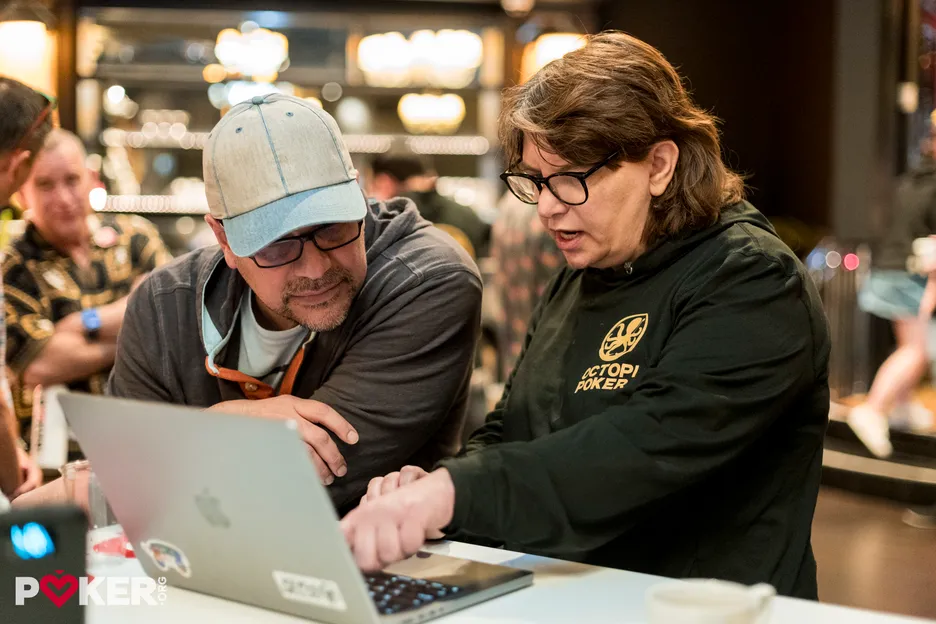
Octopi introduces My First Solver
What is your new course with Octopi all about?
The new course is called My First Solver. It gives people a foundation for taking a modern approach to studying poker. In particular, it shows them how to use solvers effectively without letting them become overwhelming and unproductive.
Are you saying most people aren't grasping the most important knowledge in their solver work?
A lot of people know they're supposed to study with solvers, but they aren't doing it very effectively, or they don't know what to look for when they use one.
And in particular, there's a lot of desire to be able to use solvers to explore exploitative poker and to explore how to exploit players at low stakes. But the biggest problem is that you can't realistically know how to play exploitatively if you don't have a foundation for understanding what the optimal strategy looks like in a given spot.

Most players want to dive straight into exploitative play. It's very, very difficult to actually do that because if you don't have the foundation of theory, you have no idea why what you're doing is correct.
Even if you want to study and play exploitative poker, you're never going to be very good at it because you don't have a foundational understanding of what optimal strategies look like and why they look the way they do.
That’s why a course like this is vital for most players. Especially players like me who may have felt intimidated when first starting to use solvers. We wanted to build a course that gives people that entry-level explanation of how to get the most out of the technology.
It felt like a no-brainer for us at Octopi because we have such great tools. But many players and students still lack that entry-level understanding of how to get used to using these tools effectively.

'Poker has always been an arms race'
Solver work can be intimidating. How do you make it useful rather than overwhelming?
One of the biggest factors in solver work is that you're diving into a world of math and concepts that aren't always easy to parse into a coherent strategy.
Poker has always been an arms race: whoever studies in the most detail and understands the game with the most complexity will have the biggest edge.
What about players who worry studying GTO will turn them into robots?
Nobody's a robot, right? No matter who the best players are, they don't play exactly how the solver tells them to. But it's just giving you a broader understanding of how one strategy plays well against another.
But if you're not Shaun Deeb or Chance Kornuth and you haven't played millions of hands of poker in your life, which is 99% of people, then you can access the solver and have it show you that, if both players were adapting to each other back and forth in a way that would make sense if they were both high-level players, this is what the strategy would look like.
And it stops you from going down that rabbit hole of trying to figure out what level my opponent is on. There is no way to figure out what level your opponent is on other than guesswork. That’s why this course is so valuable to both advanced and beginning players.
For more information on Octopi's My First Solver Guide visit Octopi.ai. Follow Octopi Poker on X.
Additional image courtesy of Rational Intellectual Holdings Ltd.