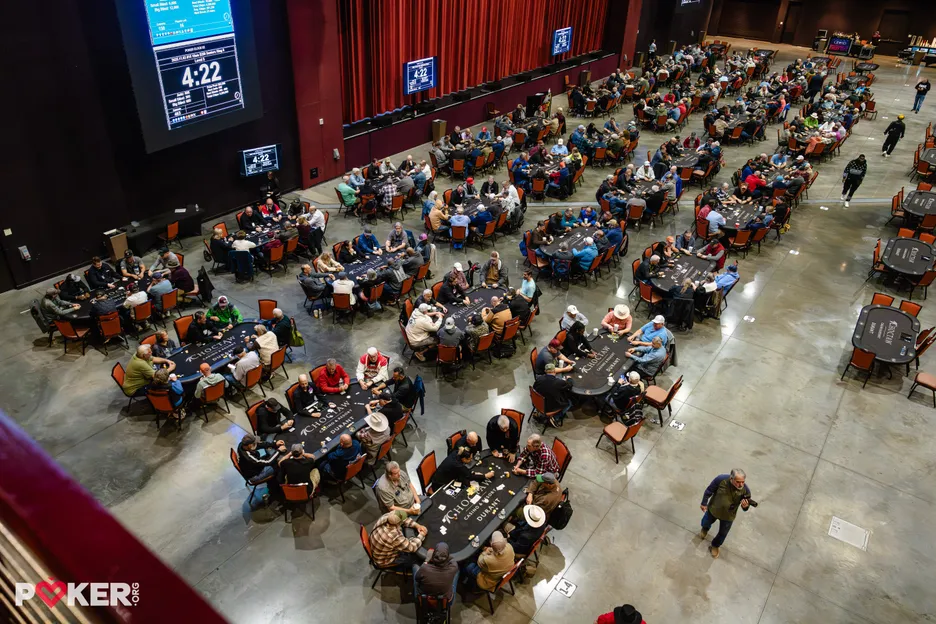


I want to talk about a tournament I ran on Hijack Poker very recently that had some added value —code word for overlay.
It means that the guarantee was more than the amount that went into the prize pool based on the number of entries.
As usual, every time something like this happens, I have plenty of help from the players. It seems I always get help on how to avoid missing a guarantee the day after I miss one. This event was no exception.
How long should the tournament last?
I’ll share how I approach building a tournament structure, such as the one at Hijack.
There's something that players will always tell you when it comes to fixing a structure: we want more chips, longer levels, more levels, and less rake. Those are the four suggestions for improving a structure that I hear from everyone.
The problem is you can't have every structure be the same for every buy-in, every tournament, and for every determination of rake.

You generally have to build tournament structures based on the entry fee. Otherwise, it devalues the bigger buy-in products and can become inefficient for a property to run it.
When I approach creating a structure, I'm trying to accomplish goals for both players and the house.
Instead of talking about how you can add more chips, more levels, more whatever, I like to start at a place where we can all agree. And generally, that’s how long should the tournament last?
OK. How long should it last? If we can answer that question, we can go backwards and figure out all the other answers to the questions that we're talking about.
For example, what happens if you tell me that a tournament should last 10 hours, have 100,000 chips, and every level is 60 minutes?
It's really easy to figure out why you can't do that because you can't have both. You can't have a tournament end in 10 hours and then give them a 30-hour structure.








How to determine a tournament structure
This is what I like to do. If you know that a tournament is going to last 12 hours, that's just math. Then all you need to do is figure out how to make it last 12 hours. Do you want there to be a large portion of the field left at the halfway point? That means in the second half, players will drop off faster. Or do you want it to be consistent, and have people busting roughly the same amount of time over the course of the tournament?
That's where it all factors in with the number of chips and the number of levels. That’s why tournament directors are constantly trying to say, ‘You don't want to start with so many chips.’
All that means is that so many people are hanging around early, that to finish by the end time, they have to bust a lot faster. Which in essence means you're taking away play from the end and adding it to the beginning.
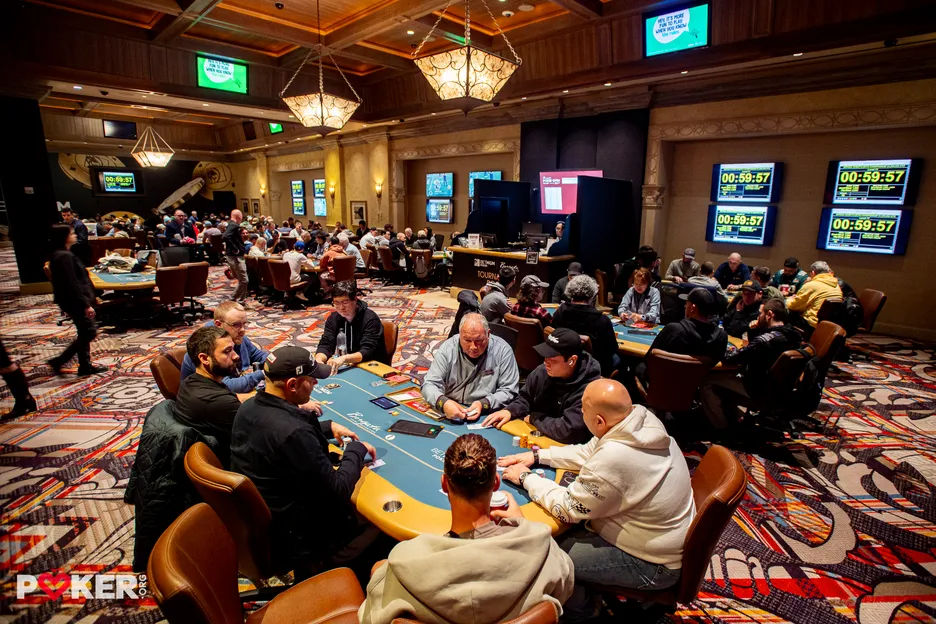
Sometimes that's what people want. Sometimes, that is a viable option. There will be lots of play at the beginning because you want participants to have value for whatever the buy-in is.
But ultimately, I'm not just trying to be an evil tournament directator. (I just made up that word) I am not trying to punish people.
What I'm trying to do is get us to the place we all want to be: a set amount of time for the tournament. And to accomplish that, we need to determine the best way to get there, so that everybody's happy by the time the event is over.
Want to test your rules knowledge? Got a tricky ruling or situation you’d like my take on? Drop it in the comments — I’ll feature the best ones in future columns.
Justin Hammer is the Live Events Director for PokerAtlas, online Tournament Director for the Texas-based poker app Hijack, and a Tournament Director for Thunder Valley Casino Resort. He also brings his expertise as a consultant and minority owner of Desert Bluffs Casino in Kennewick, Washington.
With years of experience across live, online, and casino operations, Justin has established himself as a trusted leader in the poker world.
For more info visit PokerAtlas.com, HijackPoker.com, and bluffs.poker. Follow Justin on X


