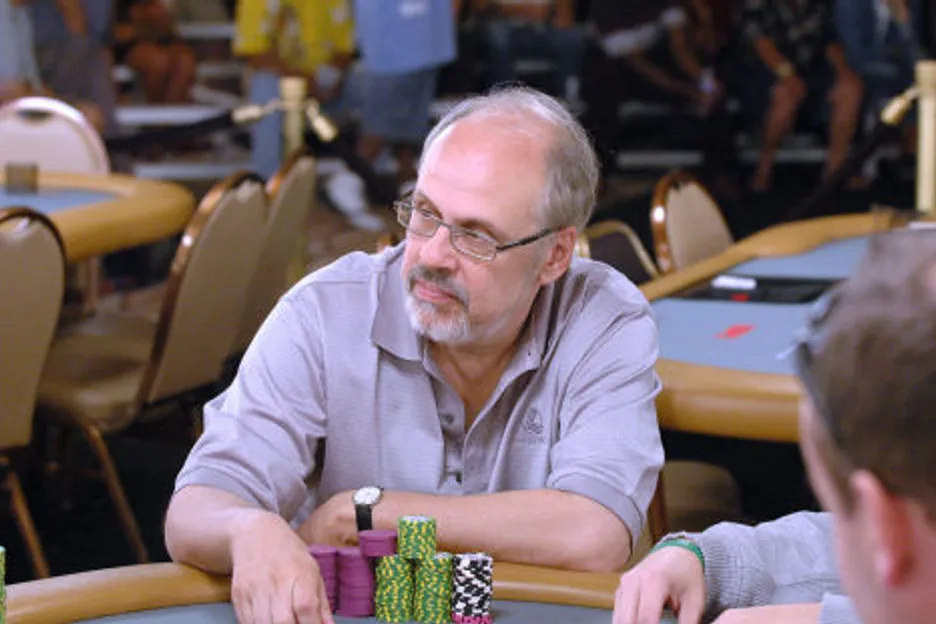


In 1983, I moved from Virginia to northern California. Thanks to a newspaper supplement, I learned that there was poker being played in an actual cardroom, 20 minutes from my house. At the time, the games being played in that cardroom were five-card draw high and (mostly) five-card A-5 lowball. But it was real poker, for real money. 24/7.
It wasn't long before I was hooked.
I didn't have the time or money to play a lot, but I started reading everything I could get my hands on. Recall that this was two decades before Moneymaker sealed Sammy Farha's fate with that unneeded five on the river for a full house.
The only poker you saw in the media was cowboys playing five-card draw in Westerns. There were a couple of books available, but even as a novice, I could tell they were anecdotal and full of myths and superstition.
Yes, Doyle had published Super/System 4-5 years earlier, but at $50, it wasn't anywhere near my budget.
Hold'em Poker, the book
Then a friend told me about David Sklansky. He said that Sklansky's book, Hold'em Poker, was the bible for limit hold'em players.
I'd been reading about hold'em in the twice-monthly issues of Card Player magazine that I could pick up at Garden City, San Jose. I'd seen Sklansky's name and soft-focused professorial goatee in the Card Player pages – maybe this guy was legit.
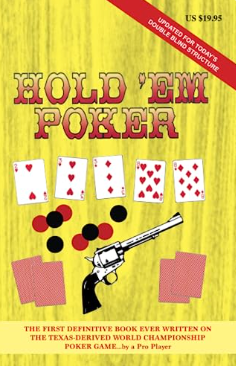
I got my hands on a copy of Hold'em Poker for a more reasonable $9.95, I think. Immediately I knew that Sklansky was the Real Deal. The information was clear, concise, and rigorously correct.
I was a novice poker player, but I also have two engineering degrees – I could tell that Sklansky was trading in facts, not myth. His book included starting hand charts for limit hold'em – what a godsend. This was the type of structure and framework that I'd seen in every academic pursuit I'd done, and now it was being applied to a gambling game.
Miraculous. And it had a pistol on the front cover – what else could you want?
I'll never forget reading a sentence that said, in essence, "If you put in the last raise preflop with AJ, obviously you prefer that the flop comes jack-high rather than ace-high."
Obviously? It wasn't obvious to me. A pair of aces is better than a pair of jacks, right? David Sklansky got me thinking about poker in a completely different way.
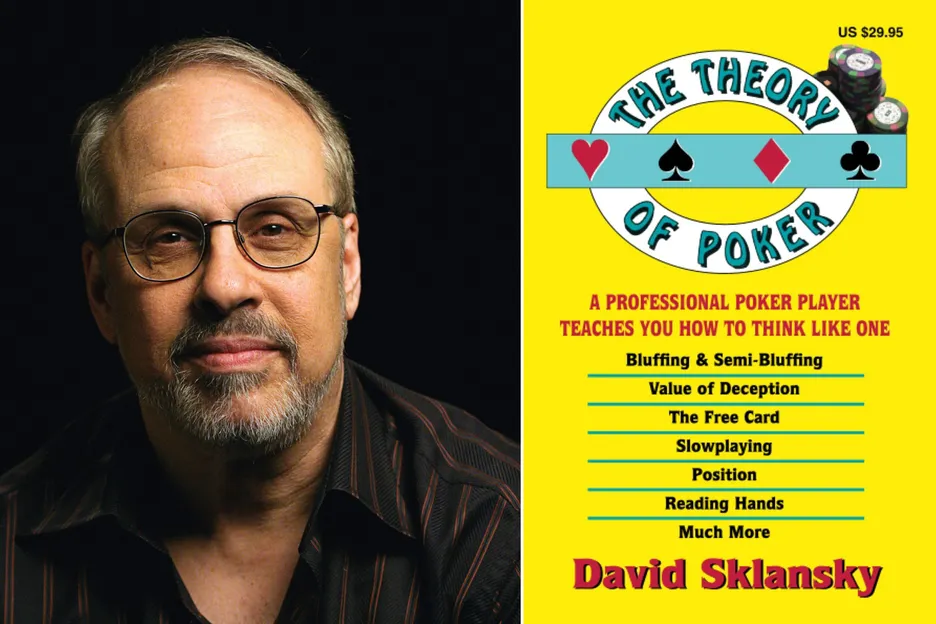





Theory of Poker
As important as the Hold'em Poker book was, it was dwarfed by Sklansky's magnum opus, The Theory of Poker – 'ToP' in the poker community.
In that book, Sklansky coined the term 'semi-bluff,' and generally laid the theoretical groundwork for many fundamentals we take for granted today. For me, and many like me, this book revealed the underlying truths of the game.
Sklansky once famously said in an interview, "If there's something I know, that the other guy doesn't know, or won't learn, then I take his money." As I pored over 'ToP,' I realized that I was learning things that most of my opponents didn't know or couldn't implement. So I could take their money.
In the early-mid 80's, when I was reading The Theory of Poker, poker players were mostly playing by the seat of their pants. Those of us who studied David Sklansky's books and ultimately ended up in the 2+2 forums, which Sklansky and Mason Malmuth founded, had a massive informational advantage over the vast majority of the field.
The light and dark of David Sklansky
David Sklansky was tied into the very top of the poker world. Doyle Brunson hired him to write a chapter in Super/System. Legendary casino impresario Bob Stupak hired him as an advisor.
As I mentioned above, Sklansky founded the 2+2 poker forums with Mason Malmuth. In the pre-Twitter era, 2+2 was the center of the poker universe – everything meaningful passed across the pages of 2+2, if it hadn't originated there.
For decades, players have talked about 'Sklansky dollars' – a term he may have coined. It's the expected profit that you make from a +EV gamble. Suppose you and an opponent each go all-in for $100 preflop. You have KK and your opponent has QQ. Before the board runs out, you have won 62 Sklansky$, your 'rightful' profit on the hand.
In short, David Sklansky was one of a handful of people who created modern poker as we know it. I just happened to be learning poker when he was at the height of his creativity, so I had a front-row seat as he revealed hitherto unknown secrets about the game.
Unfortunately, there was a darker side to David Sklansky. Most notably, he was involved with a young woman named Brandi Hawbaker, and had some kind of Svengali-like power over her. Her story ends tragically – you can hear about it on this Solve For Why podcast.
Sklansky's relationship with her was ugly, egregious. Ever since I listened to the Solve For Why podcast, I haven't been able to think about David Sklansky the same way. This is difficult, because it's probable that without Sklansky, the entire arc of my interest and, ultimately, career in poker might never have happened.
Literally as I was writing this piece, I got an email from my friend and legendary poker coach and writer, Tommy Angelo. The last line of the email was, "So long, David, and thank you for my poker career!"
I hear that, Tommy, and it rings true. Whatever darkness David Sklansky had in his life, I hope some reflection, forgiveness, and grace found its way in. Like Tommy, I probably owe my poker career to him, so I'll leave it that and use Tommy's eloquent parting words:
So long, David, and thank you for my poker career.


