


Lena Evans is a two-time World Series of Poker Circuit champion, philanthropist, and global community builder. She is the founder of Poker League of Nations, dedicated to empowering women through the game, and the CEO of Helix Poker and Suited Poker Gear.
I recently returned from three extraordinary weeks in India – a journey I hoped would deepen the heart of my upcoming book, The Mindful Competitor. It did more than that.
From meditating beneath the Bodhi Tree at the Mahabodhi Temple, to walking through sites shaped by centuries of devotion, to spending time in places where spiritual discipline and daily life still intertwine, India offered living lessons in clarity, compassion, resilience, and interbeing. Those lessons followed me everywhere – including, unexpectedly, to the poker tables of Goa.
Last month, I traveled through Delhi, Mumbai, and Goa, tracing the arc of a game I have long loved, while confronting a difficult question: What does poker look like in India now, when nearly every digital table has been erased?
At Deltin Royale in Goa, I found one answer.
Under the hum of ceiling fans and the scent of river air drifting through the room, I sat at a live cash table where chips clicked softly, and every player’s posture told a story. No tournaments were running. No satellites, no festival buzz, no promotional banners. Yet the game persisted – alive, human, visceral.
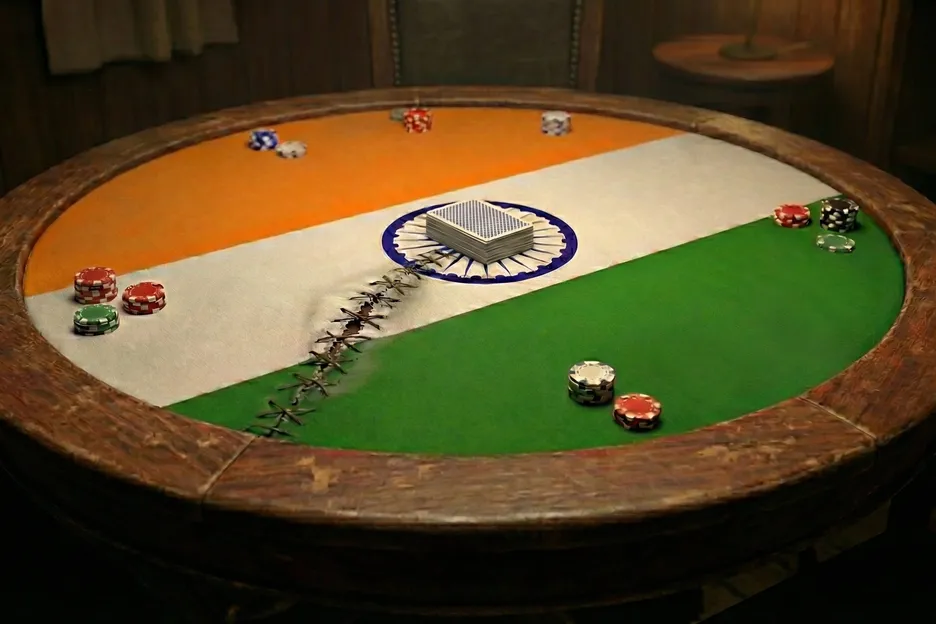
Poker in India did not die. It lost its internet wings.
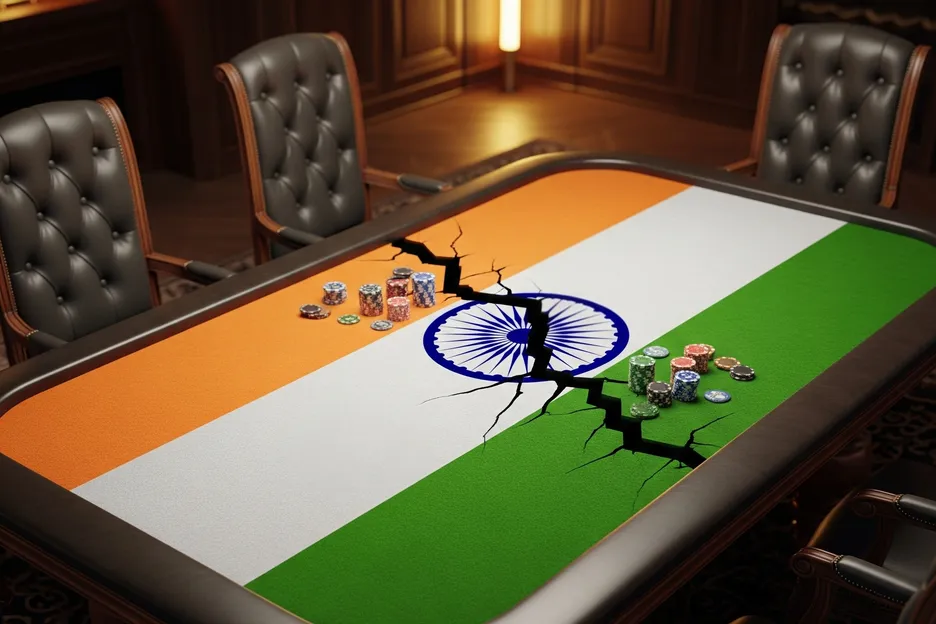
The 2025 online gaming ban: A system shock
In August 2025, the Indian Parliament enacted the Promotion and Regulation of Online Gaming Act, banning all real-money online games nationwide. Poker, rummy, fantasy sports – every digital real-money platform was shut down overnight.
The consequences were immediate and sweeping:
- Roughly 140 million players were locked out of legal online play
- A sector generating an estimated ₹20,000 crore annually in GST came to a halt
- Tens of thousands of jobs vanished across tech, customer support, media, and operations
- Domestic platforms lost 90–98% of traffic within weeks
- Player balances were frozen as operators shuttered or exited
While I was visiting Delhi, I spent the day with my friend Khurshid Ahmad, co-founder of PokerProNews.com. He explained that the ban did not merely interrupt activity – it fractured an ecosystem that had taken more than a decade to build. Players, operators, and creators alike were left in regulatory limbo, waiting for clarity that has yet to arrive.






Live poker survives - but the ecosystem is broken
Live poker remains legal in limited jurisdictions, including Goa. At Deltin Royale, I saw evidence of resilience: round-the-clock cash games, professional dealers, international tourists, and a sense of community among regulars who refused to let the game disappear.
But I also saw what was missing.
There were no tournaments. No structured competitive ladder. No clear pathway for player development. Foot traffic was uneven, and growth felt constrained — not by lack of interest, but by lack of infrastructure.
Khurshid was direct in his assessment: live poker can survive, but it cannot replace the reach, safety, or structure that regulated online play once provided. A live-only model, he argued, limits accessibility and stalls long-term growth. Without a hybrid system, the ecosystem remains incomplete.

A tale of two mind sports
While in Goa, I also attended the FIDE World Cup chess finals, where I had the opportunity to speak about my book, The Poker Powered Brain. FIDE provided a striking contrast in how India treats its mind sports.
Chess is celebrated as a symbol of intellect, discipline, and national pride. It receives institutional backing, media attention, and state recognition. Poker – despite requiring comparable levels of strategic thinking, emotional regulation, and probabilistic reasoning — has been pushed to the margins.
The difference is not cognitive merit. It is narrative.
Mind sports flourish when regulators understand them. Poker, for now, waits outside that circle of understanding – classified by outdated assumptions rather than modern analysis
What the live tables in Goa made clear is this: poker is not a technological novelty. It is a human discipline.
It lives in decision-making under uncertainty, emotional control, pattern recognition, and risk calibration. It tests patience, self-awareness, and resilience – qualities increasingly recognized as essential far beyond the felt.
Several players told me that while the loss of online volume hurt, it also revealed something else: a renewed respect for live skill, integrity, and presence. The game slowed down. It became more personal. More demanding.
But reverence alone cannot sustain an ecosystem.
The shadow economy problem
With regulated platforms gone, players have not stopped playing. Instead, many have migrated to offshore sites, encrypted messaging apps, and unlicensed private games.
This shift introduces serious risks:
- No consumer protection
- No guaranteed withdrawals
- No responsible gaming safeguards
- No transparency or taxation
- Increased exposure to fraud and exploitation
Khurshid put it plainly: “When you criminalize local play, you don’t end the game, you push it underground. In doing so, regulators lose oversight, players lose protection, and the state loses revenue.”
Prohibition, in this case, has not reduced risk. It has redistributed it, unevenly and dangerously.

What a viable revival could look like
Poker in India can survive – and potentially flourish – but only through deliberate, informed action:
- Invest in regulated live poker
Clear licensing, transparent operations, and structured tournament calendars tied to tourism. - Recognize poker as a game of skill
This aligns with global legal precedent and academic consensus. - Implement robust responsible gaming frameworks
Regulation protects players; prohibition abandons them. - Reframe the cultural narrative
Poker develops decision-making, emotional discipline, and analytical thinking—skills relevant to modern life and leadership.
Khurshid’s position is pragmatic rather than ideological: “If safety is the goal, structure is the solution. Regulation, licensing, taxation, and oversight are more effective than censorship. You cannot govern what you refuse to understand.”
Reckoning or rebirth
Yes, the ban inflicted real damage. Players, operators, creators, and support staff all felt the shock.
But sitting at that live table in Goa, watching players lean forward with focus and intention, I saw something unmistakable: life. Strategy. Community. Hope.
Poker in India is not dead. It is wounded.
Whether it heals in the open – or survives in the shadows – depends on what comes next.
As Khurshid said to me on my final night in India: “Poker’s future will not be decided by whether people want to play. That much is already clear.
"It will be decided by whether the game is allowed to exist in the light.”
Lena Evans' first book, 'The Poker Powered Brain,' debuted as a #1 Amazon New Release in psychology and creativity. Her forthcoming book, 'The Mindful Competitor: Where the Game Meets Awakening,' explores how poker becomes a living practice of awareness, compassion, and resilience, both at the table and beyond.


