


Maria Konnikova and James Hartigan have joined forces to produce a new podcast centered on decision making, both on the felt and off.
The Tough Call follows a seasonal structure, with the first of ten episodes set to drop on October 20, and features discussions between Konnikova, Hartigan, and invited guests from a wide array of professional disciplines and pursuits – all with an eye towards learning about the decision-making processes in their lives and how they can improve on them.
The PokerStars Ambassadors both have experience in the podcasting realm – Hartigan with Poker in the Ears and Konnikova with Risky Business – and are more than capable behind the microphone.
PokerOrg spoke with Konnikova to learn more about the new venture.
Making The Tough Call
Can you tell us a little bit about the podcast and what you and James will be exploring?
It's called The Tough Call, referring to tough decisions, and it's meant to span the gamut of decision makers.
It's poker-adjacent in the sense that good decision making is a huge part of the game, but it's not a poker podcast about hands or decisions at the table. The first season is meant to have ten episodes and, out of those, there's only one poker player guest. Otherwise, we have guests who are writers, film producers, businesspeople, psychologists in the mental coaching space, relationship coaches.
The idea is kind of twofold: we want to explore decision making, but we also want to make it accessible to people so they can figure out how to apply the ideas to their own lives.
We're also hoping that with future seasons we can have greater audience participation. I don't mean like having audience members on the show, but more like we want people to submit tough calls from their lives or decisions they've struggled with and then work episodes around that – so that the podcast becomes something that can really help people.
You've had experience in the podcasting realm before with Risky Business. How does The Tough Call differ from that?
It's quite different.
Risky Business is still alive, Nate [Silver] and I own the IP, we just haven't quite figured out what we want to do with it yet.
They're obviously connected in a way because they're both about decision making, but we hardly ever had guests on Risky Business, it was just the two of us talking. In that sense the format is quite different and I think the main thrust of The Tough Call will be more focused on day-to-day decisions as opposed to, you know, how we should think about prediction markets.
What has that shift been like?
I really like both formats. I love the back and forth you can have with co-hosts who are both subject matter experts and the camaraderie that I had with Nate. I haven't known James nearly as long, but it's been really fun getting to know him and discovering how to work together. I've really enjoyed it.
It's also great adding the guest dynamic in the sense that the two co-hosts and a guest format allows for a more inclusive conversation. That's been a fun shift.









Koon fits the mold
One of your episodes features Jason Koon – what interested you most about him?
Jason has such a fascinating personal history that he brings to the poker table. The way that he's been able to work up from nothing is a true poker success story – going from basically being homeless to one of the best of the best.
We were also looking for someone who can bring a bit of an outside perspective and can talk about decision making in a more broad sense. I think that a lot of great poker players are really only in the poker world and they don't necessarily have the metacognitive awareness to take those concepts outside of the game. And that's not a ding on poker players.
If you want to make a podcast on hand breakdowns and analysis, they'd be amazing. If you want them to talk about some deeper issues like psychology they might not necessarily be the best.
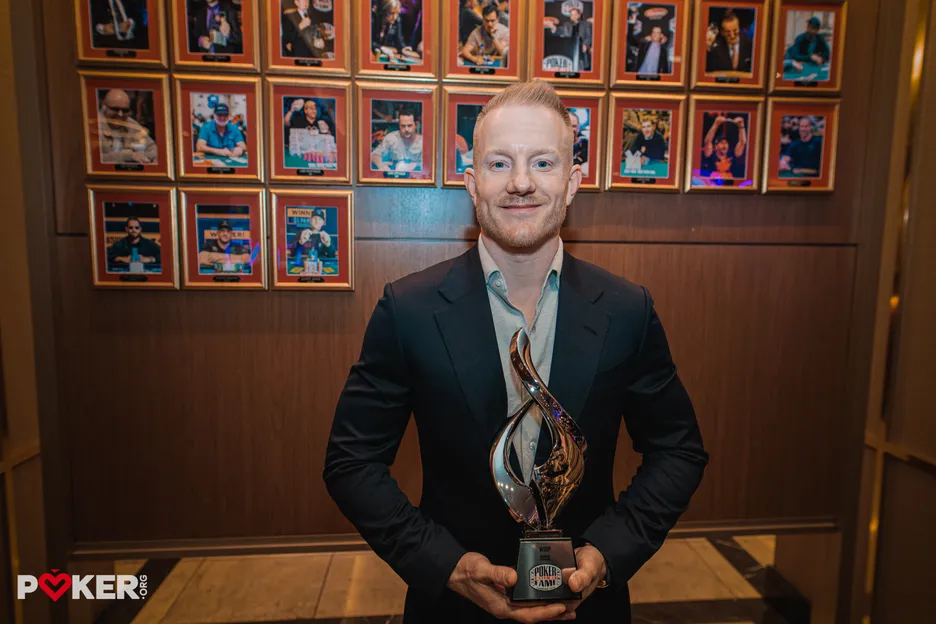
I think Jason is someone who can do both.
Were there any other guests or conversations that stood out to you?
They've all been great. I'm a little bit biased because one of my close friends, David Epstein, agreed to be on the show and that was something I was really excited about. He's a best-selling author who just came out with a book called Inside the Box which is about creative constraints.
I've known David for a really long time and I just always love talking to him.
Konnikova: Keep using your brain
Are there decisions you've made, either in your career or personal life, that have influenced how you think about decision making?
Oh, so many. Where to start? I've narrowly avoided some major mistakes – not through any prowess on my side, but because I'm very good at surrounding myself with people I trust and who have my best interests in mind.
Here's one example, something that would have been absolutely catastrophic. My first book, Mastermind, I wrote when I was in graduate school getting my PhD in psychology. I took a semester off in my fourth year to finish it and when it came out it became a New York Times bestseller and catapulted my writing career to the point where I could do that full time. And so I decided I didn't want to go back to grad school, that I didn't want to finish my PhD because I was never going to be in academia.
My Mom was like, 'Are you kidding me right now? You're being such an idiot.' I argued with her for months, but at the end of the day I listened to her even though I thought she was wrong – but she was so right and I'm so glad that I finished my degree. I think that's really changed the trajectory of my career in a positive way and I think it would have been a colossal error in judgement.
If you could give anyone a single piece of advice on decision making, what would it be?
I think the number one thing is to keep using your brain. That's one of the most important things in the modern world: don't offload your decision-making process. More and more people are defaulting to using AI for different nodes of their decision-making process and that's horrific. We're losing the ability to think critically, don't walk away from the hard stuff.