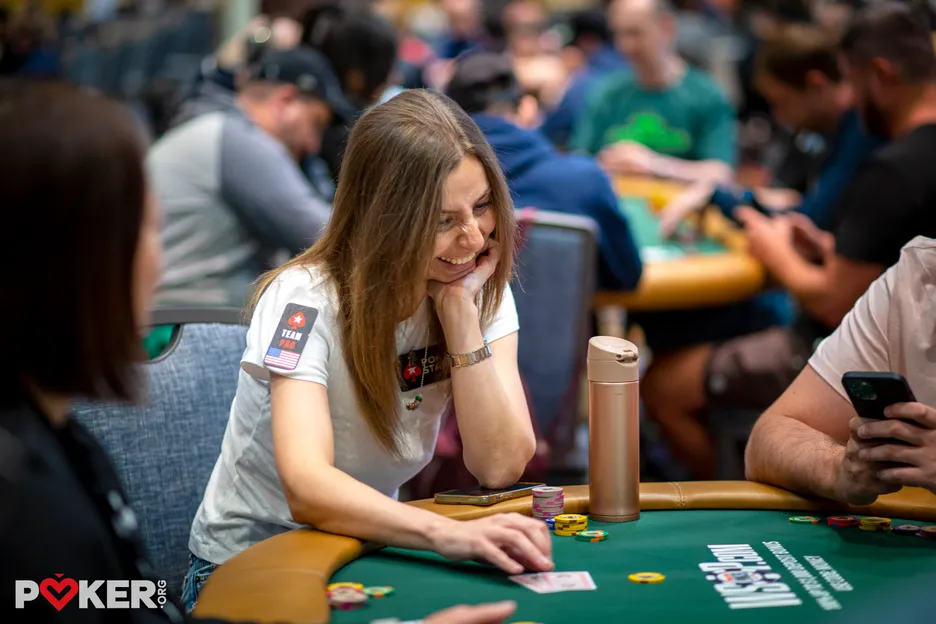


As the calendar year comes to an end, it’s natural for our minds to turn to the future. Resolutions, goals, life changes – from personal fitness to careers, relationships, and good or bad habits, if there’s a time for reflection, it’s now.
For Maria Konnikova — PokerStars ambassador, best-selling author, podcast host, and journalist — 2025 saw her pick up tournament wins at the European Poker Tour Monte Carlo ($17K) and the North American Poker Tour Las Vegas ($66K) in addition to multiple cashes at the summer’s World Series of Poker, the World Poker Tour, the Wynn Signature Series, and more.
And all this after winning her first WSOP bracelet in an online event in late 2024.
Her most recent cashes have pushed Konnikova’s lifetime live tournament earnings over the $1 million mark, but as she is so eloquent at pointing out, the benefits from an understanding of poker extend far beyond the financial.
So as the clock ticks towards a brand new year, who better to ask, 'What can poker teach us in 2026?'
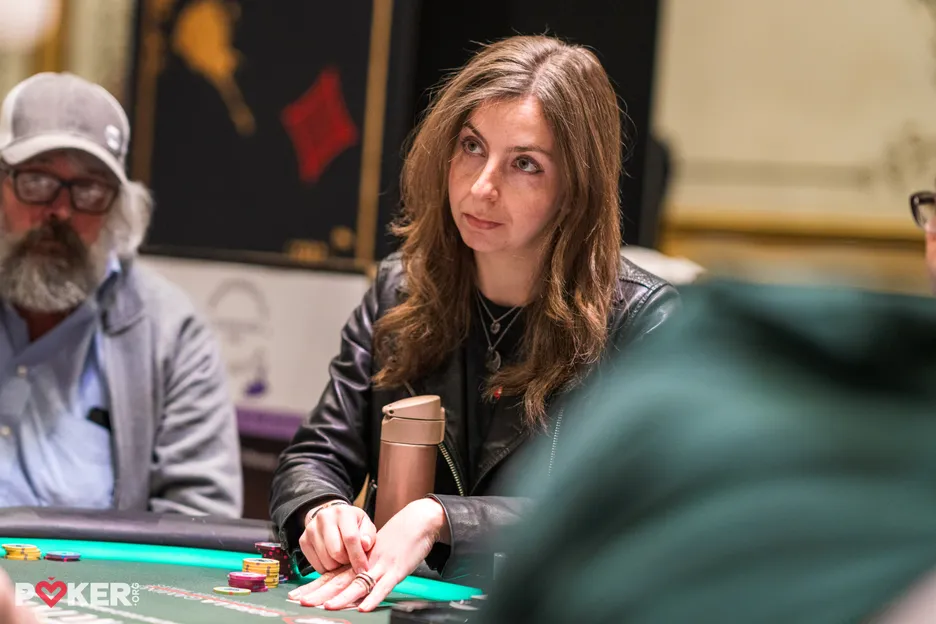
Improve your daily decisions
“I think poker skills help almost any situation in daily life,” says Konnikova, in conversation with PokerOrg’s Matt Hansen. "They vastly improve your decision-making abilities, your abilities to think through any situation, and your ability to figure out what the risk-reward is."

“What got me into poker was game theory, but poker really brings that to life in a way that helps you when you're facing any choice as simple as ‘What are we having for dinner tonight?’ and as complicated as ‘Is this a good job for me? Should I take this risk? Should I quit this job? Do I think I can negotiate for a higher salary here?’
“Poker gives you this really good rubric for how to think through that, how to do that payoff matrix, how to evaluate the risks associated with it, how to correctly read probabilities, and how to actually incorporate probabilistic thinking into those decisions.”








Practice better emotional control
“Something that I think is underappreciated is how much poker helps with emotional control,” Konnikova continues. “It helps generally in life, not just with making decisions that are less emotional, but if you're a successful poker player, you've learned to identify the things in you that might make you tilt or that might be pressure points. You also learn to recognize tilt in yourself, because you can't prevent it.
“It's really important to be able to see those signs and be like, ‘Oh, you know what? I might be on tilt – maybe I'm not thinking that well right now, maybe I just need to take a step back and just take a deep breath.' I think that that is just such a crucial life lesson that I use all the time outside of poker."
“Poker also helps with interpersonal skills, because as you are learning to identify those signs in yourself, you're also learning to read them in other people. And so you become much more attuned to that and are able to respond to it. Situations that might have escalated at another point in your life aren't going to escalate now.”
Think long-term
As the song says, you’ve got to know when to hold ’em and know when to fold ‘em. Good poker is not just about one hand or one session, and as Konnikova points out, that lesson is one that translates to many areas of life, including politics.
“Many decisions have long-term consequences,” shares Konnikova. ”In poker you're not trying to win every hand; you're trying to avoid risk of ruin and to stay in the game for the long term, which involves long-term thinking. If you are somebody who just wants to maximize short-term gain, you're probably gonna go broke and you're also going to break the ecosystem."
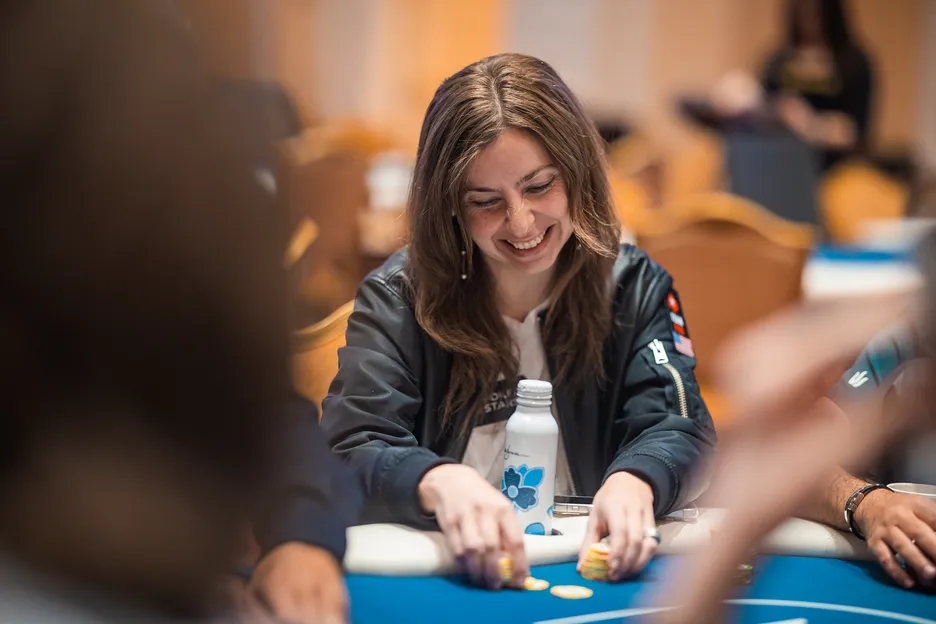
“I hate quoting him because he was such a piece of sh*t, but let me quote Amarillo Slim because it's a really good quote: ‘You can shear a sheep a thousand times, but you can only skin him once.’
“And I think too many people, especially in politics these days, are skinning and not realizing that it's actually not a zero-sum game. We're in a positive-sum environment, which is true of poker as well. And people who think of poker as always zero-sum are the people who don't succeed."
“We have to create an ecosystem where there's a long term, where there's a future to the game. And that is not something that I feel like a lot of people are considering right now who are making big decisions. And I'm talking about everything from petty vendettas to things like climate change; it's just such short-sighted thinking.
“I think that poker would help people realize that that's not how you should be thinking through any decision. Sometimes you need to know how to fold, you need to know how to walk away; losing a pot is okay, right? You don't have to fight for every single one.
“It's not personal, it doesn't mean you're a bad poker player. It doesn't mean that someone's won. It just means that you're playing a smarter game.”
Stay flexible
At the risk of stretching the metaphor to breaking point, there’s more than one way to skin a sheep. As Konnikova points out, becoming locked into one way of thinking makes you predictable and potentially complacent.
“The game's gonna keep evolving, it always has, no game is static. And I think that people who recognize that are the people who are successful. Even the most successful solver players understand what you need to be. And that's tough.
“People who think that poker is solved just don't understand the game. It's not. Solvers only ever approximate spots. Multi-way solvers are even worse than heads-up solvers. It's like with any algorithm, output is only as good as your inputs, and so many people don't understand how to use solvers correctly. And even if you do, it's not going to help you maximize your edge at a poker table.
"I study with solvers, obviously, because I want to remain competitive in the game, and it helps me with a baseline strategy, but then what gives me my edge is my psychology training, not the fact that I've studied this with a solver."
“There are players who play like solvers, and I love having them at my table, to be perfectly honest, because I'm sure they're going to be balanced in this spot. Sometimes you can see them randomizing, and I'm like, ‘I see you looking at the clock. Do you understand that if I look a few times with you, I'm going to understand how you're randomizing, depending on your action? Unless you randomize your randomization, you're just f*cking yourself over because you're trying to play these mind games.’
“Poker is always going to be a game of people, a game of psychology. Yes, there's math in it, but it's always a mixture of the two, and the people who are going to survive and thrive are the people who understand how to marry them and how to actually use both and not be too locked in to one specific way of doing things.”
You can hear more from Konnikova at her website, her podcast and her Substack, and follow her on X.
The New Year Series is currently running at PokerStars until January 20, with $18M in guaranteed prizepools.
Additional image courtesy of the WPT.


