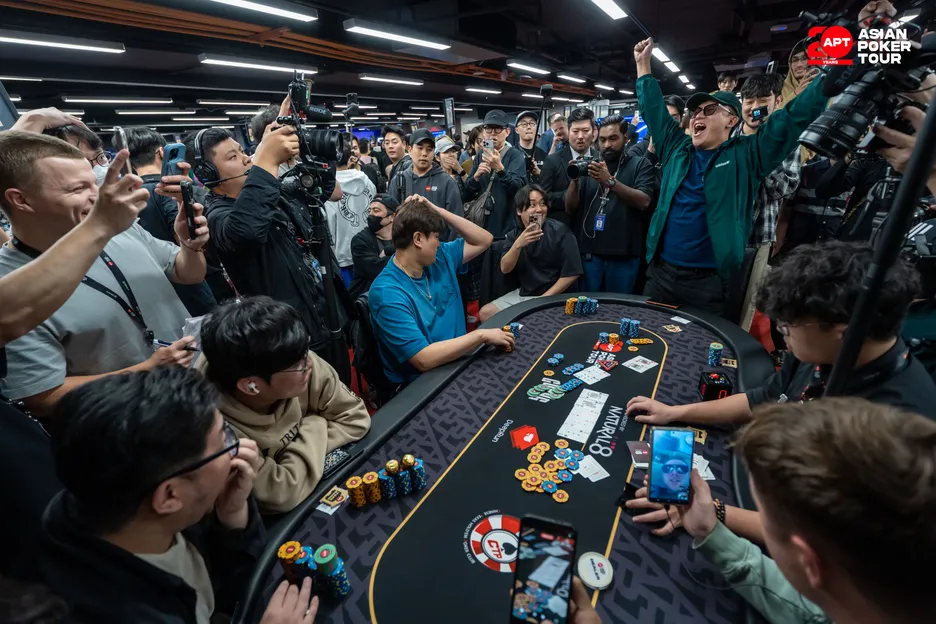


If you want to bag a big slice of the $5M guaranteed at the APT Championship (APTC) $10K Main Event next month, November 23-27, deep pockets won’t help you.
It’s a freezeout, which means you only get one shot: no re-buys, no re-entries.
It’s the same rule for everyone, established pros and amateurs alike, so being bankrolled to fire multiple bullets is no advantage. We’ve all seen tournaments with pros playing a hyper-aggressive strategy in the hopes of building up a stack they can use to intimidate the ‘scared money’ — and simply heading back to the registration desk if that attempt fails.
That won’t work next month in Taipei. Just like the big dance at the WSOP, the ‘Asian Main Event’ rewards players who know how to keep growing their stacks, how to apply pressure, when to make a heroic call or an inspired fold. Not just those who can afford a second or third chance.
We can’t teach you how to master tournament poker in 5 minutes, but we can provide some key advice on how to adjust to the specifics of the freezeout format.
So if you want to follow in the footsteps of last year’s winner, Nishant Sharma, who banked over a million dollars, read on.

One life to live
It’s the obvious place to start: no re-entries means everyone is on their ‘last life’ from the get-go.
What does that mean to the players at your table? Are they experienced pros who have been grinding the whole series, for whom this might be ‘just another day at the office’? Or are they more recreational players for whom the event may be a once-in-a-lifetime treat?
We all like to think we can make the best decisions in the heat of the moment, but if the tourney represents a rare shot-taking opportunity or even the culmination of a life-long dream, our judgment may be clouded by the need to protect ourselves. Don’t be scared money, but try to identify who is. And put them to the test.
With their tournament lives always at stake, you’ll often find players less willing to gamble. Pro player and coach Alex Fitzgerald says, regarding freezeout tournaments such as the APTC Main Event:
“Most of your opponents cannot triple barrel enough. They cannot overbet often enough. They cannot raise the turn enough. They cannot raise the river enough. They cannot donk lead huge, check-raise huge, or make many other aggressive plays with enough bluffs in their range.”

The other side of that coin is that when you run into stiff opposition from one of these players, they’re more likely to be strong.
“If you have a bluff catcher and you do not have an exact read on your opponent, you often just have to let the hand go.”
Fitzgerald also stresses the importance of not being one of these players hoping to limp to the money without ever being in jeopardy. If you constantly avoid risk, you’re not giving yourself the best chance to win.
“You need to get outside of your tight-aggressive shell. If you felt like you were not playing your normal game because you were 'at the show' then what you were likely doing was nursing your chips.
“Not only is that a recipe for not making money, it is also a recipe for exhausting yourself before you ever make a real run.
“Real champions go down in a blaze of glory at the beginning of the tournament, right before the bubble, and right before the final table. You need to embrace more aggression.”
Being able to divorce your decision-making from the occasion means you’re more likely to make better decisions.









Use the gearbox
Every poker tournament has phases. While a freezeout like the APT Championship Main Event doesn’t have a rebuy period, it still has early, middle and late game considerations to bear in mind and, along with stack sizes and other table dynamics, you’ll need to pay attention and switch gears when required.
Is your table filled with nits? Time to ramp up the pressure. Has a new, aggressive player joined who has altered the table dynamics? Time to pause, consider, and adjust.
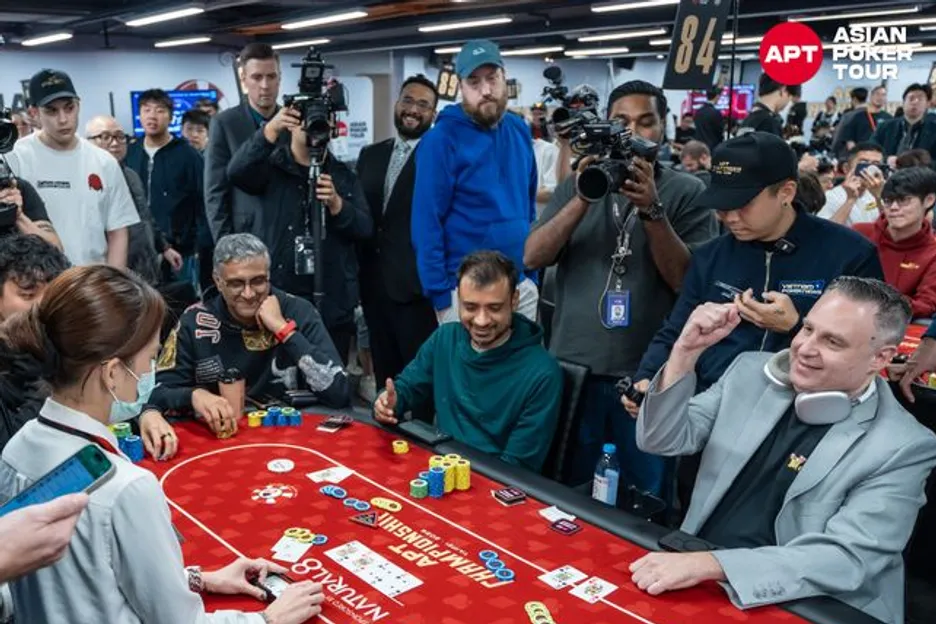
It’s a five-day tournament, with the money bubble likely to burst on Day 3. As it approaches, the short stacks will tighten up and the big ones will loosen. Stay focused and aware of shifts in mood and momentum.
Back to Fitzgerald: “If they [your opponents] are doing a lot of folding, you can shove a lot of suited aces, suited kings, suited queens, suited gappers, suited connectors, and similar hands.
“But you will see many people pump the brakes on the bubble because they are afraid of going out in a blaze of glory.
“You are not playing well on the bubble until you have busted yourself while all the people who suck at poker chortle at you because they have no idea what they are actually doing.”
Stay patient
If you join in level one of the tournament you’ll have a stack of 50K and blinds of 100/200. That’s 250bb to play with, with 75-minute levels — and they increase to 90 minutes from Day 3.
As a result, there’s little need to force anything and ‘make things happen’ early on if you’re not in good shape in a hand. Part of switching gears is understanding when it’s fine to be patient and fold the hands you know you’re supposed to.
Fitzgerald also warns not to fall victim to ‘fancy play’ syndrome.
“When I felt like I was not doing enough in big tournaments, that was almost always when I was about to bust.
“If I felt like I was not asserting myself, not paying enough attention, or that I needed to execute some big play, it was usually just a need for validation. And that need for validation was going to screw me at the table.
“Do not try to create the moment. Let the moment come to you.”
Your poker gearbox has different speeds for a reason. Sometimes you need to slow down, and sometimes you need to hit the gas.
It can be a long journey, but don’t reach for the autopilot.
Take it one hand at a time
Like many clichés, this one has a grain of truth to it: you can only play one hand, and one table, at a time.
You don’t need to worry about who the chip leader is, or what’s happening over at the next table; just focus on what you can control. And that includes your emotional reactions.
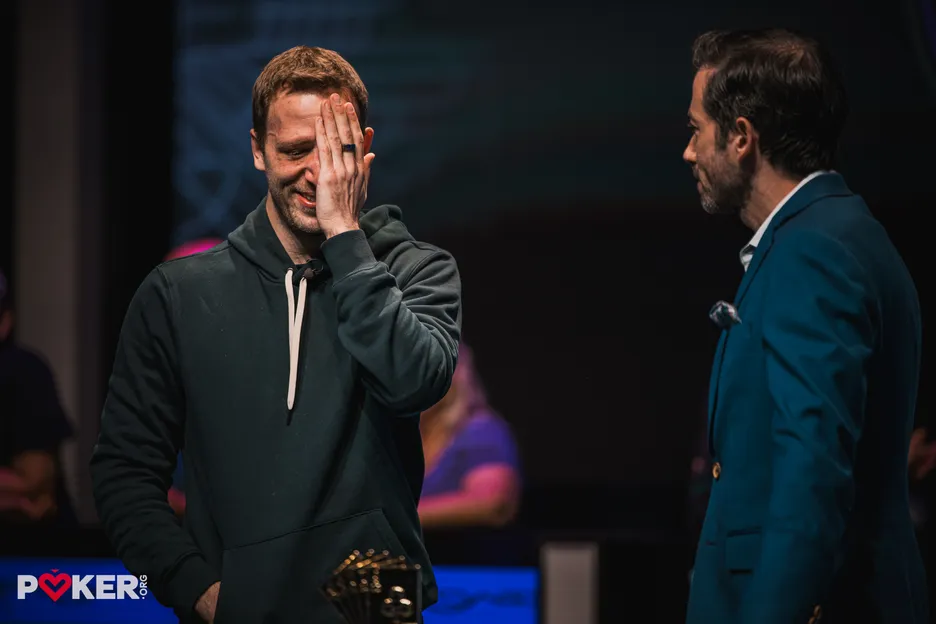
Everyone has them. In poker we sometimes get unlucky, or make mistakes. How we react to those moments can be the difference between tilting off the rest of your chips or getting yourself back to an even keel.
And let’s not forget one other thing you can control which can have a big effect on your chance of playing well: staying hydrated and fed, and getting good sleep, will help you stay present and capable of making the best decisions you can.
But the most important thing? Enjoy the moment.
The APT Championship Main Event is unlike anything else in the poker world. Players from every corner of the globe; a huge, dedicated poker space; a bustling, exotic city just outside and millions of dollars to be won inside.
If that doesn’t sound like an incredible way to spend a few days in November, then do you even poker, bro? If it does, I’m hoping to see you there.
Stick with PokerOrg for more advice on poker strategy, from advanced pro tips to our new Beginner Hub.
The 2026 Asian Poker Tour Championship is running at Red Space in Taipei from November 13-29, with the Main Event taking place November 23-27.
Visit the Asian Poker Tour now for more info or to register.
Additional images courtesy of the APT.