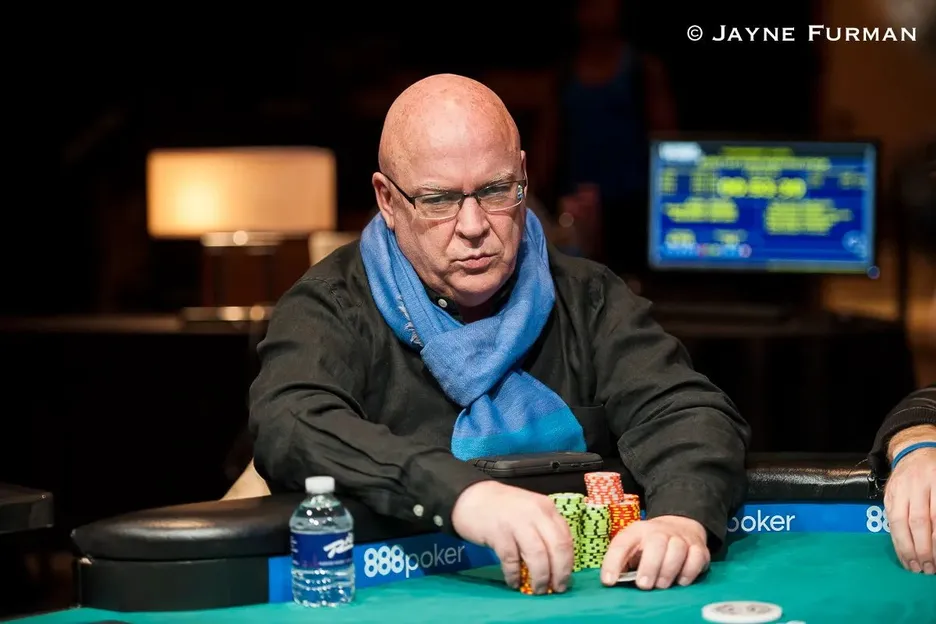


When people ask me about the 2025 World Series of Poker Main Event, they usually want to talk about the hand that ended it.
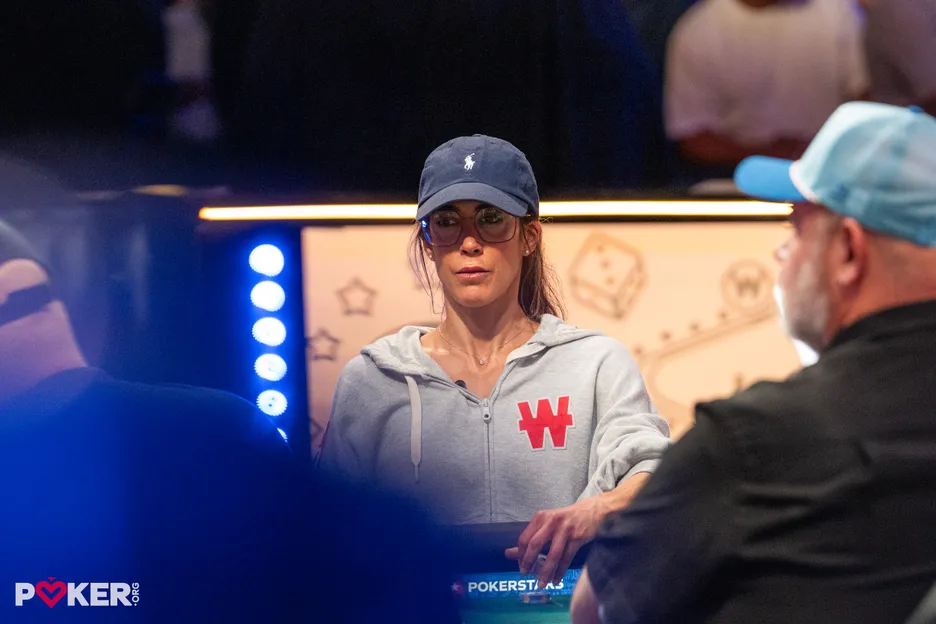
I busted with pocket kings, the second-best starting hand in no-limit hold’em. Against Catalan ‘crusher’ Leo Margets’ ace-queen, I was a big favorite. I lost. People were kind. They commiserated. ‘Bad beat.’ ‘Brutal spot.’ ‘Nothing you can do.’
Only I knew the dirty secret: I was not unlucky. I had played badly when it mattered most — not on that hand, but for most of the previous eight hours.
The paper cuts of bad decisions matter in poker. They matter in markets. They matter in business.
— Introduction to Polymath Poker, Paul Gibbons
Comparisons between business and poker are nothing new.
Both involve weighing risk against reward, understanding human behavior, and making decisions with incomplete information.
But while poker and business have similarities, they operate in different worlds. To speak with authenticity on both requires experience in both.
Which brings us to Paul Gibbons and his new book Polymath Poker: What High Stakes Poker Teaches About High-Stakes AI Strategy.
When it comes to business, Gibbons has decades of experience in banking, trading and consultancy, with a resume that includes spells with Deloitte, IBM, Morgan Stanley, PwC and his own firms.
And when it comes to poker, he’s had the bug for over 25 years.
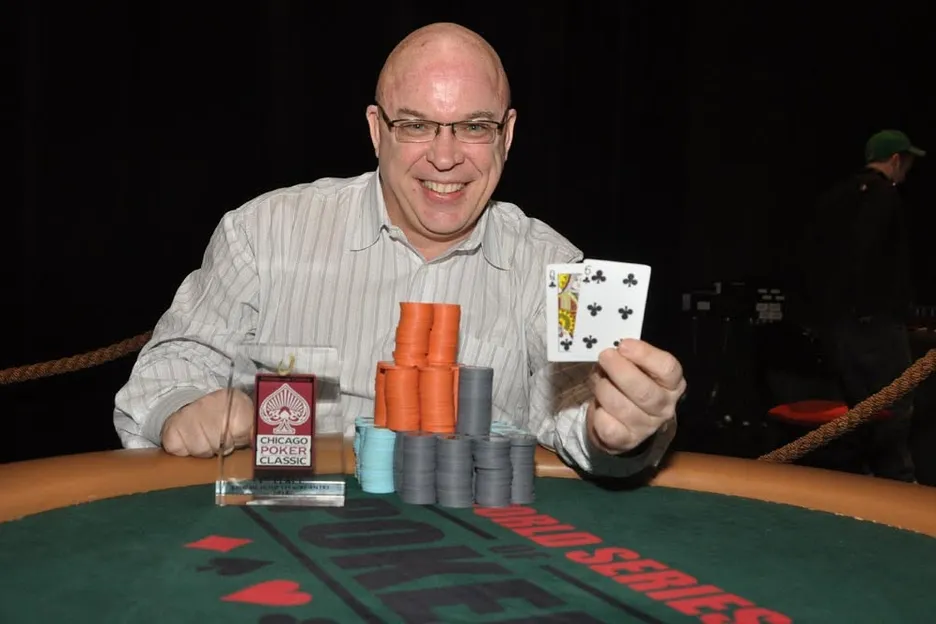
His other resume — as a poker player — includes wins and deep runs everywhere from the Chicago Poker Classic to the Wynn, Aria and right here at the WSOP, where his deep run in the 2025 Main Event gave him his best ever cash of $240K.
We meet to discuss his new book in the ballroom of Paris Las Vegas, against the backdrop of the World Series of Poker — his home from home every summer for the past 17 years.
The vocabulary of risk
“The world that poker players live in is high-stakes decision-making under uncertainty,” says Gibbons, “which is just what business people do, but they use funny words for it.”
Of course, poker has its own ‘funny words’ — you can find a useful guide here.
“There are a lot of things that we talk about in poker, with the vocabulary we have for risk, that I think are interesting for business people.
“For example, we have a term in poker: ‘equity realisation’. A lot of business people will talk about equity, but equity realisation is how much of that you're able to recover for yourself.”
As one might expect in 2026, one of the chief topics of Gibbons’ book is the game-changing advance of AI-adoption in the business world. And, Gibbons argues, those leaping to force AI into every step in their processes aren’t looking at the bigger picture.
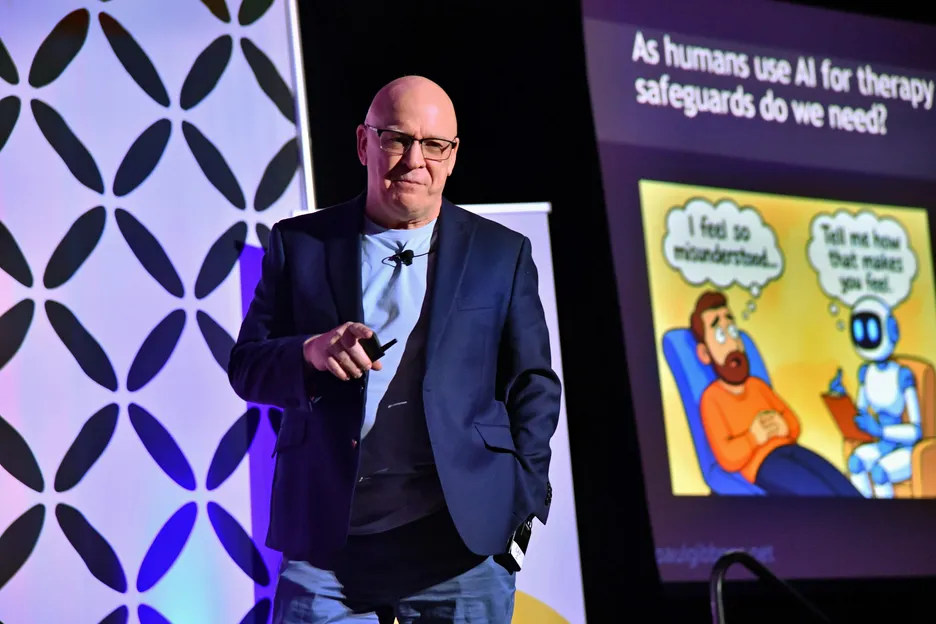
“Business people see an amazing, magical looking technology like AI, but don't think enough about how much of it they’re going to be able to put to work in their business.
“Because when this super smart thing hits a human system where, for example, the marketing director doesn't trust the finance director, the technology guys don't want it in the building, and the legal department says we're going to take nine months to approve it, there's a clash.
“That is why businesses aren't making any money out of AI. You've got guys who are like, ‘Wow, it's like having 10 people working for me’, and then when you put it inside their big business, they don't make any progress.”








The dangers of ‘resulting’
The other main thrust of Gibbons’ book, as illustrated in the introduction reproduced above, is the need to focus on good decisions over good outcomes.
“In the halls of the WSOP there are people crying about the bad beats,” says Gibbons, gesturing around us as another busy day at the World Series unfolds, “but what they're not talking about is the other 500 pots they played earlier in the day.
“Any good poker player will look at a day where they played hundreds of hands, and they’ll zero in on the hands they didn’t play well. Bad players don't do that, and bad business people don't do that.”
Gibbons isn’t merely making assumptions. As a poker player he has close to $1M in recorded tournament earnings. He has extensive experience in both cardrooms and boardrooms, and sees the same weak thinking affecting results in both environments.
“It's hard to explain to a recreational player that how the board runs out has nothing to do with how good the decision was. It's so alien to them, but it's also alien to business people.
“If something goes wrong in a business, people often look at the one bad decision about an investment, a merger, a hire or something like that. They don't look at the 500 decisions that preceded it.”
Poker as salvation
In business and in poker, Gibbons’ greatest insights are around the topic of human behavior. Digging a little deeper into his background provides some fascinating context.
The first game to pique his interest was backgammon, learned at university in his native Britain before moving to London to take on “sheiks and aristocrats at the Grosvenor Club in Mayfair.”
Despite regularly making a quarter of his annual trader’s salary in one night, Gibbons moved on from backgammon to bridge — a game he played for England — before finding himself on vacation with a poker-loving friend in The Bahamas in the late 1990s.
“He said, ‘Let's play a little heads up poker, just me and you’. And I couldn’t believe it. It was like crack cocaine.”
Speaking of drugs, Gibbons’ financial career eventually became a victim of a lifestyle perhaps better suited to a backgammon-playing aristocrat than a busy city trader.
“I had a meteoric rise in banking, and then a meteoric collapse,” says Gibbons. “I had what are referred to today as ‘behavioral problems’. Class A drugs and too much whiskey, wine, women and song on the King's Road at 4am.”
But poker became a passion, a career, and ultimately a salvation.
He employed coaches, including Tommy Angelo, built a bankroll and traveled across his adopted home of the USA as a live grinder.
“I had to learn discipline, restraint, hard work. If things come easy to you when you're young, you don't really learn to work. And things did come easy to me, and so I didn't really become an adult until I was well into my 30s.”
Eventually he decided to settle down in Colorado, and became a professor at a university and one of poker’s ‘weekend warriors’.
And like so many weekend warriors from across the USA and the world, June finds him at the WSOP — a place he has returned to every year since 2009.

“I walk into this room,” Gibbons gestures around us at the gold-trimmed walls of the Paris ballroom, “with all of these players, the cash games, the action, and everyone from farmers from Alabama to surgeons from Beverly Hills, and it's just an everyman game.
“It’s the most democratic game on the planet: your background doesn’t matter, where you're from or your level of education — if you're willing to put the time in, you can be a reasonably good poker player.”
Finally, if poker and business are the major passions in his life, is he able to switch one off to focus on the other? It turns out that’s not a big deal these days.
“While I'm playing in the Colossus I've got Claude building me a website, I've got agents emailing customers, I've got 4 or 5 things going on and I can drive it from my phone.”
Polymath Poker, and other books by Paul Gibbons, are available now at Amazon. Find out more at polymathpoker.com and Gibbons' Substack.
Images courtesy of Paul Gibbons/Jayne Furman.