


Phenom Poker kicked off 2026 with a major announcement about its token – a core part of its rakeback system and a way to put ownership of the company into the hands of its players.
Technically dense, it boiled down to two major changes.
1. The Phenom token (PHNM) will be listed on the open market and tradable on a DEX (decentralized exchange). Once it’s listed, the future price of PHNM will be decided by the market.
2. Players will get USDT (a stablecoin) as a rakeback reward and can choose to autobuy PHNM if they want with all or a portion of this. Additionally, PHNM holders will receive USDC as a reward for staking their PHNM. This comes from site revenues.
The site’s core philosophy remains the same: Phenom wants to give players the option to be part-owners of the platform and share in its future growth.
But the announcement came alongside a temporary freeze on redemptions and sparked a wave of criticism on X.
To get the full story, we spoke with Phenom Poker CEO Matt Valeo about what’s changing, why it matters, and what comes next.
Why does the Phenom token exist?
The whole idea is we essentially tokenized ownership interest in an innovative new poker site. In most businesses, a couple of people hold the stock, and maybe over time the company goes public. But the community, or the users of the product, don’t get to participate in any of that upside.
Our idea was to decentralize ownership amongst the actual users of Phenom Poker. When you look at where the money flows… Online sites generate hundreds of millions in rake, and that money just disappears. Our vision was by the players, for the players – and then make everyone an owner.







How did the original token model work?
We started with a closed-loop system where the token could only be earned through rakeback or referrals. You couldn’t buy it – you could only earn it and then redeem it through the treasury. The goal was to ensure the token remained in the hands of our players and community, not speculators. I thought, if we put this on the open market, then it's not really going to be community owned. It will be owned by anybody who wants to buy it.
But there were compromises. Since we made the Treasury the sole provider of liquidity for the token, the model only worked if, in aggregate, holders gave the site (and treasury) time to grow. If too many people decided to cash in too early, the site would struggle to become sustainable.
We also weren’t doing a great job of decentralization. We were sending out tokens every week, but then we were watching the tokens come right back to us.
Why didn’t it work?
The issue was human behavior. We thought redemption demand would correlate with token price. It didn’t.
People would redeem because they’d lost money, and this was a way back into the games. Or some other life circumstance would come up that didn’t fit into a predictable model. We even had ambassadors redeeming – not in large quantities, but still in some quantity.
We got to the end of the year, and I finally came to the conclusion that it couldn’t be modeled. We had a great year, and we accomplished a lot of great things. But I couldn’t model the redemptions. And if I can't model it, then I can't budget. And if I can't budget, then I have to be ultra-conservative with spend, which is not ideal for a business trying to grow.
We’d essentially be a startup swimming with weights on our arms and legs.

Why the shift onto the open market?
We went back to the drawing board. We asked: ‘How do we get tokens out of the hands of those who don’t want them, and into the hands of those who do?’ And we realized we’re blocking both sides.
We had people saying, ‘I love what you’re building. How can I buy in?’ But they didn’t play online enough to earn tokens. And yet, the people with tokens were trying to redeem them.
So we decided: let’s make it liquid. Let the market decide.
And what about concerns it won’t be community owned?
It's a niche token. We're not going to be out shilling it to the masses. We’re not doing an ICO. The treasury's not going to be selling any tokens. Most of the insiders have no plans to sell any tokens anytime in the near future. So I think that it will still largely be community owned.
Will there be some traders and speculators who also go in and buy some tokens? Sure. But that's the cost of liquidity.

Why didn’t you allow a vote on the changes?
I think there is a little bit of confusion surrounding the ‘decentralized’ nature of the site. Ownership is decentralized through the token, but the decision-making is currently very much centralized. I think this is a feature, not a bug. We’re a complex technology and gaming startup. We have to move quickly and be decisive if we hope to disrupt an extremely competitive industry.
While we very much value community feedback and are very active discussing many topics with the community, if we know we need to make a critical business decision, we need to make it.
We do plan to launch a governance portal, but here’s the thing. I believe the poker community should have the opportunity to participate in upside, but that doesn't mean that every individual should have decision-making authority in a multi-billion dollar online gaming business.
If we put it to a real vote and the Phenom team had abstained from voting, I would bet you a large amount of money that the community would have said, ‘Leave it as it is,’ which would have been guaranteed death.
That said, we will launch a governance portal. And we think the community should vote on things like treasury allocation, sponsorship deals, or how to handle cheating incidents. Just not on critical operational decisions.
Why were redemptions frozen?
We made this announcement on a Saturday and over the weekend, everyone was losing their minds on Twitter. Then, on Monday, in a completely unrelated issue Polygon ran into some serious issues. People were even questioning whether player funds were safe – this had nothing to do with player deposits. The whole point of Phenom is those are never in danger.
But people were panicking and then we were getting flooded with redemption requests. We are actively redeeming people. We are also imposing limits on redemptions and informing our user base that it's not the time to dump every single outstanding token, which is just compounding the problem.
The better solution was obvious: shift to a market-driven model where users can trade tokens freely, without relying on the treasury for exits.
How will the new token work?
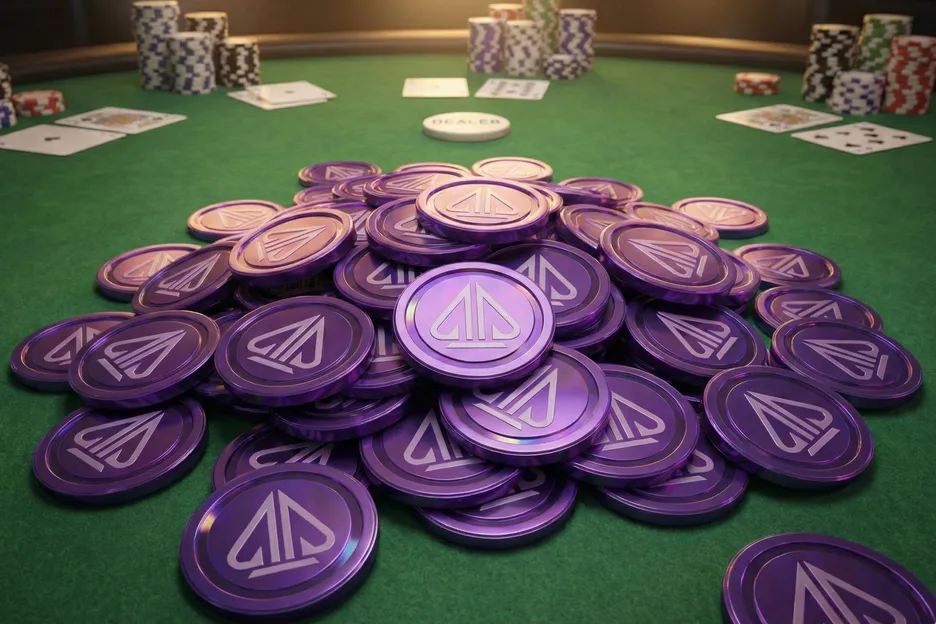
The token will be listed on a DEX and the initial pool will be funded by the Phenom treasury. The token will be priced at whatever the current formulated valuation is on the day we launch. Then the market decides where it goes from there.
The token is still a claim on site revenue. That hasn’t changed. The only thing that’s changed is that we no longer control the valuation, the market does. It could trade at 10x revenue, 30x, 5x, who knows? But it will still be correlated to revenue.
And this means the team's job is completely unchanged. Our job is to grow a site, to get customers, to grow revenue, to ship product, to give customers a great experience. That's our job. Our job doesn't change at all. We just don't get to own all the rules.
We’re moving to an emissionless model, meaning we’ll stop issuing new tokens as rakeback – we don’t want to create a flood of sellers every week. Players will receive rakeback in USDT. But they’ll be able to opt in to auto-buy Phenom or auto-stake for bonuses.
We’ll also have in-app swapping, so the pool will be accessible inside our app. So, for our players who want to buy or sell, they don’t have to read up on how to use a DEX. We'll make all those tools super easy for our users.
The vast majority of large wallets are locking up their tokens long-term, many for 24 months. So the liquid supply is going to be very tight. That’s good for supply and demand.
We minted 50 million tokens. Of that, 16.3 million remain in the treasury. Those will be used strategically, not dumped. We’ll fund partnerships, ambassador deals, and maybe things like splash pots or Phenom-denominated tournaments.
What about price volatility?
I’ve had people say, ‘What if it crashes to 20 cents?’ My answer: then someone is going to get a bargain.
Let’s say the token hits $0.20. With 50 million tokens in supply, that means someone could buy 20% of the entire company for $2 million. That’s absurd. We did $7 million in revenue in our first year. We have 18 full-time team members, a world-class ambassador roster, and we’re becoming a real brand in an industry that’s extremely hard to break into.
If it dropped to 20 cents, I personally know dozens of smart investors who would be watching that liquidity pool and ready to scoop it up immediately.
I’m not worried about price. My job is to grow revenue and build long-term value into the token. My tokens are locked. I’m in this for the long haul.
Why build it this way at all?
It would have been 100 times easier to launch a traditional rake site, charge 5%, avoid KYC, and keep all the profits. But I didn’t want to do that. I’ve already had a financial win with my last company. This is a passion project.
Phenom came from a place of asking: what kind of poker site would I want to exist? A place that shares value with its players. That feels fair. That gives people ownership in what they’re helping build.
We’re not here to get rich quick. This is about building something different, something better. That’s why I’m willing to put in the time, the stress, the effort. I love poker. I love working with legends like Huck Seed and Brian Rast. And I love the idea of reshaping this industry.
We’re just getting started. We’ve grown this thing on an ultra-thin, mostly organic marketing budget. And now that we’ve fixed the redemption model, we can actually budget, we can invest in growth, and we can take it to the next level.
We’ve got a world-class team, the strongest ambassador roster in poker, and a product that people love. We’re building something real.


