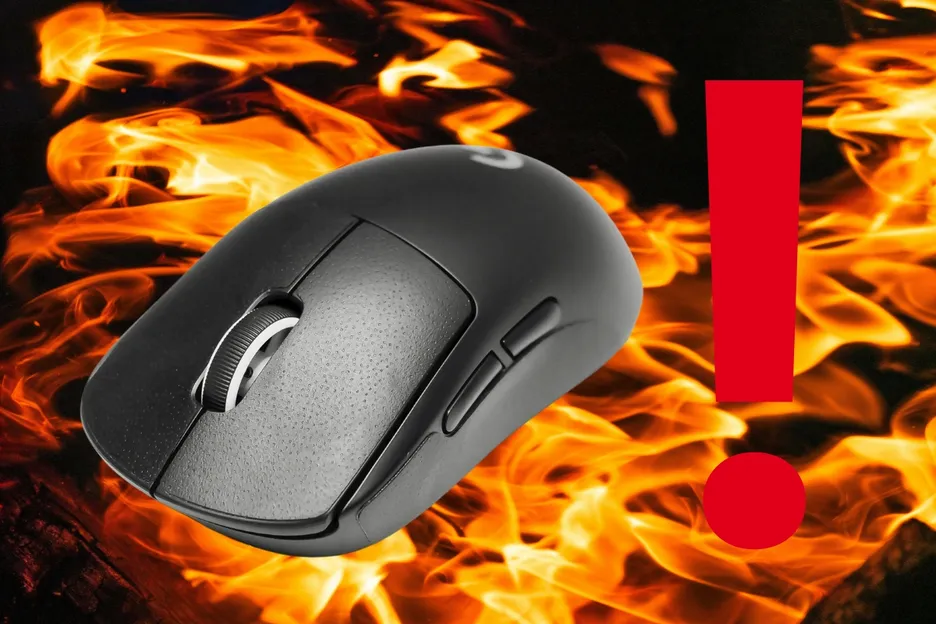


Name: Acting accidentally at the poker table… or possibly something more sinister?
Age: 61.
Appearance: Faces red with embarrassment (or anger).
Is this about accidentally buying a terrible faux leather jacket on eBay after drinking too much at the work Xmas party? No, why?
No reason. By the way, you wanna buy a great genuine leather jacket? No thanks, Fonzie. In this case, a ‘misclick’ is when you accidentally click the wrong button while playing online poker.
That sounds familiar, but is it 61 years old? Well no, but the computer mouse was invented in 1964; I’m sure the first accidental click happened soon after.
So this is just an online thing? It’s a term that’s also come to mean an accidental action in a live game, too. And it can lead to all sorts of problematic situations.
Like what? Let’s say it’s preflop, it folds around to you with a big stack on the button and you announce a raise, opening for the minimum. But there was already a big raise ahead of you which you didn’t notice (you 'misclicked' by raising an illegal amount), so the rules dictate you must raise much larger than you intended to.
That sounds bad for you. It would be, if you had a bad hand and were just trying to steal the blinds. It certainly might look that way to your opponents, who may then try to exploit your mistake by re-raising you and forcing you out of the pot, having put in more chips than your hand was worth.
So your opponents would benefit. What’s the problem? Well, let’s say that you actually had a super strong hand and made that move, all in the hopes of inducing an opponent to re-raise so you can spring a trap?
That would be… clever? Yes, but many would argue it’s unethical play.
I thought acting strong when weak and vice versa was all part of the mind games? It’s a fine line. You’re not so much breaking the rules as using them in an unintended way. If your accidental action was actually deliberate, it would fall into the category of angle-shooting, which is very much frowned upon and can incur penalties.
How would anyone prove it? That’s the problem — genuine mistakes happen all the time, so it’s very difficult to rule with certainty that an error was made intentionally. Most times players will be given the benefit of the doubt, and it’s the exploitation of that good faith that makes angle-shooting so egregious. Repeat the mistake, though, and you’ll probably start getting penalized, not to mention a bad reputation.
Presumably this is a low-stakes issue? High rollers are going to make fewer mistakes like this, right? It happens more often than you might think, and when it’s a pro involved, with lots of money on the line, it doesn’t take long for the accusations to start flying. In 2025 there were similar incidents everywhere from the WSOP High Roller to the EPT Monte Carlo Main Event — and both of those were at the final table. Of course, there’s no hard evidence that either was a straight-up angle-shoot.
I assure you that next time I make a mistake at the table, it won’t be deliberate. I assure you that, in your case, I believe you.
Do say: “Sorry, I genuinely didn’t see your raise. Maybe I should take off these sunglasses?”
Don’t say: “Of course I lied, it’s poker!”
Images courtesy of Jan Loyde Cabrera/Engin Akyurt/Unsplash.


