

Poker is a simple game, but one with incredible depth. So much so that over the years it’s developed a culture all of its own, and in turn a vocabulary of terms and phrases used to describe and define itself.
Many of these have passed into mainstream speech, from ‘the buck stops here’ and ‘an ace up your sleeve’ to ‘calling someone’s bluff’ or a ‘poker face’. But there are plenty more than anyone learning how to play poker may not be as familiar with.
We’ve already looked at some useful betting terms, so here are a few more words you can add to your poker vocabulary, this time all about players.
For a comprehensive, detailed glossary of poker terms, check out our full dictionary.
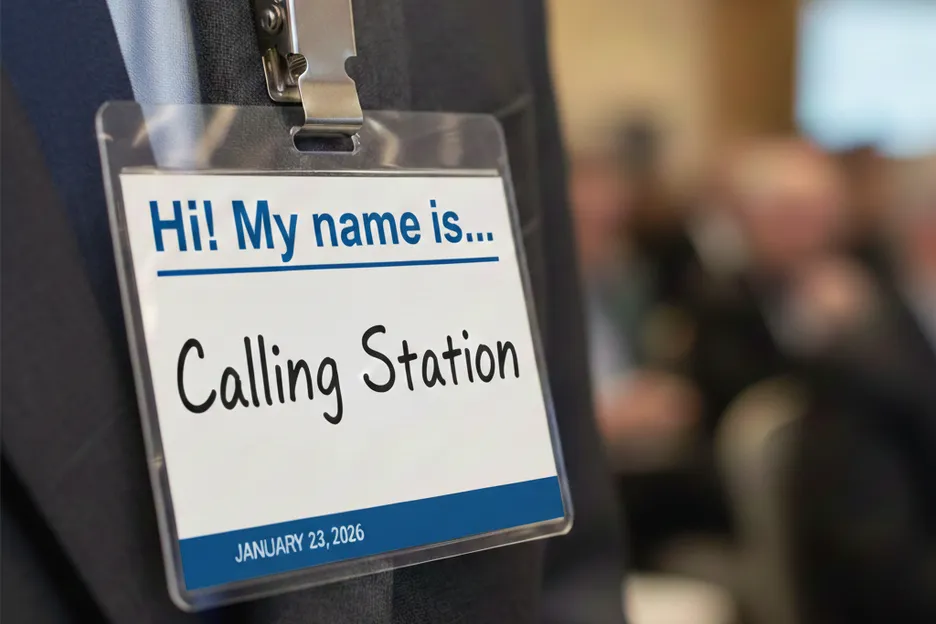
Calling station: A player who calls too much. Many new players start out in this category, as calling may seem like the ‘safest’ option that keeps you in the hand without committing more chips than you’re comfortable with. Because of this lack of confidence and aggression, calling stations are often dragged into pots while behind, pushed into uncomfortable situations, and fail to make the most of their good hands.
Chip leader: The player in a poker tournament with the largest stack.
Dead money: A dismissive term for a player (or group of players) implying that they have no chance to win, and that their chips will inevitably be collected by better players.
Fish: For some reason, poker has a fascination with marine biology. Rather than ‘dog eat dog’ or ‘it’s a jungle out there’, animal analogies in poker revolve around underwater ecosystems (no one knows why). In this analogy, fish are the bottom of the food chain — the weakest players who are consumed by the ‘sharks’.
For-profit player: Doesn’t everyone play for profit? While everyone wants to win, many play without that expectation. Not these players. Pros and semi-pros.
Fun player: The other side of the ‘for-profit’ coin. Someone who, while still looking to win, plays poker primarily because they enjoy it. They may get lucky, they may get better, but money isn’t the driving factor for them.
Grinder: A professional who puts in the hours ‘grinding’ out a profit in poker cash games and/or tournaments. You’d think someone who plays a game for a living would have a less depressing nickname, which says something about what happens when you turn a hobby into a full-time job. Also, a big, long sandwich.
Hero: Coincidentally, another name for a long sandwich, but also a term used to describe the ‘protagonist’ of a poker hand. Someone talking through a hand they’ve played will often refer to themselves as the ‘hero’ and their chief opponent as the ‘villain’.
Horse: A player who has a backer, an investor who helps bankroll them in exchange for a cut of their profits.
Loose: A description of the playstyle of somebody who plays a lot of hands, often for too many streets with weak hands or draws, and the opposite of ‘tight’. Loose-aggressive players can be unpredictable and tough to play; loose-passive players are the opposite of that.
Maniac: A term for an extremely loose-aggressive player, and one generally used by the people they’ve stacked.
Mechanic: A cheater who uses card manipulation or sleight of hand to rig the deck. Thankfully, this is extremely tough to do and requires a combination of natural dexterity and years of practice, and so is rare to encounter outside of shady high stakes games or Hollywood movies.
Nit: A term describing a tight player.
OMC: An acronym for ‘Old Man Coffee’. A disparaging term for an older male with an extremely tight playstyle, sitting in a game all day sipping coffee and apparently waiting for pocket aces.
OWT: The female version of an OMC: ‘Old Woman Tea’.
Passive: A playstyle lacking in aggression, calling instead of raising and checking instead of betting.
Railbird: A viewer of a poker game. Named for the rail — the edge of a poker area where people not in the game can watch the action.
Rec: A recreational player, and so not a ‘reg’ (regular). Being a rec doesn’t equate to being a losing player, or taking the game less than seriously, just that it’s more of a hobby, passion or pastime than a job.
Reg: As opposed to a ‘rec’, a regular player. Just as recs aren't necessarily losing players, being a reg doesn’t mean you’re a winner. A ‘bad reg’ might be a regular or even a pro player who isn’t actually good enough to win, while a ‘misreg’ is shorthand for a miserable reg — someone who spends a lot of time playing poker, but doesn’t ever seem to be happy about it.
Rock: Another term for an extremely tight player, such as a ‘nit’ or an ‘OMC’.
Rounder: Effectively another term for a ‘reg’ or a ‘grinder’, harking back to the days when finding regular games to play involved physically traveling round entire regions, states, countries, or the planet. Immortalized in the 1998 movie Rounders.
Runner: A neutral term for a player in a tournament field, though the only time you might actually see them running is on their way back from a break or the restroom. When describing the size of a tournament you might say ‘it had over a hundred runners’.
Shark: Another marine biology poker term, this time describing winning players who feed on ‘fish’ for the bulk of their profits.
Stable: As the name implies, a group of ‘horses’ (backed players) who share the same backer.
Streamer: Someone who streams their online poker play on a platform such as Twitch, usually with a time-delay to prevent others seeing their hole cards while in a hand against them.
Tight: As you might expect, the opposite of ‘loose’. Instead of playing a lot of hands they play very few, often with high standards regarding what constitutes a ‘playable hand’.
Villain: The opposite of ‘hero’. When recounting a hand history, players refer to themselves as the hero and the opponent in the hand as the villain.
Whale: The last of today’s marine biology metaphors, this is a term for someone who is not good enough to win, but so rich that their mere presence brings the sharks out in their shivers (and yes, that’s a real word for a group of sharks). Like Moby Dick but with cards instead of harpoons.
Visit the PokerOrg poker glossary for a detailed explanation of every poker term you'll ever need to know.
Featured image created using AI.


