

99 trophy events. Over 12,000 entries. More than $13 million in prize money.
The Asian Poker Tour Jeju Classic 2026 has just concluded and, as we’re coming to expect, threw up some incredible numbers — not to mention a new record for Korea’s largest poker tournament.
1,718 entries in the Main Event has set a new bar to clear, but the APT is getting used to the challenge of outperforming itself.
“The women's Main Event broke its own record, going from 61 to 65,” shares APT President Neil Johnson. “The women's high roller, which did 19 last year, which was a good start, jumped all the way up to 39, I think it was. I know it went up by more than 100%.
“The Super High Roller broke its record, the Superstar Challenge broke its record. The Ultra Stack set a record, because it didn't exist when we were here last time, but it got 312 people for an Ultra Stack High Roller.
“It's been a really tremendous turnout from all the players, and we appreciate it, with being wedged in between Christmas, New Year and Chinese New Year, as well as being out here in the cold.”
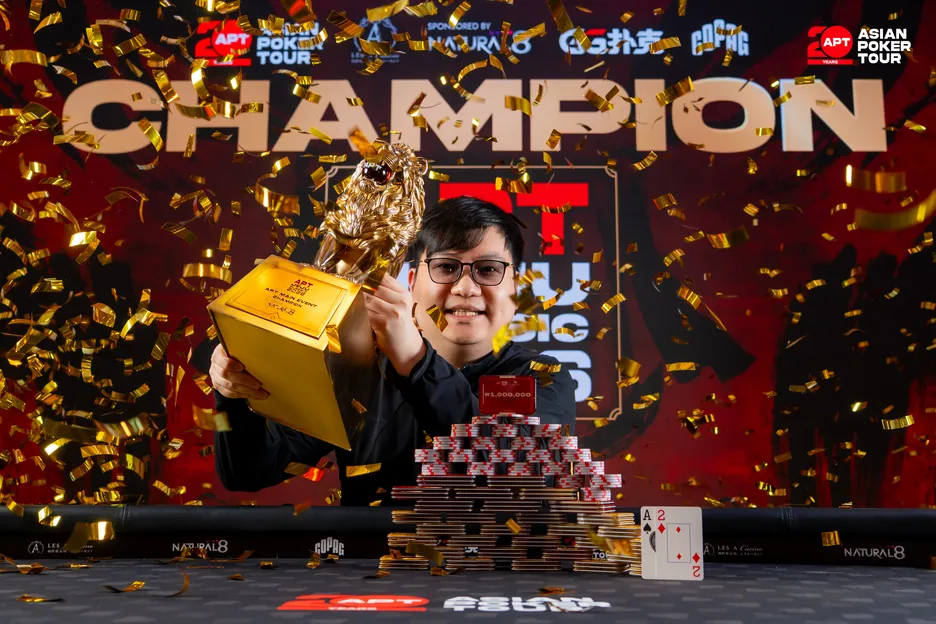
But as the dust settles on APT Jeju it will be the epic Main Event that will probably live longest in the memory; Canada’s William Li won the $402K top prize created by the record-breaking field.
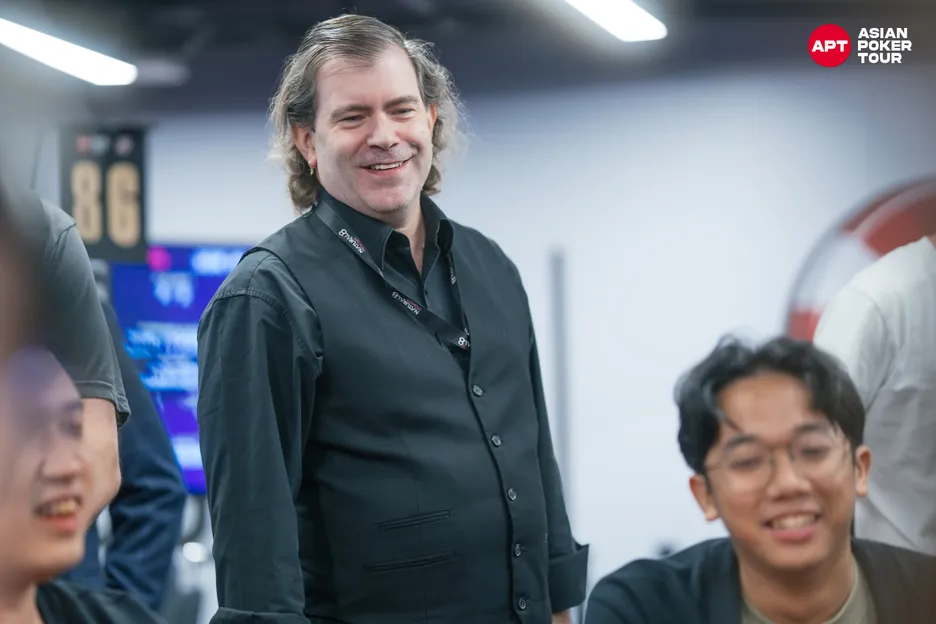
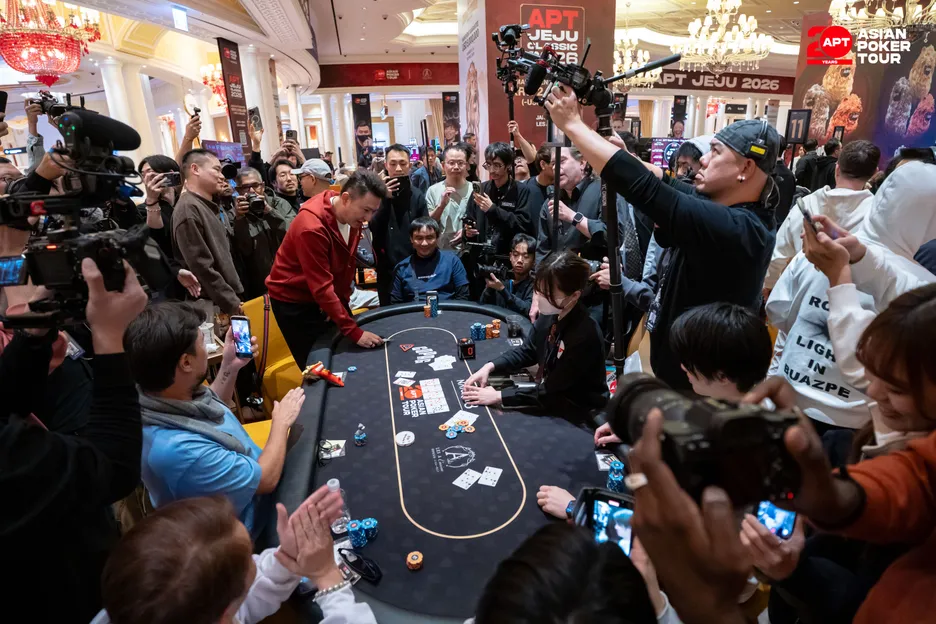
It certainly provided some of the most memorable moments of the festival for Johnson, whose duties include roaming the floor with a microphone and camera crew to capture key hands on the bubble.
“The bubble is usually the biggest money jump for about 10 of the 15% who are getting paid,” says Johnson. “It’s that moment between zero and ‘what did I just do for two days?’

“So [on the bubble of] the Main Event we were at 258, paying 255. First we saw K-6 lose to A-K for about 90 bigs, preflop. I'm not even sure I could call with ace-king for 90 bigs on the bubble of the Main Event. Maybe his 3-bet's been raised 40 times by the same guy, or whatever. There must be some history there.
“So then we’re two off the bubble, and three players are all-in and at risk. The first one they both had the same hand and chopped. Another, the guy was forced all-in on the big blind and lost, but I make my way over to another table, and I can barely get to it, there's so many people around it. All I can hear is people screaming ‘Deuce! Deuce! Deuce!’
“The blinds are 3K/6K, and a guy’s gone all-in for 250K and got called by pocket aces. He turns over 7-2 offsuit. There was a deuce in the window, but he ended up going broke.
“I hope that guy had more than a $1,500 bet on whether he would shove 7-2 on the bubble, because that feels pretty crazy to put 250K in at 3K/6K with 7-2. I'm assuming he had a reason.
“It’s even crazier because there was one gentleman in the field who actually didn’t show up for Day 2, and he had 2.5 big blinds remaining and would have been gone in three or four hands. He ended up making the money without even coming in.”
‘It’s supposed to be fun’
When he’s not reporting live from the bubble, Johnson’s other responsibilities include the crucial task of setting the tournament schedule.
And while a series of broken attendance records suggests he has a good grasp of what’s needed to keep the tour going from strength to strength, he stresses that it’s not an exact science.
“Because we run 8 to 10 women's events across the series, I made one of them limit hold'em, because there just needs to be a little variety; you can't run the same tournament every day.
“The women's events performed very well across the week, but when I went out to check out the limit event with 20 minutes left in late reg, there were nine people. So maybe the women don't want to play limit hold'em? That’s a learning that I'll take away.”
Another part of Johnson’s role — and one that I suspect many would envy (this writer included) — is finding new and unusual poker variants to spread in a tournament format.
We’ve previously showcased many of these lesser-spotted games, and their guaranteed presence on APT schedules over recent years has helped the tour create its unique personality.
“My favorite part is learning about ways to make the game more fun,” says Johnson. ”The high rollers and the Main Event and stuff, they have their place. Those people are playing very serious poker, they're playing for hundreds of thousands of dollars. But you can lose sight of the fact we're all playing a game, and it's supposed to be fun.”
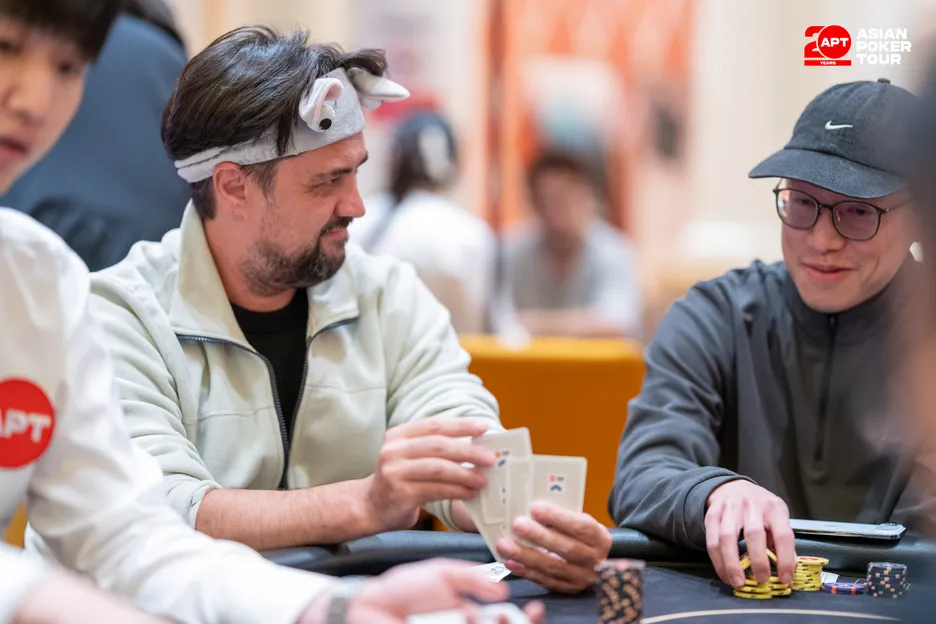
For many, this means playing something new, different and sometimes, in Johnson's words, “some really stupid sh*t.” And it turns out the choice to put so much faith in non-hold’em games can be traced back to 2023, and 17 keen badugi players.
“I think it was Hanoi in May of 2023," he remembers. "I had a hole in the schedule that couldn't be filled with hold'em, because the Sunday Superstack was that day. We dropped a badugi event in there. Now, it only got 17 people, but there was a chunk of them that told not only ownership, but myself and others, that they only came to play that event. They didn't come for any of the rest of the festival.
“For the next stop, in Da Nang, I said, ‘Look, I proved a little, now let me play for real.’ And because our ownership is so cool about it, they said ‘knock yourself out.’ But writing it down is one thing, the players have to actually show up, and we had a good turnout. I think the average was, like, 30-35 people for each event.
“So from those 17 badugi players, the mixed games on the APT were born. And now, with respect to the WSOP, I think we have the best non-no-limit hold'em offering on the planet.”
And as far as the ‘really stupid sh*t’ goes, the choice of new and unusual games comes about the old-fashioned way: by Johnson and the APT crew testing games out themselves. Some work, and some just don’t.
“Just today we were trying ‘reverse hold’em’, where you deal the river first, then the turn and finally the flop. We discovered that it’s a sh*t game: the order of the cards kills the action, because there's just no action with 3 cards and 4 cards. We were, like, ‘Okay, this doesn't work’.
“But then we played ‘Omajack’, which is 5-card Omaha where you make your best Omaha hand for half the pot, and your other 3 cards make a blackjack hand, closest to 21 gets the other half. And that was a blast! We were all having tons of fun with it. That's going into Incheon. I don't have room in Taipei, but that's absolutely going into Incheon.”









Second venue added for return to Taipei
While curious potential Omajack players will need to wait for APT Incheon in August, the 2026 season has only just begun. As well as Incheon there are stops in Taipei, late April, and a return to Jeju in September before the second edition of the APT Championship takes place in November.
The first Championship in 2025 did what so many APT series tend to do — broke records — so it’s understandable that expectations are high for 2026. Especially so given the celebratory nature of this, the APT 20-Year Anniversary season.
“With a one-off, you put all your marketing muscle behind it, and so much effort into it. The question is, can you do that a second time? Can history repeat itself?”
Johnson and the APT are determined to not only match their previous achievement, but surpass it, and part of that means growth.
While Red Space in Taipei, host of the APT Championship in 2025 and again in 2026, is a massive venue, it’s still not big enough to hold the type of numbers expected to descend on Taipei in November.
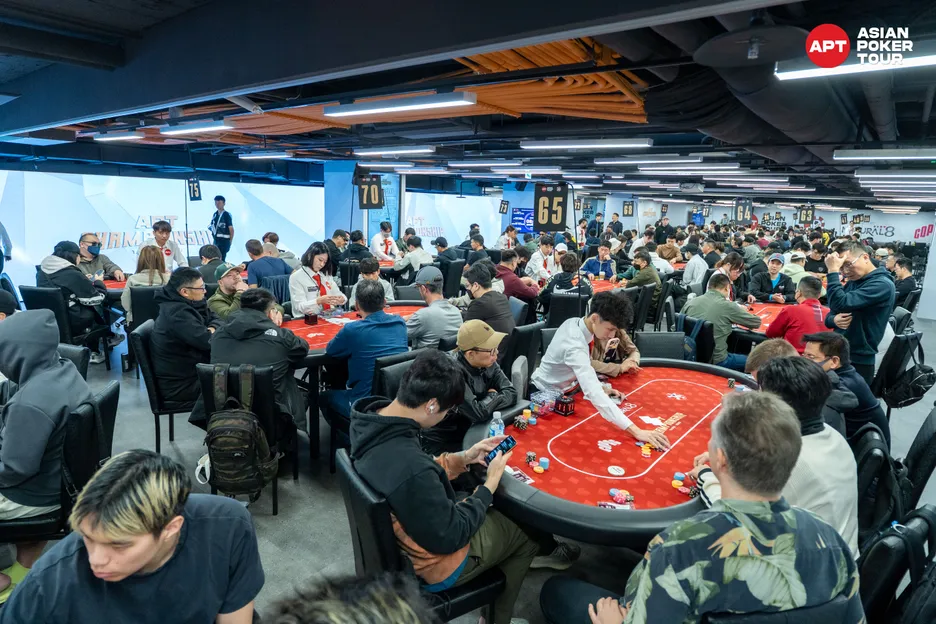
As a result, an additional venue — the Asia Poker Arena — is entering the picture, adding another 50 tables to the 100 already available at Red Space. The two venues are fairly close together and walking between them is a matter of minutes — Johnson compares it to how the neighboring Horseshoe and Paris in Las Vegas share custody of the WSOP.
Details of what will take place where are still being decided, as are the finer points of what new events may be offered.
“We’ve been talking about the possibility of a heads-up championship, a $1-2K, 64-cap kind of thing. I'd also love to see a super high roller PLO, whether that's $5K or $10K. I think that could appeal to European players; a lot of the Finns, the Swedes, the Norwegians love their PLO. But it all kind of comes down to, ‘where does everything fit?’”
Hard work and ‘nonsense’ games
Johnson explains that this freedom to experiment is a testament to the hard work of the full APT crew.
“We have such a talented team that we're really clockworking the mechanics of how this operates. And then, when the building's built, you get to spend so much time painting the walls, designing the rooms.
“It’s like we've built this awesome house that we take to every place we go, and we just paint it in different colors and put different things inside. That, to me, is one of the coolest things about what we've been able to build over here.”
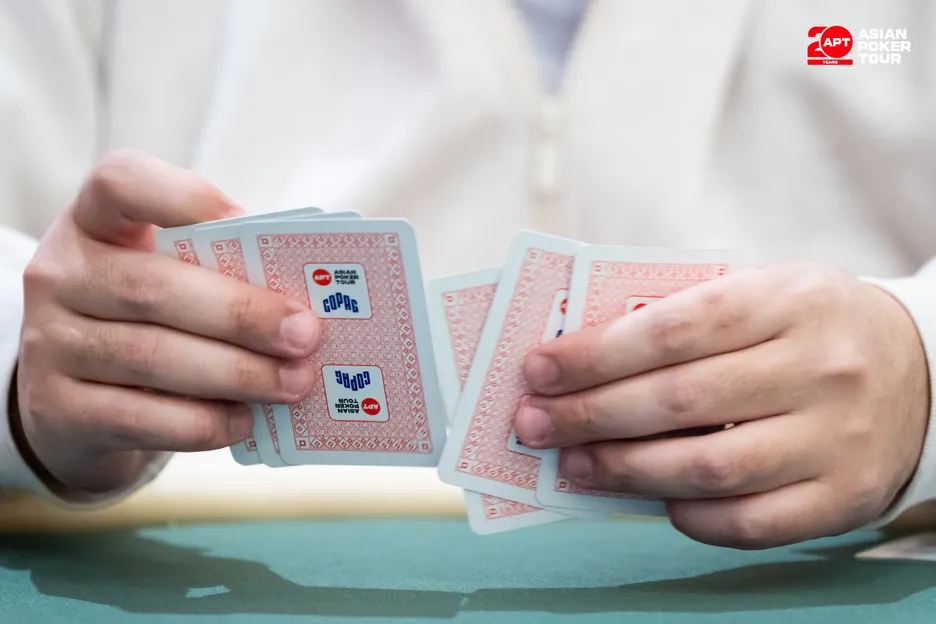
Johnson, a former poker dealer himself, is also quick to single out the work of his colleagues out on the tournament floor, who are often stretched further than they may be on competing tours.
“I don't think there's anybody that works their dealers through as much as we do when you think of all the variations they have to learn to deal.
“It might be a silly game for $100, but the players pay real money to play. The dealers have to be good enough to deal that game, the floors have to be good enough to rule on that game. These guys have all had to learn how to deal all of this nonsense that has fallen out of my head.”
In this landmark anniversary year it feels appropriate that a former dealer, who actually worked at the very first APT series, is so crucial to the tour’s ongoing success.
“It was my first trip to Asia,” recalls Johnson of that first APT series in Singapore. “I’ve still got the card protector that they gave us at the time. Tony G won it, JJ Liu was there, a bunch of people came over.
“It feels like an oddly full circle for me to have been there at the very beginning, and then now find myself helping to create what the next 20 years is supposed to look like.”
The next chapter begins in Taipei, Taiwan, on April 22.
Images courtesy of the Asian Poker Tour.