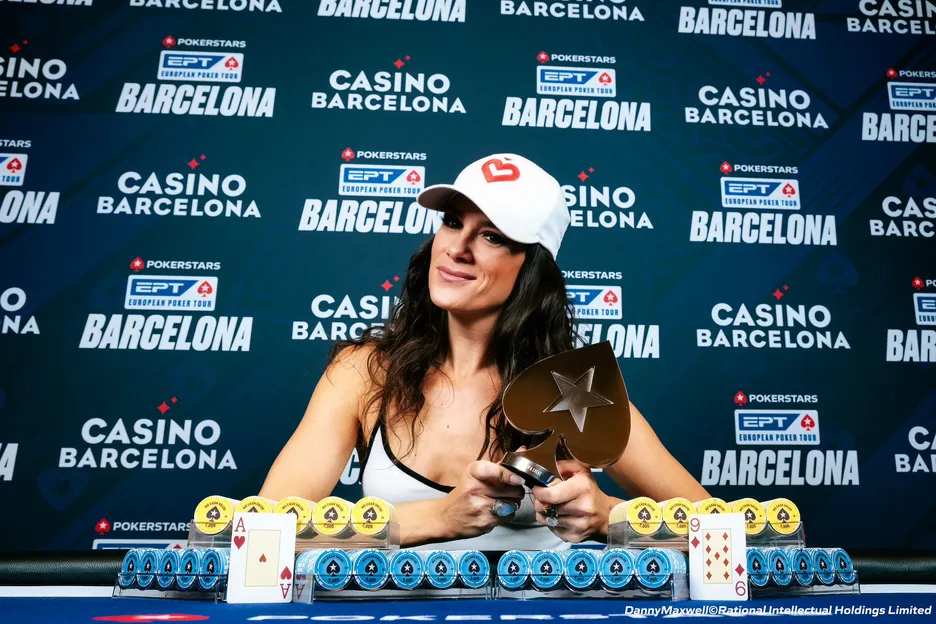


As a broadcaster, public speaker, reality TV star, WSOPC ring winner and poker coach, Tiffany Michelle has worn a lot of hats since being catapulted to fame via an epic run to 17th in the 2008 World Series of Poker Main Event.
And as you can tell from the picture above, she has good taste in hats.
She still makes time to play then, obviously, and a glance down her Hendon Mob page reveals decent results from across the USA and Caribbean but no recorded scores from further afield.
Until last week, that is, when she took down the €1,100 Women’s High Roller at EPT Barcelona. Victory would not be straightforward; it rarely is, and not just at the poker table.
The win was worth around $15K but, as she explains in our exclusive interview, she emerged from the experience much richer than that.
A humbling start
Her first bullet fired in Barcelona, in a €550 hold’em side event, went some way wide of the mark: she lasted all of four hands.
“I think that was the first time I ever was out of a tournament so quickly,” Michelle tells me, ”and because I was only playing three tournaments in Barcelona, I felt such a need to make every one count.”
Ever the pro, she walked back to her hotel with her tail between her legs to regroup for the following day’s €550 Women's Event. That didn’t go as badly — how could it? — but still she fell short of the money.
“The calibre of play in Europe with these women was intense,” she says. “The amount of aggression and 3-betting and bluffing was not something I personally see a lot of in the women's events that I usually play.
“I ended up triple-barrel bluffing and getting caught and eliminated, a very humbling and embarrassing moment. I'm not usually all-in and out of control for my tournament life like that.”
But say what you like about Tiffany Michelle — and goodness knows plenty of people have — she is not one to succumb to negative thinking. She returned to Casino Barcelona the next day ready to face a new challenge and travel a new path, unburdened by the weight of failure. After all, every tournament, every hand and every decision is a new opportunity
If that all sounds a bit ‘Eat, Pray, Bluff’ to you, I get it. But the truth is, that poker mindset has helped Michelle through times much tougher than busting a couple of tournaments.









Running bad
Those tough times really piled up over the last couple of years.
The LA fires of early 2025 destroyed her home, but even more distressingly she was diagnosed with cancer. Daily medical consultations, three emergency blood transfusions and multiple, significant surgical procedures gave her plenty of reasons to lose her faith in the poker gods.
Now happily in remission (“these words surrounding cancer feel so foreign to me”) and settled in a new home, Michelle ascribes much of the strength she has needed to the game that has already given her so much.

“It's kind of funny how everything comes back to poker, and how much I've learned or grown by viewing things through that lens,” she says with a smile. “Even when I'm faced with a difficult decision, or I'm tilting, the next hand gives me a whole new path of decisions that I can make, new choices that can take me in new and different directions.
“And so especially when I find myself in emotional moments in life, like in the aftermath of the fire and losing my home, it really is like, ‘Well, yep, your aces got all-in against ace-king and you got screwed, what are you going to do? What's the next decision that you make?’
“There's a lot of times when life has felt very unfair, and I have felt very overwhelmed, and I try to imagine myself sitting at a poker table. We stop, we reset, we look at all the pieces objectively. What‘s the next hand in front of us? What's the opponent, the chip stack, the next decision?”
In Barcelona last month, that decision was to get back on the horse and play the €1,100 EPT Women’s High Roller. It was a good choice.

A stacked field awaits
Upon finding her seat in the Women's High Roller, Michelle had something of a rude awakening.
“I sit right down and I’m right next to Cherish Andrews. Marle Spragg’s at my table. Sam Abernathy comes through at some point, Jess Vierling gets moved to my right.
“In the bigger fields that I play with in the US, you don’t usually have this concentration of talent right at your table. It was like a VIP Sit & Go.”
But as we know, Michelle has the chops to handle challenging situations. She did what the past few years have prepared her for more than anything else: she survived.
And by the time the final table rolled around, she had the chip lead. But if you thought she’d then cruise to an easy victory, you haven’t been paying attention.
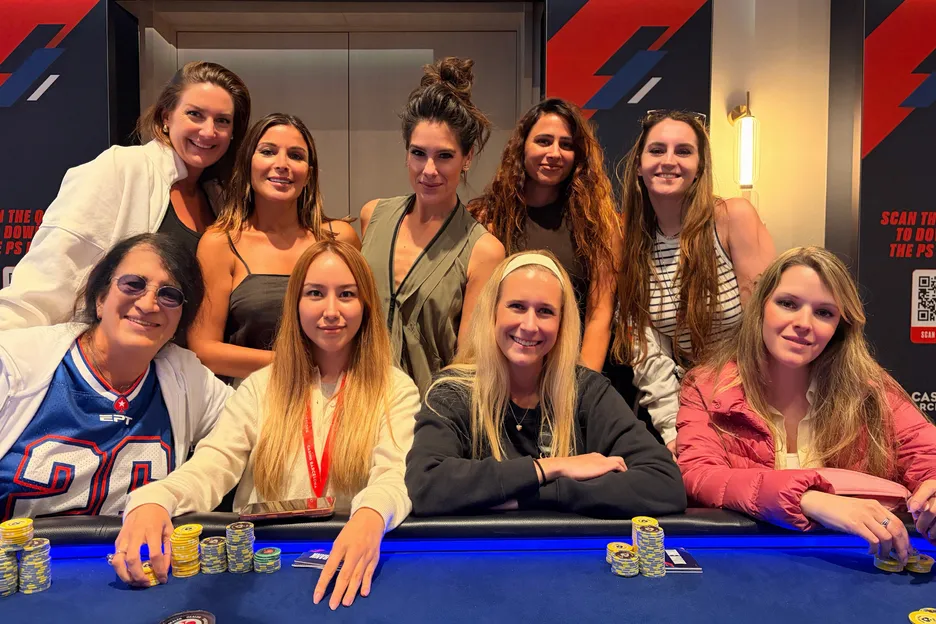
“There's just one thing that you don't want to do when you come in as chip leader at a final table, and that is lose those chips very quickly. And that's exactly what I did. Bleed, bleed, bleed, half my stack is gone.
“I felt the momentum shifting in the wrong direction, but I'm really proud that I didn't try to force it back. One of the biggest areas of growth for me in my game has been learning when a tournament starts slipping away from you that you don't have to chase it.”
That revelation paid dividends as she slowly but surely clawed her way back up to the top of the chip counts until, with four players remaining, she had twice the stack of 2nd place.
A deal was struck giving her €13,050, a little less than the advertised 1st place prize money, but with the payouts settled it became clear that her three remaining opponents were dead set on winning the trophy.
They’d end up receiving their own lessons in resilience: the trophy went home to California with Michelle.
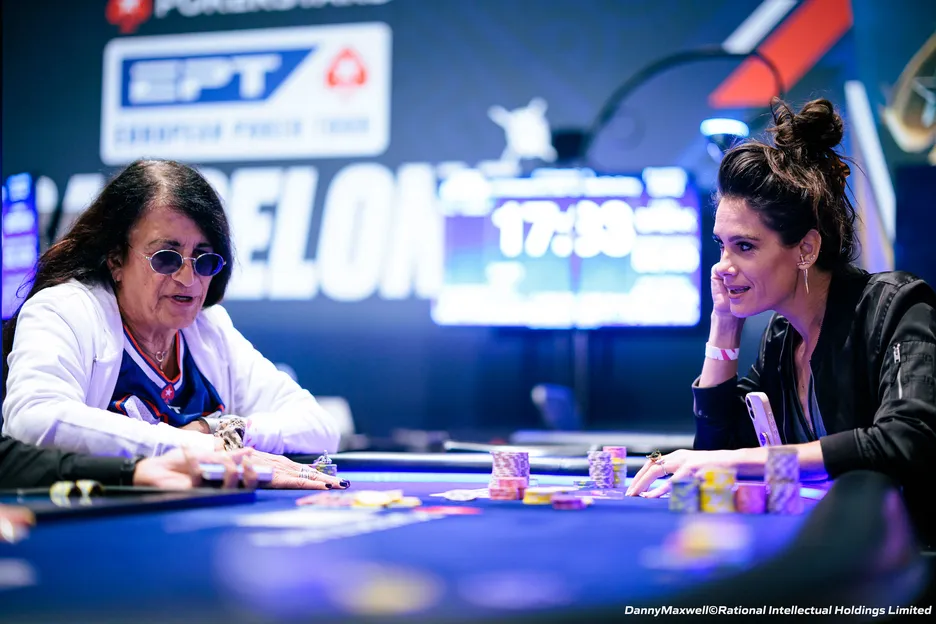
Hearing the echoes of 2008
“When people started saying congratulations, I noticed myself qualifying the win and kind of downplaying it. ‘Oh, it was a small field, it was only $15,000’.”
That minimization of her own achievement is a hangover from another painful time in her life; one less immediately obvious than her recent struggles against the destructive forces of cancer and fire.
Having run so deep in the 2008 WSOP Main Event, she had expected to feel a sense of accomplishment and joy. Looking back, she remembers it turning out very differently.
“I had so much negative backlash after [the 2008 WSOP] that it really made me want to hide. I realised people did not want to hear and see me be proud. If I was too loud or too bright or too excited, I faced a lot of negativity, and I think that I overcorrected.
“For years I tried to kind of, let's say, hide my light. I didn't want to draw attention to myself, I had to create this false sense of humility so that I didn't rub people the wrong way.”
That overcorrection is something she still struggles with. Winning an EPT title is a great way to move the needle in the right direction.
“To accomplish something at 24 years old and wake up the next day and have it turned into an absolute nightmare, I think created something in me that became nervous about succeeding, and doing things that were exciting and difficult and hard. Like, if I did something successful that meant it was going to come with years of hardship and having to hear horrible things.
“So then winning at EPT Barcelona, I was so proud — it’s so hard to close out a tournament — yet here I was with my words trying to downplay it so I didn’t repeat this thing that happened back in 2008, when my success came with so much toxicity.
“It’s normal to measure our wins next to the very big ones. It’s not a million dollars, it’s not the WSOP Main Event, it was only so many people. But you have to celebrate the wins, no matter how small. So it’s been a healing, emotional learning experience for me.”
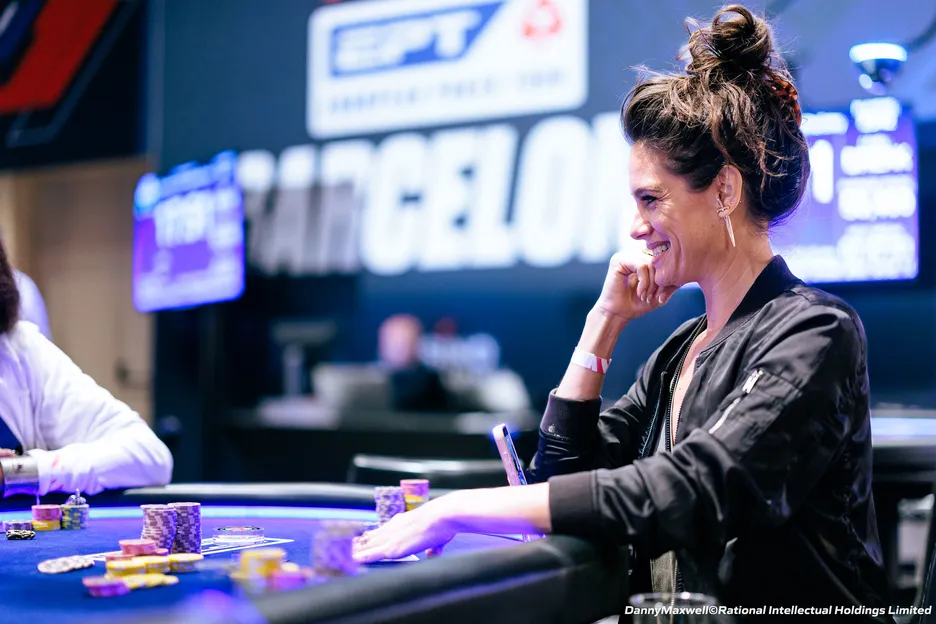
The adventures of Tiffany Michelle provide a great example of poker’s potential to help us rise, overcome and grow. Bad beats hurt, they always will, but experience and objectivity can allow us to zoom out and see the bigger picture.
We all suffer, we all experience loss, and poker’s great at reminding us of that. But it can also be a source of personal affirmation — of your instinct, your resilience, ability or confidence — and you don’t need to take home a trophy, or even take down the pot, for that to matter.
“I used to worry that if I couldn't prove a decision theoretically then I wasn't entitled to make it,” she reflects. “I don't believe that anymore. You study so that your instincts can become better, not so that you can eventually stop having instincts.
“Sometimes confidence is calling, sometimes confidence is folding, and a fold doesn't have to come from fear; a fold can come from conviction.”
Follow Tiffany on X.
Images courtesy of Tiffany Michelle/Rational Intellectual Holdings Ltd.