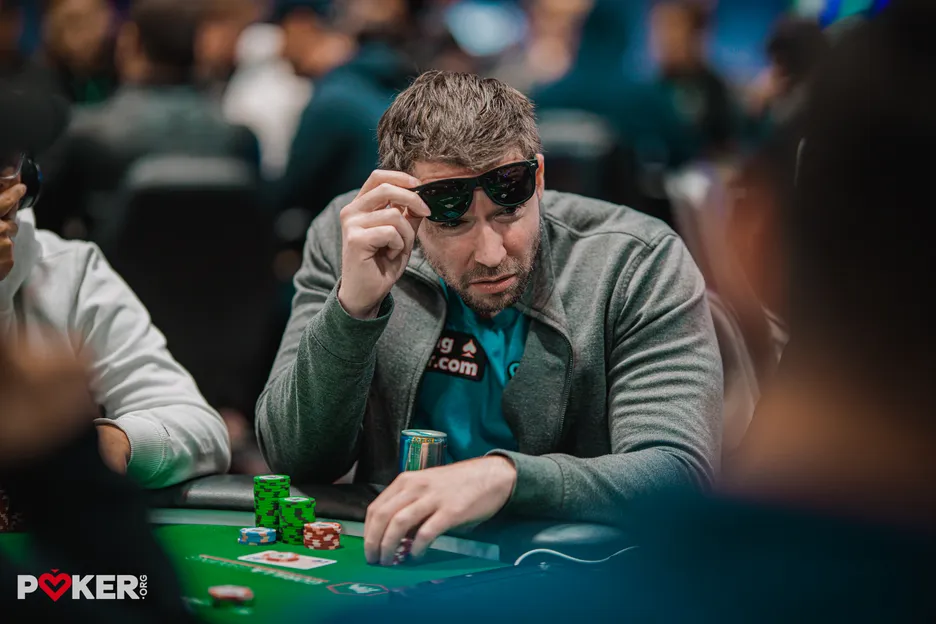


Nearly 20 years ago, Aaron Barone walked away from law school to pursue a career in online poker.
He'd been neglecting his studies, and one instructor challenged him to take his education more seriously. Barone tried, but ultimately decided that being his own boss and chasing the poker dream mattered more.
Two decades later, he has no regrets.
“I'm not in the Poker Hall of Fame,” says Barone, “but I am living my version of the dream. My version wasn't to play the highest stakes, receive worldwide acclaim, or be the best in the game.
“My goal was to do something I enjoyed, do it from home, have the freedom to choose my own schedule, make time for other things in my life that I enjoy, and live comfortably. And poker's allowed me to do all those things.”
With that version of 'the dream' in mind, Barone recently began wondering whether it was still possible to build a bankroll from dust.
Can you still beat low-stakes poker?
Just how tough had low-stakes poker become? Were the games still beatable, or had the doom-and-gloom predictions been right all along?
Barone decided to find out for himself.

Armed with a $2,500 bankroll, he set out to prove that low-stakes online tournaments were still beatable, streaming his progress on his Twitch channel.
Six days later, he'd made $8,000, and the challenge was complete. It reinforced his belief that there's still money to be made at the lower stakes.
PokerOrg caught up with Barone to find out why so many players struggle to beat today's games, and what living the poker dream really means to him.









Breaking the routine
You've been playing professionally for nearly two decades. What inspired you to take on a bankroll challenge at low stakes?
I thought my challenge would accomplish a lot of things. First off, if you ask anybody who loves their job, they will say that at some points, they’ll get a little bit frustrated with it. You get a little bored, and everything becomes routine.
I was in the midst of a decent-sized downswing when I had the idea to start my challenge. I’ve always looked for ways to make what I'm doing more enjoyable.
Because if at some point I don't like what I do, then how is that different from having a 9-to-5 that someone hates, right? So, I try to find ways to make the grind more novel, more fun.
Why the focus on low-stakes games?
I wanted to show people you can still beat low-stakes games. And not only that, but you can also crush low-stakes games.
The reason some people are losing isn't because of all these 'forces working against them'. The site isn't rigged, people aren't being cheated.
Sure, online poker does have some problems that need to be worked on and fixed, but the main reason most people are losing at these stakes is that they're either not good enough or they're not putting in the volume.
I knew my bankroll challenge would be fun, and I hoped it would show people that their thoughts on poker being dead or dying are just wrong.
My goal was to play 100 tournaments a day. I ended up getting to play about 93 per day on average.
What surprised you most about returning to these stakes after all these years?
The games have gotten a lot tougher; strategy has evolved. The players at the highest levels are so much better than they were 20 years ago, that’s true, but the grinders at the lowest levels are also so much better than they were.
If you took a player who's a winning reg at $11 average buy-in MTTs, put them in a time machine and dropped them back into 2003, they might be a top five player in the world.
That’s insane to think about, but that’s just how far we've come with strategy and evolution in the game.

What are the biggest mistakes you see low-stakes players making, and how can they start correcting them?
I think not understanding when to fold. This leak extends across all buy-in levels.
Against certain types of players, you play your theoretical game, and what you're supposed to do won't work. Why?
It’s because the players aren't following the same set of rules. They're supposed to fold half their range there, right? Well, if they're not folding, then what are you doing? Then why are you bluffing that spot?
You have to identify those players as quickly as possible, what their leaks are and how you can exploit them. That is something everyone struggles with across the board.
Is that more common at lower stakes?
True. You're going to get a higher percentage of players who, one way or another, are just lighting their stack on fire. And you have to figure out how they're doing that to take advantage of those mistakes.
If they never fold, I won't bluff them that much, and if they seem to overfold I'll bluff them all the time.
Bankroll management
Does the size of the buy-in change how low-stakes players approach a tournament?
You know, the money is different for everybody, but if you find a player who is playing a $5 average buy-in and they're in a $45 game, they might treat that game like it's the main event. They might have a different hand range in that game than they would in their normal stakes.
I think there's a wide variety of losing players at lower stakes in terms of their style, and you just can't put them all in the same bucket.
You started your bankroll challenge with $2,500 and risked $2,000 on the first day. Was that too aggressive?
I played 100 games, 150 games with rebuys. Would you have preferred that I did that over the course of a month? Would that have made it better or more responsible?
The answer is no, as long as you're playing the same way, you're playing well, and you're mentally there. If you can get in more volume in a short amount of time, then that's great.
I wasn't putting all my eggs in one basket, I was putting them in 150 different baskets.

What I would say is that when people do a bankroll challenge, you can ask yourself: 'How much do I need to play X, Y stakes, whatever?'
Usually it's not, ‘Hey, I have $1,000 to my name. If I lose it, I live under a bridge. What should I do?’
It’s more like, ‘I have $1,000 extra spending money that I saved up, and I have a regular job, or I can replenish the funds. How can I best use that to scale up efficiently?’
My challenge was more the second part. But if you had said, ‘Hey, this $2,500 is all you have to your name, what's your approach going to be?’ I would have been much more careful with my bankroll management.
The verdict on low-stakes poker
What's the most important lesson you hope players take away from your bankroll challenge?
If there were only one, I'd want people to know that the games are still beatable. The doom-and-gloom stuff is often just a mask people put on to feel better about not being able to beat them.
Nothing's guaranteed. You can choose to work hard at something, and you give yourself the best chance of success.
It was really fun playing the bankroll challenge. I really enjoyed putting in the work and playing the games. I didn't have any huge scores, it wasn't like I just won one big tournament and completed the whole challenge.
I’m happy with it. I played a lot of games, I made a lot of good decisions, and I ended up making a lot of money. Sure, poker is a hard game, but if you work at something and put in the effort, you'll most likely set yourself up for the best chance to succeed.