I recently stated my opinion on X that you’re probably going to make more money at a cash game table if people don’t necessarily like you. I didn’t think this was a particularly controversial position, but a lot of people either disagreed with it or misunderstood what I was trying to say.
So let’s talk about why you don’t necessarily want to make friends with everybody at a cash game table. There’s a huge difference between creating a little competitive tension and being the kind of person nobody wants to play with.
1. I’m not saying you should be a jerk
Let’s make this clear right away: I’m not saying you should antagonize everyone at the table. You don’t need to insult people, make personal comments, slow down the game, berate bad players, or do anything else that makes the table miserable.
You can be polite and still understand that you’re not there primarily to make friends. A little competitive friction can be useful, but genuinely making people uncomfortable is usually terrible for the game.
The goal is not to have everybody leave thinking you’re a horrible person. The goal is to avoid becoming so friendly and trustworthy that nobody ever wants to look you up when you make a big river bet.










2. You want people looking for reasons to call you
The largest bet in a no-limit hold’em hand frequently comes on the river. In a big pot, that final bet can sometimes be larger than all of the previous bets combined.
So how do you make money on the river?
One way is to raise somebody as a bluff and get them to fold a better hand. That certainly happens, but it isn’t the easiest or most common way most low-stakes players make serious money.
The much simpler method is to have the best hand, bet for value, and get called.
Fortunately, a lot of players are already looking for excuses to call. They think everybody is bluffing them, they have a chip on their shoulder, and they’ve heard people talk about things like minimum defense frequency (MDF) without necessarily understanding when those concepts are actually applicable.
That creates a fantastic environment for value betting. If somebody already wants to believe you’re full of it, you don’t necessarily want to talk them out of that belief.
3. Distrust can change how people respond to you
People behave differently depending on whether they view somebody as cooperative or adversarial. Even the language people use to frame an interaction can change the way they respond to another person.
The words we use can fundamentally change how people perceive and respond to one another. In a fascinating 2000 study, researchers Terence Burnham, Kevin McCabe, and Vernon Smith had strangers participate in a decision-making game. The rules were exactly the same for everyone, but one group was told they were playing with a 'partner,' while the other was told they were playing against an 'opponent.'
The results were striking: When given the opportunity to reciprocate another person's trust, 68% of participants in the 'partner' group responded cooperatively, compared with just 33% in the 'opponent' group.
Nothing about the game itself had changed, only the word used to describe the other person.
This study reveals how powerfully language can shape our expectations and behavior, reminding us that when we approach others as partners rather than adversaries, we create a greater opportunity for trust, cooperation, and connection.

At a poker table, you’re obviously not trying to create cooperation in the middle of a hand. If someone already sees you as the opponent they want to beat, that competitive framing can work in your favor when you’re trying to get paid.
4. Sometimes you only need to nudge them a little further
If the seed of distrust is already planted, you may not need to do very much. Your opponent already wants to call you, catch you bluffing, and prove that you aren’t getting one over on them.
That’s where being slightly annoying can occasionally become profitable.
Think about Floyd Mayweather’s public persona. Early in his career, he was known as 'Pretty Boy Floyd,' but as his career developed, he became extremely effective at marketing himself as somebody fans wanted to see lose.
A defensive boxing mastermind is impressive, but it isn’t necessarily the easiest thing in the world to sell to casual fans. A villain people desperately want to see get knocked out gives those same fans an emotional reason to pay attention.

Poker can work on a much smaller scale.
If someone wants to beat you personally, they may become more willing to call you in situations where they should probably fold. If your river betting strategy is heavily weighted toward value against that player, their desire to prove you wrong can become very profitable.
5. You don’t have to become a full-blown villain
None of this means you need to create some ridiculous professional-wrestling character every time you sit down.
Often, a little playful trash talk is more than enough to get somebody interested in beating you.
For example, suppose you raise preflop and everybody folds. You could jokingly announce, “Easy money,” while you pull in the pot.
Yes, it’s obnoxious.
That’s also why it can work.
Somebody at the table may immediately think, 'I’m not letting this guy run us over.' Now they’re actively looking for opportunities to play pots against you instead of simply folding all of their marginal hands.
Obviously, you have to read the room. What sounds playful at one table can sound obnoxious at another, so don’t force it if nobody is enjoying the banter.
6. You can frustrate people without saying anything
You don’t actually need to trash talk to create this effect. Sometimes the way you play is more than enough to frustrate somebody.
A lot of recreational players come to the casino because they want to see flops. They may have spent several days waiting for their next poker session, and the last thing they want is somebody constantly making them pay a huge price just to participate.
If you start using large isolation raises whenever they limp, you can get underneath their skin without saying a word.
They wanted to limp for a few dollars and see a cheap flop. Instead, every time they enter a pot, you make it expensive.
Eventually, some players get tired of it and decide they’re going to start calling you down. When that happens, you need to recognize the adjustment and start giving them exactly the action they’re asking for when you have strong hands.
7. Small bets can feel surprisingly insulting
Another tactic that can annoy certain opponents is using deliberately small bets in the right situations. Some players interpret a tiny bet as you telling them, 'I don’t think you can handle even this.'
That can get under people’s skin.
They start thinking you’re trying to push them around with nothing. Once again, that can create the emotional desire to call you down later.
You obviously shouldn’t start making strategically terrible bets just to annoy somebody. But if a small sizing already makes sense in the hand, there can be an additional benefit when you know the opponent is the type who takes those bets personally.
The most useful exploits are often ones where the strategically sound play and the psychological pressure point happen to line up.
8. Profit and comfort are not always the same thing
Whenever I talk about this, somebody inevitably says that playful trash talk, oversized isolation raises, or annoying little postflop bets don’t sound comfortable. My response is that comfort isn’t necessarily the objective.
You’re playing a competitive game for money.
That doesn’t mean you should treat people badly. It does mean you should be honest about the fact that everyone at the table is trying to win everybody else’s chips.
Most people acquire money by trading their time and effort for it. That’s exactly why money matters to them, and it’s exactly why a serious poker game is inherently competitive.
You can respect the people you’re playing against while still trying to maximize your edge against them. Those two ideas are not contradictory.
9. Show one ridiculous hand and change your image
One of the easiest ways to create an action image is to make one unusually large raise early in the session and, if everybody folds, occasionally show something ridiculous. Turn over 7-4 suited and suddenly everyone thinks they’ve figured you out.
Then make it worse by joking that it’s your favorite hand and telling everybody you came to gamble.
Now you’ve given the table a story.
They’re going to remember the 7-4 suited much longer than they remember the next six hands you quietly fold.
Players are incredibly susceptible to memorable information, and one ridiculous hand can sometimes influence how they interpret your bets for the next several hours.
Of course, don’t start torching money just to create an image. But when you find a reasonable spot to show a weird hand, understand how much mileage you may be able to get from it afterward.
10. Creating competition doesn’t mean killing the game
Another criticism I hear is that this style of play somehow hurts poker because people don’t want to be around trash talk or competitive behavior. But friendly competition and playful antagonism have existed in recreational games forever.
Pickup basketball didn’t die because people talk trash.
Again, I’m not saying you even have to trash talk. I’m saying that you should understand the value of having opponents who want to beat you.
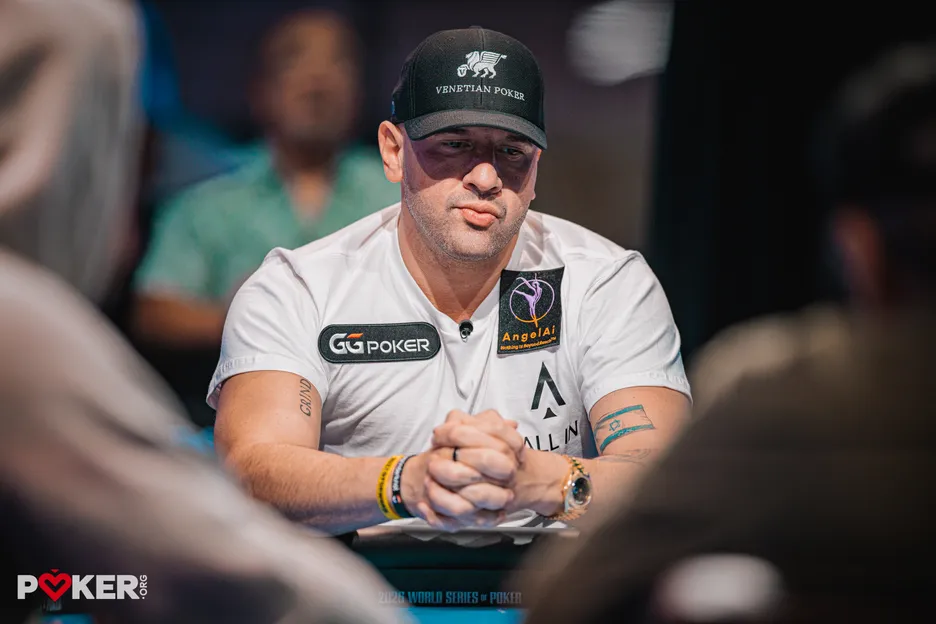
If people like you so much that they always give you credit, comfortably fold every river, and never feel motivated to look you up, that friendliness isn’t necessarily helping your win rate.
If they think you might be messing with them, they’re much more likely to put chips into the pot trying to prove it.
Just don’t take it too far.
The ideal situation is a table where everybody is having a good time, nobody feels personally attacked, and several people are still very motivated to catch you bluffing. If you can create that atmosphere while spending most of your big river bets on value, you’ve put yourself in an excellent position.
Give people a reason to call you
The important distinction here is between being disliked competitively and being disliked personally. You want people thinking, 'I want to beat this guy,' not, 'I never want to play poker with this guy again.'
That difference matters.
Poker is still a social game, and protecting the atmosphere at the table is important. But you don’t need everybody trusting you, agreeing with you, or thinking you’re the nicest player they’ve ever met.
Sometimes a little friction is exactly what gets your value bets paid.
Build an image that makes people curious about what you’re doing. Give them reasons to think you might be bluffing, notice which opponents become emotionally invested in beating you, and then make sure you’re ready to value bet when they finally decide they’ve had enough.
That’s my time for today. Wishing you the best of luck on the felt.
Alex Fitzgerald is a best-selling author published by D&B Poker. Check out Alex’s most recent book, ‘How to Beat Players Who Never Fold.’
Visit pokerheadrush.com and subscribe to Alex's FREE strategy newsletter to receive three FREE training video packs. Follow Alex on X and Instagram.