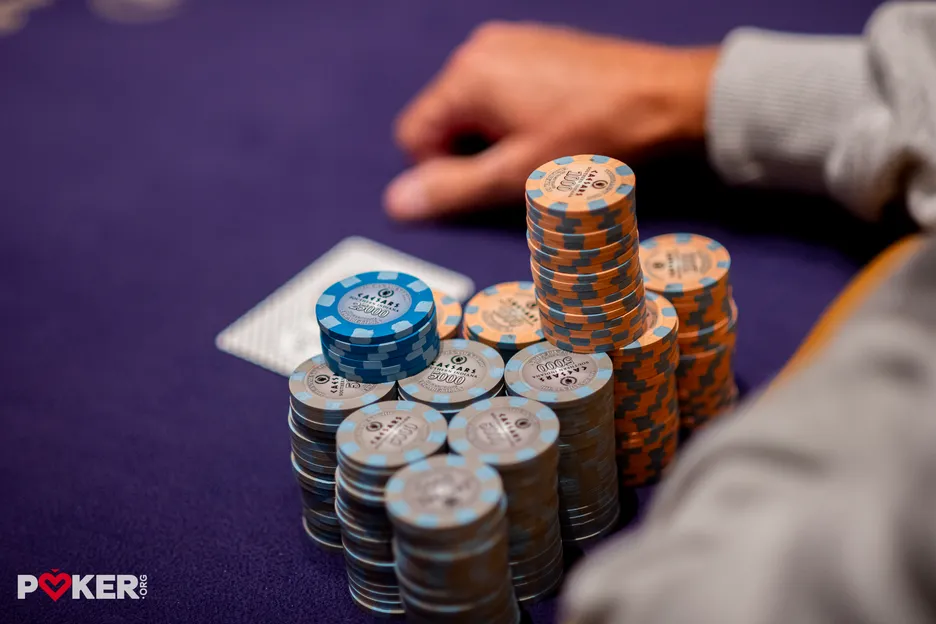


As 2025 turns into 2026, we’re talking to some of the biggest names in the poker world and reflecting on the year’s most interesting stories and events.
Here we present some strategic preflop concepts, both offensively and defensively, Here we present some strategic exploitive concepts shared in our exclusive ‘Pro Tip Series’ earlier this year shared earlier this year by Justin Saliba and Brian Hastings.
Justin Saliba: In small-stakes tournaments, becoming a big winner has far less to do with simply seeing cheap flops and hoping to make a strong hand. Real success comes from stealing pots that don’t belong to you, and that begins with building a stronger, more aggressive preflop strategy.
Overall, you want to raise first in preflop play. One of the most important first steps is to stop limping, with the exception of the small blind.
Some of you just want to see cheap flops; limping should disappear from your game. When you raise instead of limp, you seize the initiative. Your raise announces that you have a strong hand, and I’m coming into the pot for a raise, which puts immediate pressure on people as you take the initiative.
This initiative forces opponents to fold equity, prevents them from seeing free or cheap flops, and sets you up to win the pot postflop with a continuation bet, with a potential range of very strong hands. Simply put, raising first makes you a more aggressive and more profitable tournament player.

Brian Hastings: Let’s talk about defending the big blind when you're playing tournaments.
You play more hands from the big blind than any other position. There are two key reasons for this. First, when you call a raise from the big blind, you close the action unless there's a three-bet in front of you. There's no possibility of someone else three-betting behind you if you call an open, unlike when you call a raise from any other position.
The second reason is that you’re getting a good price to continue. One very common example: if you're playing a live tournament with a big blind ante and an opponent from outside the blinds min-raises, you're getting 4.5 to 1 to defend your big blind.
In order to make defending the big blind wide a good strategy, you don't need to do anything unusually fancy. That’s a common misconception You can just play poker and develop balanced continuing ranges on various flops.
If your opponent continuation bets the flop, you get to check-raise with some value and some bluffs (and some merges), but you don't really need to reach and check-raise hands with no interaction to the board to make defending a marginal hand a good play. You just take your great price to defend and attempt to realize as much equity as you can with your range.

Three-betting is the biggest upgrade
Justin Saliba: Beyond raising first in, the biggest improvement most small-stakes players can make is learning to 3-bet far more often.
I see numerous players in small-stakes tournaments who call and see a flop very often, but that passive habit leaves a tremendous amount of money on the table.
When you 3-bet, even without a premium hand, you take control of the pot before the flop and increase your stack slowly over time.
Sometimes the opener folds immediately, and you scoop uncontested chips. Other times they call, and you enter the flop with initiative, allowing you to c-bet and continue to apply pressure.
Over time, those extra chips accumulate and help build the stack you need to go deep.
Brian Hastings: You will be 3-betting a more polar range in the big blind than you are from any other position. This comes down to the fact that you are closing the action. Because of that, calling becomes a more attractive option from the big blind than from any other position against a raise. For that reason, a lot of hands prefer calling.
Additionally, 3-betting from other positions forces the players yet to act out of the pot most of the time; from the big blind this is not a factor.
This means your 3-betting range will be mostly a mix of really strong value hands and bottom-of-your-calling-range type bluff hands. This is going to vary depending on stacks, positions, and the stage of the tournament.
Your 3-bet for value will often be hands like JJ+, AK, and AQs. Your bluffy hands are often the offsuit hands near the bottom of your defense range, such as A2o, K4o, and T-7o.
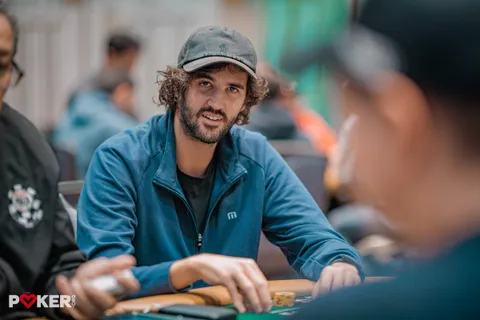

Justin Saliba, a professional player with over $10 million in live tournament earnings, is a two-time WSOP bracelet winner and sought-after coach for players of all levels.
For more information regarding coaching from Justin, see PokerCoaching.com and PeakGTO. Follow Justin on X.
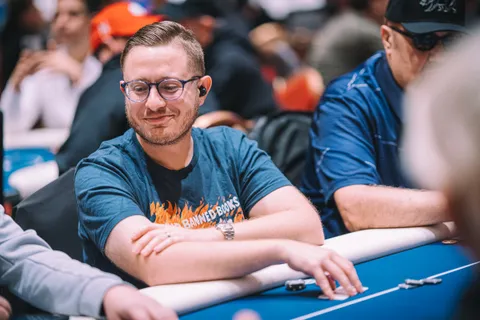
Brian Hastings is a professional poker player with 20 years of experience across a variety of formats — cash games and tournaments, no-limit hold’em and mixed games. He has won six WSOP bracelets and is a no-limit hold’em and mixed-game coach at Run it Once and Octopi Poker.