

In today’s strategy guide, let’s cover the plays that are being sorely underused in tournament poker in 2026.
Over the last two months, I have worked extensively with a number of students through training packages and private lessons. One of my clients managed to capture half a million dollars at the World Series, and I had several other players cash the Main Event or make other deep runs.
I also got to play online at home and was able to final table a million-dollar tournament online.
These are the plays I see people underusing the most.
1. The overbet
Pretty much every single time you see a North American player use an overbet, it is for value.
It is very rarely a bluff.
That means overbet bluffing is sorely underused.
This is definitely something you should be doing more often against the right players.

I lost count of the number of times I was in the big blind, called out of the big blind, and then called a continuation bet on a board with a flush draw.
When I check-call that flop, I have revealed a lot.
I likely do not have an overpair because I probably would have 3-bet those hands preflop. I likely do not have a set because I probably would have check-raised those hands with a flush draw on the board. There also are not many combinations of sets anyway. I probably would have check-raised my two pairs as well.
So when I get to the turn, I should face a lot of overbets from the in-position player.
Why?
Because my range is extremely limited, and their range is uncapped.
They can put extreme pressure on me.
But time and time again, I saw people fail to make that critical exploit.
I understand not doing it once in a while. Sometimes a player is feisty and does not want to fold.
But that cannot be true every single time.









2. Larger preflop raises
It blows my mind that people will adjust their bet size on the flop, turn, and river depending on the situation, but they will almost never adjust their raise size preflop.
There are some tables where people more or less 3-bet the same range regardless of what your open size is.
At those tables, you should use two times the big blind because that is the minimum you can risk to get involved in the pot as the preflop raiser with the uncapped range.
But if you are dealing with inexperienced players who see small opens and think, “Oh boy, this is going to be really fun to re-raise because they did not even put out a man-sized bet,” then you need to stop the unpredictable play.
Start opening to 2.5x or 3x.

Honestly, it is not even bad to go bigger than that against the right opponents.
If they are just going to call you and then fold on most flops, use some creativity to solve the problem.
Do not get married to one preflop sizing just because it is what everybody else is doing.
3. Check-raising to different amounts
Pretty much every single regular I saw check-raised too much out of the big blind and always used the same sizings.
They would check-raise to about 60% or 70% of the pot on the flop. Then they would bet about 60% or 70% on the turn. Then a lot of them would just give up on the river.
That is a problem.
If you are going to take that line, you need to follow through with triple barrels more often, or you need to use larger sizings earlier in the hand if you truly want folds.
Most people are calling down way too much.
If you use the same check-raise sizing every time, they are going to get comfortable. If you never follow through on the river, they are going to start calling you lighter.
You need to make their life harder.
Sometimes that means using a larger check-raise right away. Sometimes that means applying more pressure on the turn. Sometimes that means actually pulling the trigger on the river when the board and blockers allow it.
But you cannot keep taking the same predictable line and expecting everyone to fold.
4. 3-betting enough
Almost nobody 3-bets enough to this day.
When somebody 3-bets me, I give them the benefit of the doubt most of the time because most people still cannot find enough 3-bets.
On my way to that million-dollar final table, I made about 50 loose opens and only got 3-bet five times.
At one point, I got 3-bet three times in the same orbit.
If I had reacted like most people, I would have assumed everyone was trying to bully me. I would have felt like I needed to 4-bet bluff, 4-bet and fold, or call and do some postflop jiu-jitsu.
But I stuck to my guns.
My rule was simple: nobody 3-bets enough.
It was much more likely that one person knew they were supposed to 3-bet nines, whereas earlier in the tournament, most people were just cold calling with that hand.
So I folded.
And sure enough, all my raises started getting through again.
Most people are cold calling too much and not 3-betting enough. That is a problem because 3-bets are generally more profitable.
It is also a problem for people’s perception, because most players believe they are getting 3-bet bluffed way more than they actually are.
So when they do get 3-bet, they overplay their hands.
Do not fall into that trap.
5. The all-in
The most underused play in tournament poker is the all-in.
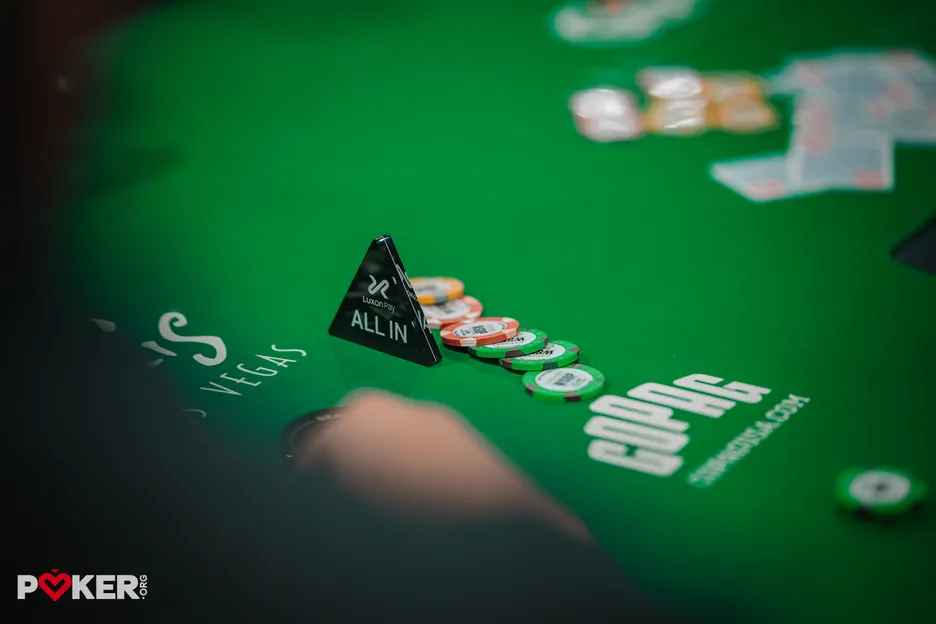
I had a situation where I had a suited ace in the big blind. A player raised, and three people called. There were about 12 or 13 big blinds in the pot, and I had 27 big blinds.
I shoved my suited ace and got it through.
I showed this play to some of my students, and they were aghast.
They said, “Oh my God, you are not doing that well when you get called. How can you risk your tournament life on that?”
Listen, if I can potentially increase my chip stack by 40% without a showdown, I am going to do that often.
Additionally, the only person I am really worried about in that situation is the preflop raiser, because all the cold callers likely would have 3-bet their best hands.
Finally, you are never going to run deep in tournaments if you are constantly trying to protect your tournament life.
If I could give you no other advice, I would say this:
Go for everybody’s throat at every chance.
Most people back off. That is not how you get deep runs.
If you are constantly trying to game-manage and wait for a better spot in 2026, it is likely that a lot of those perfect spots no longer exist.
You end up passing on the marginal spots that do exist, which means you never actually find a spot worth your time. Then you blind down until you need multiple double-ups just to get something going.
Do not let that be you.
I hope these tips are beneficial to you and your game.
Wishing you the best of luck on the felt.
Alex Fitzgerald is a best-selling author published by D&B Poker. Check out Alex’s most recent book, ‘How to Beat Players Who Never Fold.’
Visit pokerheadrush.com and subscribe to Alex's FREE strategy newsletter to receive three FREE training video packs. Follow Alex on X and Instagram.