

Is there anything more obnoxious than those articles that attempt to connect business concepts with random, spurious real world experience?
You know the sort: ‘The 10 things I learned about social marketing from having a secret second family’.
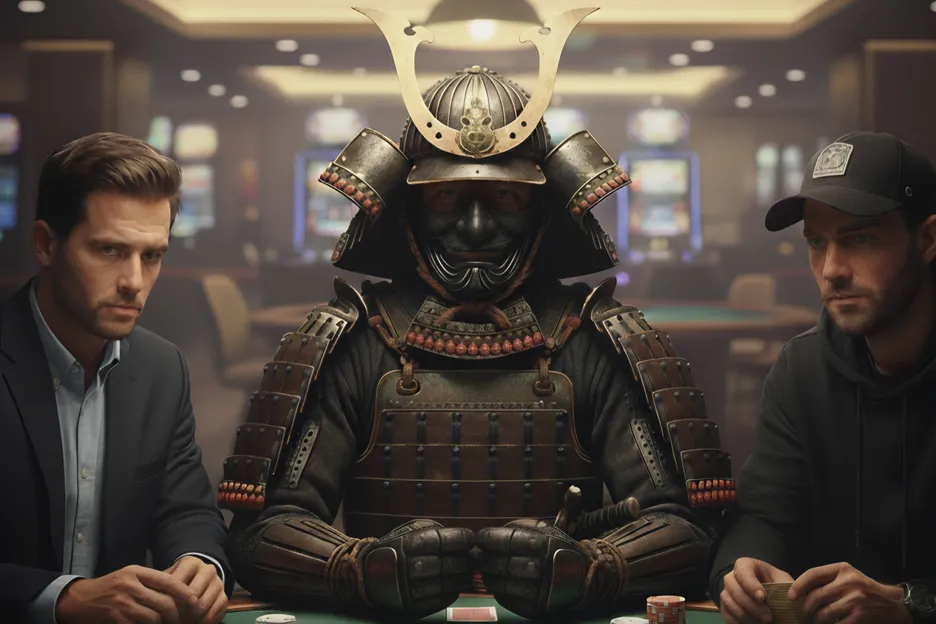
But get this: there was a famous Japanese swordsman who wrote 9 principles for samurai to live by. And it turns out that being a good samurai and being a good poker player are more connected that you’d think.
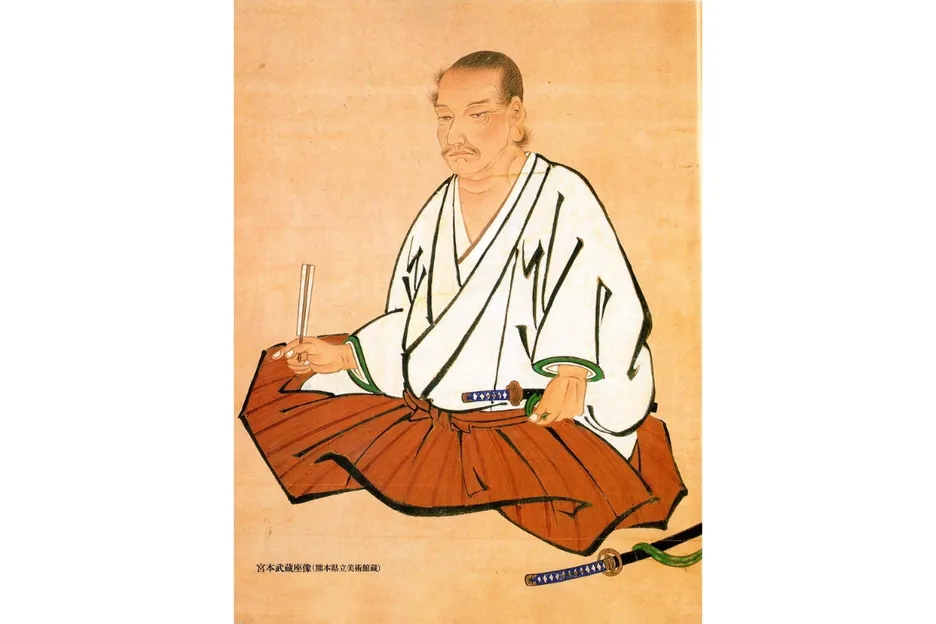
Miyamoto Mushashi (1584-1645) is remembered as one of Japan’s greatest warriors, fighting in over 60 duels, taking part in battles from the age of 13, and writing famous texts such as The Book of Five Rings.
It’s this book, written at the end of his life, that contains the following 9 principles.
Strangely, despite being written hundreds of years before poker was born, every single point relates directly to the game.
1st principle: Do nothing that is unnecessary
In poker, focus is key. Keep your mind on the game in front of you, not the game on TV, get in the zone and don’t waste your energy on things that can only derail your flow. Be intentional in your actions, and know why you do what it is you do.
And of course, don’t do too much needless fiddling with your hands. We all know how that plays out.

2nd principle: Perceive things that are invisible to the naked eye
On the battlefield or at the poker table, heightened perception can mark the winners from the losers.
Even the best laid plans can fall apart if you don’t pay attention to how the enemy reacts to them, where your biggest threats are, and when the opposition is weak, strong or off-guard. Poker is a game of information; gather as much of it as you can.
3rd principle: Develop intuitive judgment ability
Intuition is another key trait of successful players, and you don’t need to be born with it to develop the ability. Practice, experience and mindful play can hone these skills.
Even those who focus their work on solvers have to internalize what they learn so they can apply the knowledge quickly in the heat of battle. Hone your instincts, then trust them.
4th principle: Clearly understand gain and loss in any situation
EV, the samurai way. Understand your equity in every moment to make the best decisions you can.
Everyone’s approach to the risk/reward tradeoff is different. Consider and comprehend your own approach, be true to yourself and prepared to handle the consequences. Gain and loss must be adjusted to in every decision, in every hand, in every session.
5th principle: Know the ways of all professions
In other words, know your enemy. Is the silent guy wearing sunglasses and headphones in the 3 seat a pro, or a nervous newcomer? Is the lady in the expensive suit who keeps raising under-the-gun making a living in the poker room, or blowing off some steam after a day in the board room? Will the day trader on your right have a different attitude to risk than the antiques dealer on your left?
In poker, you play against people. The better you understand them, the better you’ll do.

6th principle: Never leave the way
Once you know the things you need to do to be a successful player, each time you ignore them you are making a decision that will cost you.
Do you play worse when you are overtired, drunk or upset? Do you react to needling by overplaying hands against your enemy? Are you a strict believer in GTO, but you'll play 5-3 offsuit every time in any situation because it’s your ‘lucky hand’?
Do you frequently ignore these -EV pitfalls, even though you know how things usually play out? Wise up.
7th principle: Never stop training for the way
If you think you’ve got it all figured out, you’re doomed.
From fresh training methods, to new concepts, to changing population tendencies, poker is not a game that stands still. To be at the top of the wave, you’ve got to keep paddling.
To keep winning, you must keep improving, and that takes work.
8th principle: If you are self aware, you will be honest
Ego can be a killer. Whether you’re too results-oriented when variance happens to go your way, or convinced you’d crush the super high rollers because you’re the best player in your 5c/10c game at college, self-awareness is a quality that can be hard to attain.
But it’s crucial. Knowing your strengths is important, but being honest about your weaknesses can make all the difference — and actually allows you to address them.
9th principle: Nothing is a detail
It’s tough not to give off information constantly. From timing tells online, to involuntary physical reactions live, we are transmitters of important details that can inform wily opponents.
Be one of those opponents. Open your eyes and pay attention to every clue you see.
The old man in the 7 seat has switched from coffee to beer — does that mean he’s loosening up, or is he playing his last orbit of the night and will be looking to lock up a win? The woman who stepped away for a phone call looks irritable, maybe it was a work call? Is her mind elsewhere?
Be perceptive, stay receptive.
Remember: poker is not war, but it can hurt. Play to win, play with honor, and protect yourself. It's the way of the samurai.
Additional image courtesy of the Kumamoto Prefectural Museum of Art.


