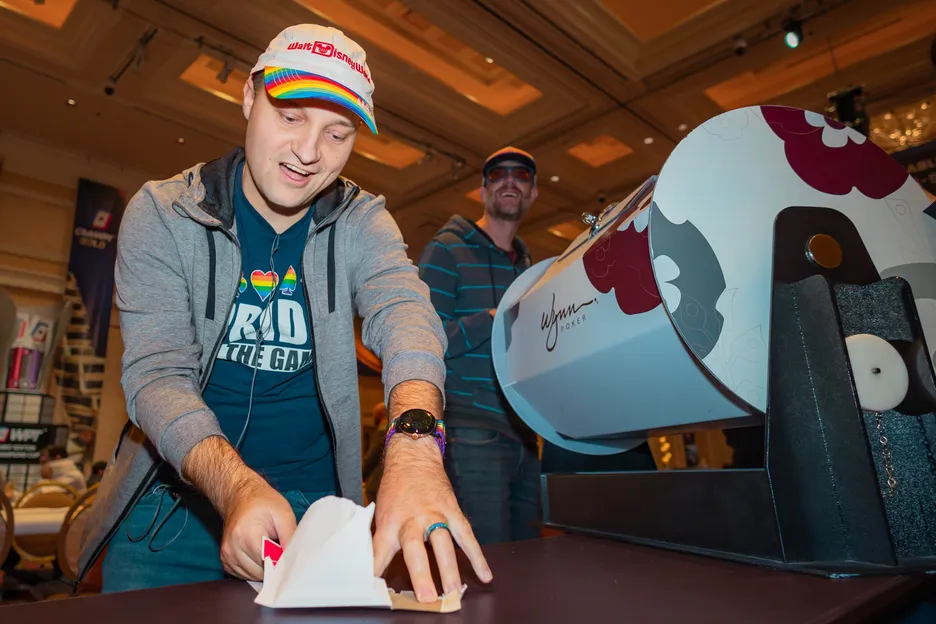


Few formats in poker have had as meteoric a rise in poker as the Mystery Bounty.
What was a novelty format in 2021 became a staple part of live poker in 2022. It seemed every single live poker tour had multiple Mystery Bounty tournaments on the schedule in 2022 — in some cases it became a de facto second Main Event.
Speaking of Main Events, if the Mystery Bounty had its own Main Event, it was, without doubt, the Million Dollar Bounty event at the World Series of Poker.
One player pulled a ticket worth $1 million for eliminating a single opponent in this $1,000 buy-in tournament. The tournament attracted a staggering 14,112 entries and was won by Quincy Borland for $750,120. He wasn’t the biggest winner, however. That accolade went to 42nd-place finisher Matt Glantz, who pulled the $1 million bounty ticket after he busted Justin Lett in 538th place. As a mark of goodwill, Glantz gave Lett a $5,000 bonus for being on the bad end of the biggest bounty in live poker history.
More recently, they've taken off online, so now seems like a good time to dispense my ten top tips for Mystery Bounties.

Winning tips for mystery bounties
1. Late register
The first piece of advice is literally about when to buy into the tournament. Most Mystery Bounty events do not see the bounties come into play until Day 2 or at least well after late registration. It stands to reason that the closer you start the tournament to the bounties, the more chance you’ll have of being in the mix when they become winnable.
2. Play to try to cover people
You can’t win bounties if you do not cover people. Your priority in these tournaments should be making sure you cover as many people at your table as possible, at least when you get close to the start of the bounty period. That might mean taking a gamble to get a big stack. It also might mean passing a profitable spot to maintain a chip lead.
If you are getting to the end of the re-entry period and you are short-stacked, now is a good time to gamble. If you double up, then fantastic; if not, you can buy back in for an average stack, which should cover a decent amount of people.
3. Play tighter if you are covered when bounties are in play
It’s not the worst advice in the world to simply say, 'Do not bluff when you are covered,' in particular when short stacked. Your opponents will be looking for an excuse to get you all-in, they won’t be looking for a reason to fold. On the plus side, this does mean you can value bet thinner than usual.
4. The earlier in the bounty period, the more bounties play a part
Once you get to the bounty portion of the tournament, you should be playing most aggressively to win bounties at the start. Bounties make up a big part of your equity at the start of Day 2. The later the day gets, the more important it is to make the money/get to the final table. Play looser at the start of the bounty period and play tighter as the day goes on.
5. The impact of the big bounty
Every time a small bounty is won, the average bounty value creeps up because the big bounties are still in play. When the big bounty is won, then the average value of the bounty goes way down. If all the big bounties are gone, you should treat the event more like a regular MTT. If they are still in play, then you should make busting players your main goal.
Do not go crazy, however. If 200 players remain, then your chances of winning the biggest bounty are low. Play wider but with survival in mind. If you are at the final table and a bounty bigger than first prize is still in play, then you might be justified in taking a huge gamble to win it.








When should you pull your mystery bounty?
6. 50/50 mystery bounty tournaments are looser than 70/30s
The more of your buy-in that goes into the Mystery Bounty prize pool, the more you should prioritize busting other players. In tournaments where 50% of the entry fee goes into the bounty pool, you should play a lot looser than in ones where only 30% of the buy-in goes into it.
7. Suited broadway hands go up in value
You will inevitably play more multiway pots in Mystery Bounty tournaments as everybody is gunning for a bounty. This changes the types of hands that play well. Small pairs go down in value because you are, at a minimum, facing four overcards in a multiway pot. Hitting a set is a dream scenario, of course, but most of the time you miss and have to fold.
Suited Broadway hands like KQs/KJs/QJs go up in value because they can make a straight or flush, they are usually good if they hit a pair, they block some really strong hands, and occasionally against very loose opponents they don’t need to improve. They are much more robust than small pairs.
8. How to get a player all-in by the river
If you have a good hand and you cover a player in a pot, a simple trick you can do to get them all-in by the river is to bet 10% of their stack size on the flop. This might mean overbetting the flop. Doing this means you can bet two-thirds of the pot on the turn, and you will have a less-than-pot-sized shove on the river.
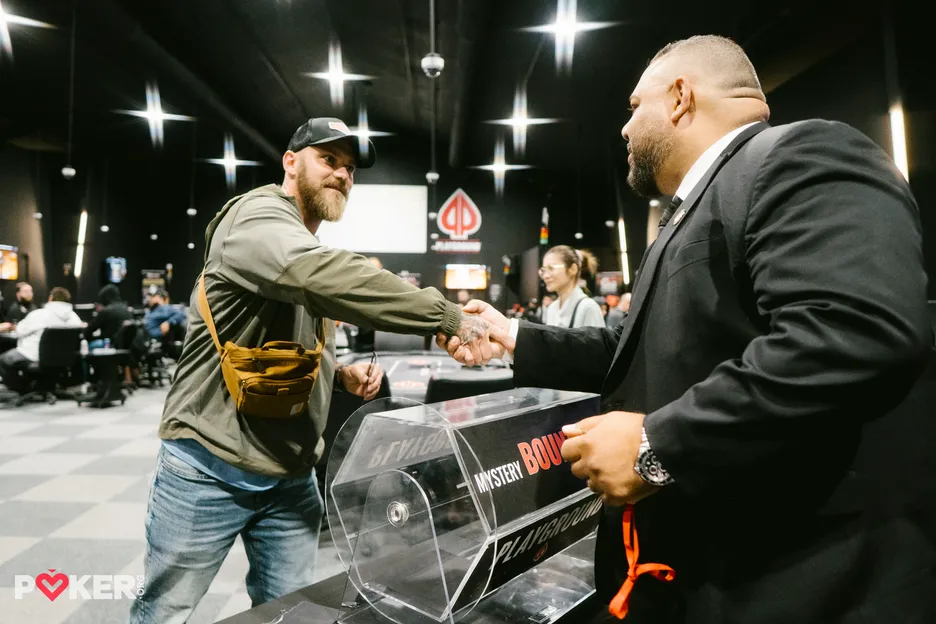
9. It doesn’t matter when you draw your bounty ticket
Seriously, it doesn’t. There is no magic system. Waiting for a few bust-outs or doing it right away does not increase your chances of winning the biggest prize.
10. Accounting for the bounties
When the bounties are in play, the easiest way to take them into account when someone goes all in (and you cover) is to convert them to chips using this formula:
- (Starting stack x average bounty value) / buy-in
Adds these chips to the pot if they are already all in. If they're not yet all in, add these chips to the stacks.
If you want to learn more about mystery bounty strategies, I recommend my course, Mystery Bounty Masterclass (use coupon code POKERORG for a 10% discount), or my book, Mystery Bounty Poker Strategy.
While you're there, check out our other courses on mystery bounties, exploiting soft live fields, target stack satellites, and our signature course, 'Tournament Poker Study Simplified.' Sign up for a free strategy newsletter and get a free ebook at my training site, Simplify Poker.
Dara O’Kearney is an author of seven best-selling poker books, a pro, coach, commentator, and the co-host of the GPI award-winning podcast The Chip Race. Dara is sponsored by WPTGlobal. You can follow Dara on X.
Feature image courtesy of WPT.


