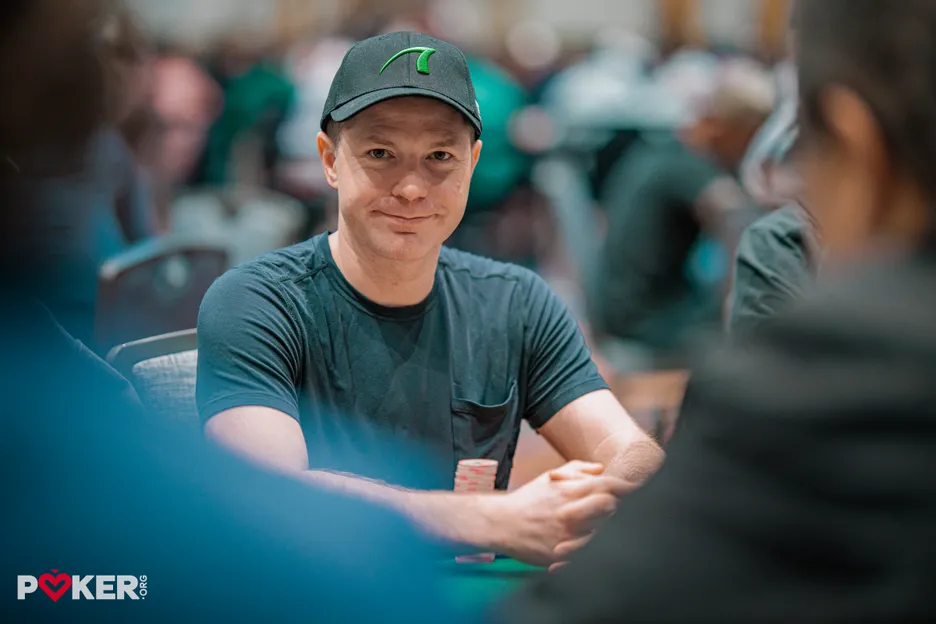


After a fifth-place finish in the Super Colossus at WSOP Paradise in December, Jonathan Little hasn’t slowed down. The PokerOrg Player Advisory Board member has already added two more final tables in 2026 at the PokerGO Studio in Las Vegas.
When he's not making final tables, Little is helping other players do the same through his training site PokerCoaching.com and his ever-growing library of poker strategy books.
His latest title from D&B Publishing, The Complete Poker Workout: Test Your Knowledge with 100 Key Tournament Hand Quizzes, will help sharpen your decision-making under pressure. Little walks you through each scenario, breaking down the action and revealing the thought process behind every key move.
Read an exclusive extract from the book below.
Facing leads (175bb)
8-handed in a $5,000 buy-in tournament with a 35,000 stack and the blinds at 100/200, it folds to you in the lojack with 
 .
.
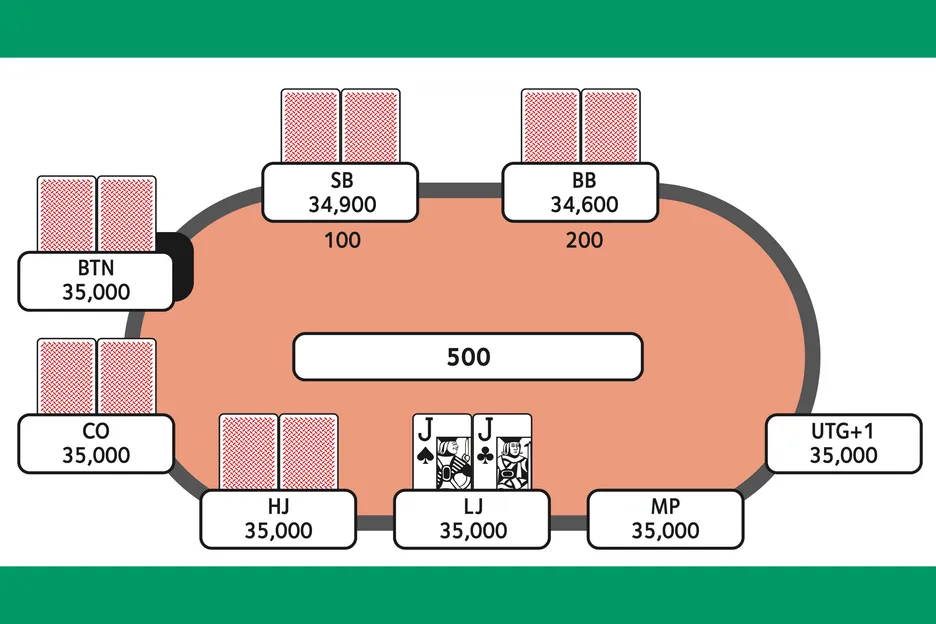
Question 1: Should you...
- Fold
- Call
- Raise to 400
- Raise to 600
Answer: In most scenarios when playing deep stacked, you don’t mind building the pot, making 600 the ideal bet size.
You raise to 600 and are called by the cutoff, a generally tight, aggressive player, and the small blind, a splashy player who overvalues marginal made hands. The flop comes 

 and the small blind leads for 1,500.
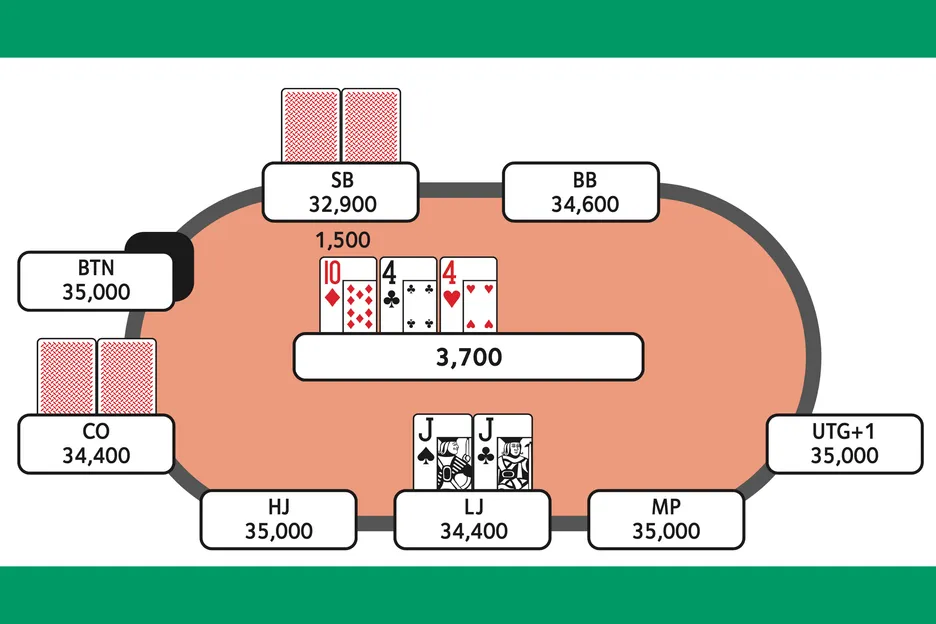
Question 2: Should you...
- Fold
- Call
- Raise to 3,000
- Raise to 4,500
Answer: This is an abnormal situation because no one should have many fours in their ranges. If you were facing the big blind, their range would contain some fours, but you should not worry too much about the small blind’s range containing too many fours, even accounting for the fact that the small blind likes to splash around. By leading for two-thirds pot into two opponents, the small blind is announcing they have a polarized range, which means you should not raise too often. If you happen to know that your splashy opponent will want to play for all of the money with just a ten, consider raising, but in this spot, call and potentially get out of the way if the cutoff raises and the small blind then re-raises or goes all-in.
You call and the cutoff calls as well. The turn is the  and the splashy small blind checks.
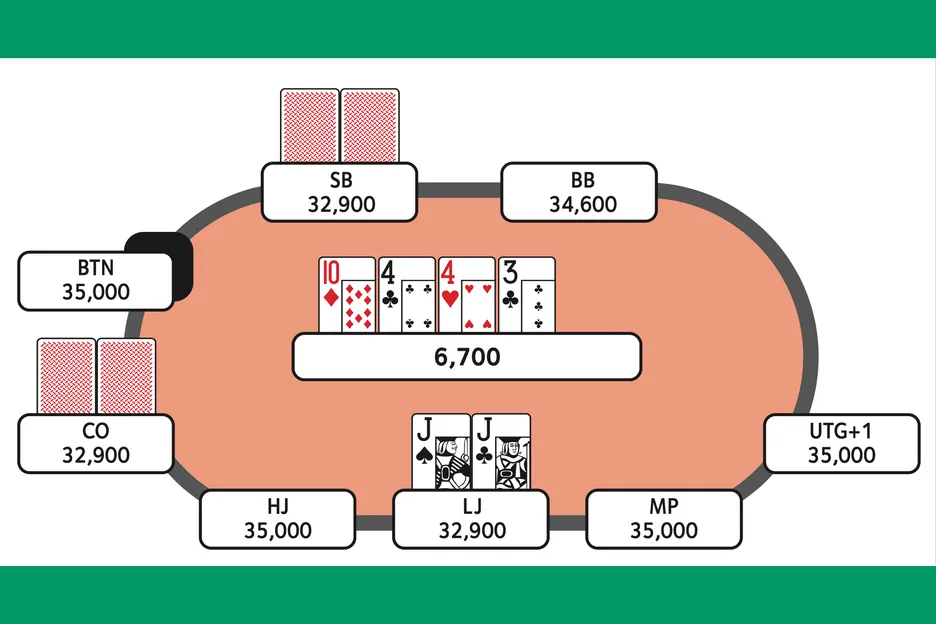
Question 3: Should you...
- Check
- Bet 2,000
- Bet 4,000
- Bet 6,000
Answer: It is safe to assume the small blind would keep betting with most of their fours, meaning you are probably holding the best hand. Checking is not ideal because you allow both of your opponents to realize their equity for free. Since you are likely ahead in a multi-way pot where both of your opponents’ ranges are not too strong, you should use a small bet size. If you knew one of the players had a ten, you could bet larger, but be careful to not bet too large because strong players will be quick to fold hands as strong as top pair in a multi-way pot when facing a lot of aggression.
You bet 2,000 and only the splashy small blind calls. The river is the  and your opponent leads for 5,000.
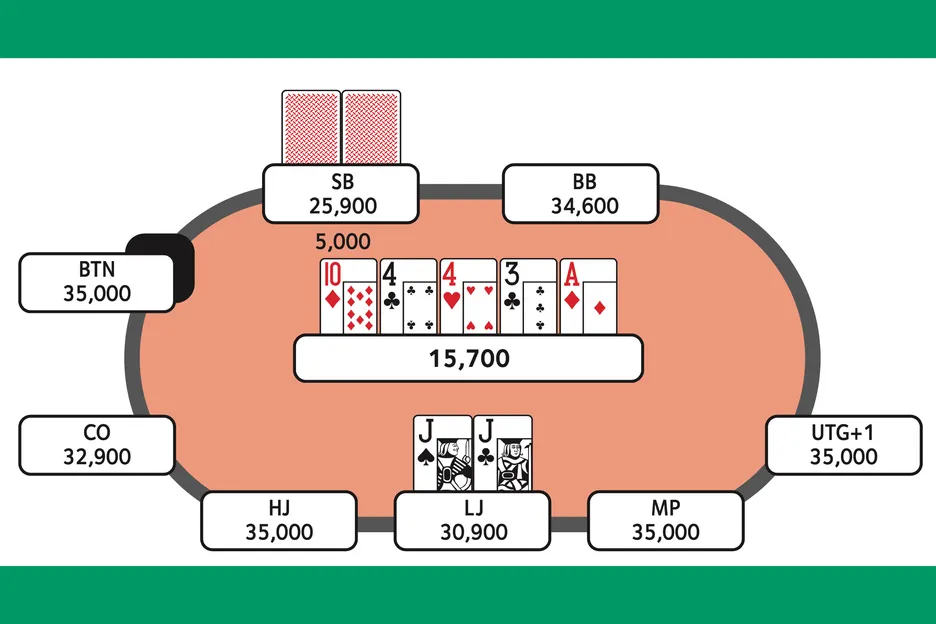
Question 4: Should you...
- Fold
- Call
- Raise to 12,000
- Go all-in
Answer: This is an odd spot for your opponent to lead because some of your bluffs on the turn will be with Ace-high, which will never fold to a river lead. It is difficult to put your opponent on a logical range, so you have to ask yourself if your specific opponent is more likely to be value betting with a hand better than yours, value betting with a hand worse than yours, or bluffing. While you will never definitively know what your specific opponent is doing, in this case, because you know your opponent to be loose and splashy, it is at least somewhat likely they are either value betting with a worse hand than yours or bluffing. Raising has little to no merit even though you probably have the best hand because when you raise and get called, you will usually be crushed. Getting excellent pot odds and closing the action, calling is the only play that makes sense.
You call and your opponent turns over 
 , awarding you a nice pot.
The Complete Poker Workout: Test Your Knowledge with 100 Key Tournament Hand Quizzes is available now from Amazon and D&B Publishing.