


When you’re playing live poker, pay attention.
That’s the biggest mistake most players make. Instead of watching the table, they’re watching TV, scrolling on their phone, or zoning out.
Paying attention is an undervalued skill and one of the biggest edges you can have in a live game.
As the cards are dealt, players look at their hands and almost always do something specific. If you’re paying attention, there’s a treasure trove of information available before a single chip goes into the pot.
Early in a tournament, during the first 30 minutes or so, players are usually careful. They’re focused on not giving anything away. But after about 45 minutes, people relax. They get lazy. And that’s when patterns start to show up, often without them realizing it.
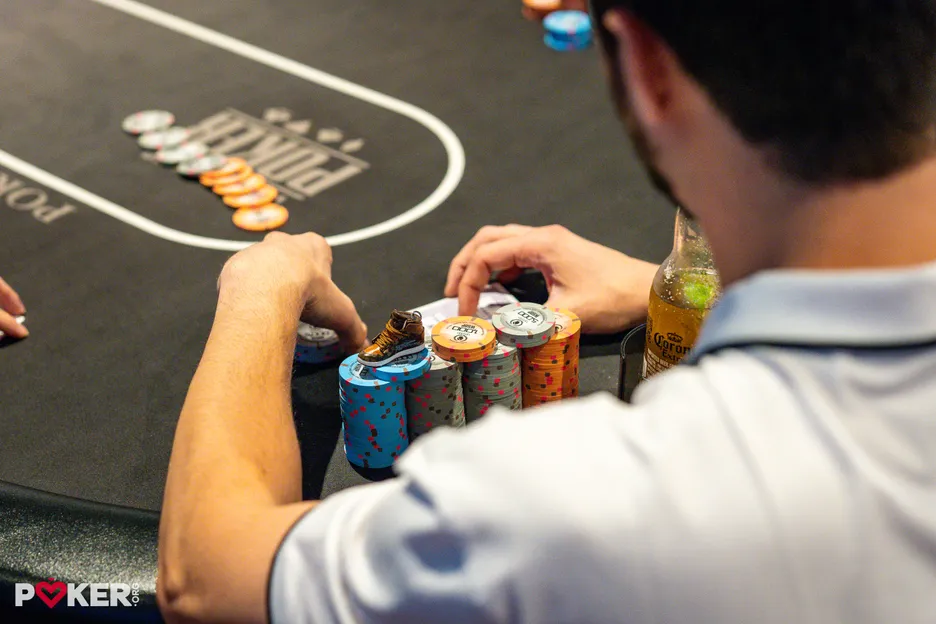
The real tells happen before the big decision
When players think about tells, they usually focus on the decision point of a hand. It’s the river, there’s a big bet, and suddenly everyone’s watching breathing patterns.
That’s not what I’m talking about.
At that point, players are actively trying to deceive you. They’re aware they might be giving something away. The real tells happen earlier, when players first look at their cards.
Here’s what I look for as the cards are dealt – players almost always react differently to good hands versus bad ones.
When someone picks up a good hand, they might pull the cards closer, protect them with a chip, or stare straight ahead like a deer in headlights. Everyone does something a little differently, but if you watch closely, they do the same thing every time.
With bad hands, players stop caring. They’ve already decided to fold, so they don’t think it matters if they give something away.
They might hold the cards loosely, pick them up, and play with them. The thought process is simple: I’m folding anyway, so why does it matter?
That’s exactly what you’re looking for, something a player does every single hand.






Turn tells into wider opens
And yes, it matters.
If you’re sitting to the right of someone and you know they’re about to fold, that immediately changes the range of hands you can play.
You can open wider, apply more pressure, and pick up pots that other players miss entirely. When you see strength, you tighten up. When you see weakness, you attack.
I’ll give you an example from a tournament I played in Uruguay.
I raised all-in on the button with eight-deuce offsuit. It’s a hand that’s usually an easy fold. But I knew it was going to work.
The small blind had a tell: every time he looked at his cards and planned to fold, he placed them slightly to the left. He did it every time.
The big blind had a different tell. When that player had a marginal hand, he stared at his cards for a few seconds. When he wasn’t playing, he glanced quickly and put them down almost immediately.
I saw both tells before the action got to me. I knew the small blind was folding, and the big blind didn’t have enough to continue. I shoved to remove any doubt. Both players folded instantly.
That hand worked purely from observation.
That’s one of the main reasons I love live poker. I can use my experience and know when my opponents are going to play hands, and what they are doing.
And if you’re paying attention, you can often know who’s going to play a hand and who isn’t long before they touch their chips.
Chris Moneymaker is a Team Pro with ACR and the founder of the Moneymaker Poker Tour. Follow Chris on X.


