


For a little fun this week, let’s divert from topics like three-betting strategy or big blind defense to think about one of the simplest, yet commonly overlooked, actions in poker: Looking at your cards. It’s not flashy, but this tiny act (and what you do after looking) can reveal, or conceal, a treasure trove of information.
Tiny act: Big implications
Most live players know that one of their first preflop actions should involve shooting a glance to their left. It’s a chance to review stack sizes and check out the players still in the pot.
A shocking number of those waiting players make almost no effort to hide their intentions, especially when they plan to fold. They peek early, spot 7-3 offsuit, then immediately check out. They flag down the staff for a beer and go back to watching the game on TV until it’s time to chuck their hand in the muck.
To them, this is harmless. They’re folding. What do they care if you know it?
This is hugely short-sighted. Your knowledge of their impending fold might not hurt them now. But it could harm them immensely later when they pick up pocket queens and suddenly get focused. Because you’re paying attention, you’ll recognize them springing to life and avoid making a donation with any borderline holdings. Their laziness when they have nothing costs them dearly when they actually get some cards.
(You also get an instant benefit from noticing their disinterest. Suppose you’re in the cutoff, look left, and realize the button is going to fold. You can now play like you are effectively on the button yourself. By paying attention, you’ve earned the right to open up your raising range with no risk of being flatted or three-bet in position.
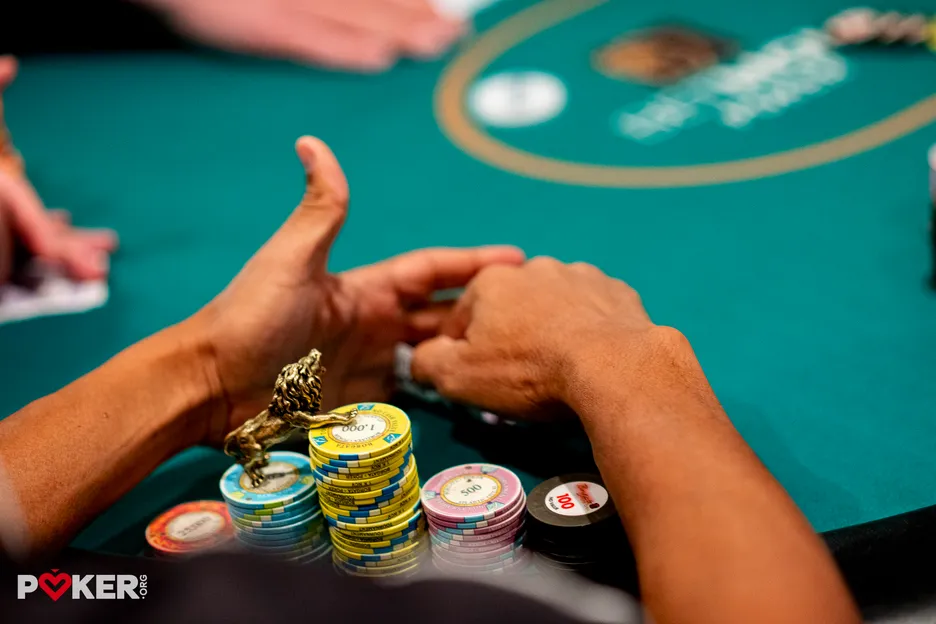





When should you look at your own cards?
What about the other side of the coin? When, and how, should we look at our own cards to avoid giving information away?
Let’s start with 'how.' Different people will have different answers, but they all revolve around the same theme: ingrain a routine. Whatever you prefer, do the same thing every single time. If you cap your cards, cap them every time. If your next step is to look left, look left every time. No deviations. Repetition denies readability.
'How' might be obvious. But the answer to 'when'? Maybe not.
The discussion above is Exhibit A for waiting until your turn before looking – there’s no way to leak information you don’t know. Keep your mental slate clean as long as possible.
But waiting has drawbacks.
Most people at the table watch the player who is acting. If you wait to peek until your turn, everyone’s eyes will be glued on you. They will monitor your reaction, your card and chip handling, your thinking time, the works. While these observations will only benefit the players still in the pot, they can have real value. On top of that, if you face a tough decision, you may feel rushed in the face of the collective stare-down.
This is why some players look as soon as their cards arrive. Nobody is paying attention to you in that moment. You can do your checking unobserved, then have more thinking time to process how to respond to the action.
Because early lookers know their hand immediately, they must standardize their actions the moment they peek. If this is you, don’t let subconscious reactions leak info to observant foes.

Making the choice: Consider looking one seat early
So what’s the right answer? At the end of the day, it’s a personal decision. To each your own, as long as you stay consistent after looking.
With that in mind, allow me to suggest a third option that can split the difference: I peek at my cards while the person to my immediate right is looking.
In many ways, this offers the best of both worlds. All but one player on your right cannot glean anything from you whatsoever. There’s still a reason they don’t tell spies any more than they absolutely need to know.
But by looking one seat 'early,' you get your initial glance while everyone’s eyes are on your neighbor. The accelerated look also extends your timebank a few seconds and allows you to keep play moving when your hand is an insta-fold. That’s a nice courtesy to your tablemates.
(It’s worth noting that if poker continues moving toward shot clocks, chess clocks, or other methods of speeding up play, the calculus may shift, and looking as soon as possible may become the norm. But we’re not there yet.)
Looking at cards poses questions where the right answer varies from person to person. Whatever feels best to you should work fine, so long as you do the same thing every time. If you’d like to minimize the risk of giving away info but also avoid the table’s stares when you’re looking, take a shot at squeezing your hand “one person early.” You just might like the results.
'Improve Your Poker Now!' by Topher Goggin and Alexander Fitzgerald is available as an ebook or paperback from D&B Poker, and now as an updated 2026 audiobook.


