

There’s a reason the majority of poker players know Texas hold’em. It's a simple, beautifully balanced game, easy to learn yet with limitless complexity. And perhaps most importantly of all, it’s the game most other people know how to play.
But as any lover of mixed games will tell you, poker doesn’t begin and end with hold’em.
As longtime poker legend Barny Boatman told PokerOrg earlier this year, “I see no-limit hold’em as this very hardy, successful plant in your garden. It’s choked off all the other beautiful flowers because it just soaks up all the sunlight and all the water. There are some wonderful, exotic flowers out there, if only they’re given the chance.”
Allow us to pick a few beautiful blooms from the weeds, for consideration at your next home game.
Here are four fun poker variants you might not find at your local card room.
Flop games
The second poker variant most people learn is Omaha, due to its many similarities to the first game they learnt: hold’em.
It’s an obvious step to take, as the two extra hole cards in Omaha add interesting wrinkles to the game without overwhelming hold’em players or adding too many potentially confusing changes. You can learn how to play Omaha here.
Omaha uses the successful flop game structure of hole cards + flop, turn and river, but there are a couple of other simple twists you can add to this for a little more variety to your game night.
Courchevel
Legend has it this game was invented in the European ski resort that gives it its name, and while the French Alps may be over 4,000 miles from Omaha, Nebraska, the places are connected by the similar card games they’ve inspired.
In fact, the game of Courchevel plays almost identically to the game of Omaha, but with just a couple of small tweaks that give it a unique flavor all its own.
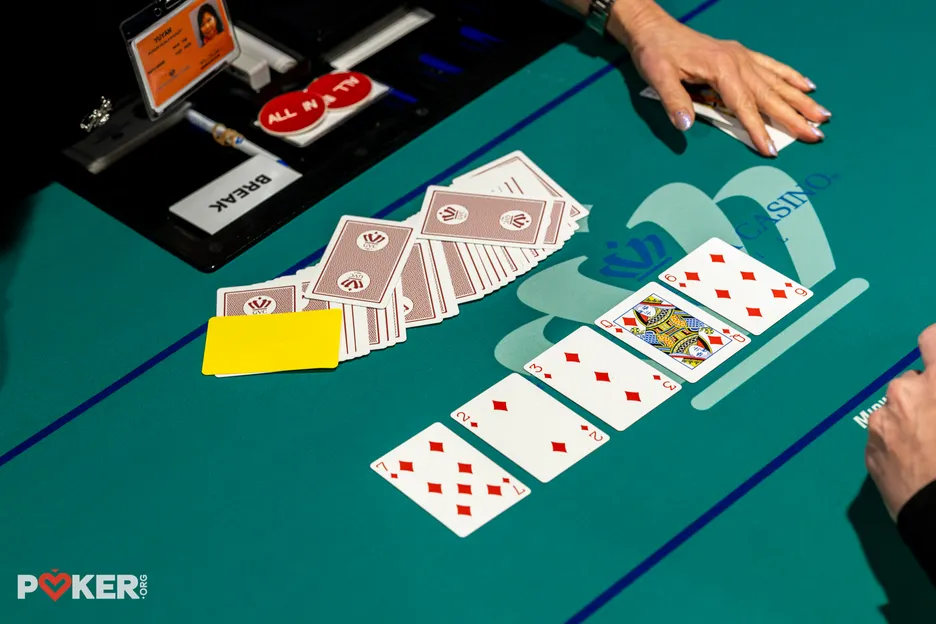
The first difference is that players receive five hole cards instead of four. This allows for more card combinations and can lead to stronger average hands, just as with five-card Omaha. It’s the second difference which is a little more unusual, though: the first board card is revealed preflop.
Obviously, with six of your cards known to you before you make your first decision, Courchevel is a game that gives you a lot of information to act upon. It also gives you a lot of draws. Add in the fact that it’s often played hi-lo (eight or better), and some players may find it harder to find a foldable hand than a playable one.
And here’s a tip: Don’t be one of those players. Like any poker game, hand selection is key, just remember it might take a while to adjust your understanding if you’re coming straight from a game like hold’em. Draws will be everywhere, often to the nuts, and it can often be an expensive, action-packed ride to the river!
Cincinatti
Like Courchevel, Cincinatti is a game named after a place and with a connection to Omaha poker. Unlike Courchevel, which you may find spread in some card rooms and even online at sites such as PokerStars, Cincinnati has more of a reputation as a home game variant; you’re far more likely to find a game of Cincinatti being played around a kitchen table than in a casino.

Why’s that? It’s fun, a little weird, has a bunch of different modifiers you can add and even sometimes uses wild cards. If that sounds like a good time to you, here’s how you can get started.
Players receive four hole cards, followed by four board cards, revealed one at a time. They can use any combination of hole cards and board cards to make a hand, which makes this a tricky adjustment for Omaha players who must always use two hole cards.
Five betting rounds is more than most big bet games, so Cincinatti is often played as a fixed limit game, but the ‘home game’ nature of Cincinatti means you might come across this one played pot-limit or no-limit too, and there are various other tweaks you might encounter.
These might include:
- The number of hole cards or board cards, with some games giving five of one, the other, or both
- Wild cards, whether universal and predetermined (e.g. ‘deuces wild’), relative to each player (e.g. the lowest card in your hand is wild, as are all other cards of that rank — for you specifically), or randomized (e.g. the river is wild, as are all cards of that rank — for everyone)
- The game played as a split-pot variant, hi-lo
- A reduction in betting rounds, such as by revealing the first board at the deal, or by revealing the first two board cards at once
However you want to play it, Cincinnati is an action game where big hands are common and gameplay can be further modified to suit the tastes of its players, making it a fun game to add to your home game rotation.








Fusion games
It’s tough to come up with a completely new game to play, which is why many of the lesser-spotted poker variants take an existing game and give it a new twist — such as those above do with Omaha.
But what would happen if you took two different poker variants and tried to somehow fuse them together into a new way to play? That’s what these next two games do, with some startling and unusual results.
Drawmaha
As its unusual name suggests, drawmaha is a fusion of draw poker and Omaha, meaning it's not necessarily the easiest new game for a novice to pick up, but for those with a little more experience it can be a refreshing new way to play.
Standard drawmaha is a split-pot game, but not played hi-lo; instead, half the pot is awarded to the best Omaha hand, and the other half to the best 5-card draw hand.
Things start off like a game of 5-card Omaha: players receive five hole cards, there’s a betting round, and then a three-card flop. Here’s where things get a little funky, though, as after the flop betting round players can draw new cards.
Once that’s done, the turn and river are played out as usual before the showdown, where the pot is split between the best Omaha and draw hands.
As you might expect, the draw after the flop is the big differentiator in this game, and presents players with interesting options. With eight cards already in play, you’ll likely know whether you want to go for the Omaha half, the draw half, or ideally both, but how will that affect the cards you discard?
You may have noticed that we mention ‘standard drawmaha’ above; that’s because drawmaha has its own set of sub-variants that provide even more fun ways to play, such as:
- Switching out the 5-card draw hand for a 2-7 draw hand (‘drawmaha 2-7’)
- Switching out the 5-card draw hand for the highest number of ‘pips’, so aces are worth one, 2-10 are worth their on-card value, and face cards are worth zero (known as ‘drawmaha 49’, as the highest hand would be four tens and one nine, totalling 49 pips)
- Switching out the 5-card draw hand for the lowest number of ‘pips’, scored as above (known as ‘drawmaha zero’)
- If a player draws just one card, they get a choice of an exposed card or a different, unexposed card (the ‘one open’ rule)
- Adding more drawing rounds
- Limiting the number of cards that can be drawn
Razzdugi
Another game that attempts to bolt two existing games together is razzdugi which, as you might guess, fuses the games of razz and badugi.
This might seem to be an odd coupling, as razz is a stud variant and badugi is a draw game — two separate and distinct branches of poker’s family tree — but they do have one key factor in common: they’re both lowball games. Instead of aiming for the top of the hierarchy of poker hands, you want to make the very lowest hand.
This means it can be easier to scoop both halves of the pot — which is always the ultimate objective in any split-pot game — as winning hands in razz and badugi can be very similar, as opposed to a hi-lo game where they will likely be more different from each other.
Razzdugi should be a fairly easy game for stud players to pick up, as technically it is dealt identically to razz: players initially receive three cards, two down and one up, followed by three more up cards and a final hole card, one at a time and with a betting round after each.
Fixed-limit betting is the norm, and action begins with a bring-in from the highest-ranked door card (the first up card); the lowest showing razz hand then starts the betting on all subsequent rounds.
The twist comes at the showdown, where half the pot is awarded to the best razz hand and the other to the best badugi hand. For the latter, normal badugi rules apply: the lowest unsuited, unpaired four cards wins, with the lowest three-card combo winning if no four-card hands can be made, and so on. Unlike traditional badugi there is no opportunity to discard and draw new cards.
Lowball is a fun way to play and can be a breath of fresh air to players looking to change things up. And with razzdugi, you can play two lowball games at once!
What unusual or lesser-played games do you enjoy? Does your local room offer any of the above? Perhaps you’ve invented a new poker twist to play at your home games? Let us know in the comments.


