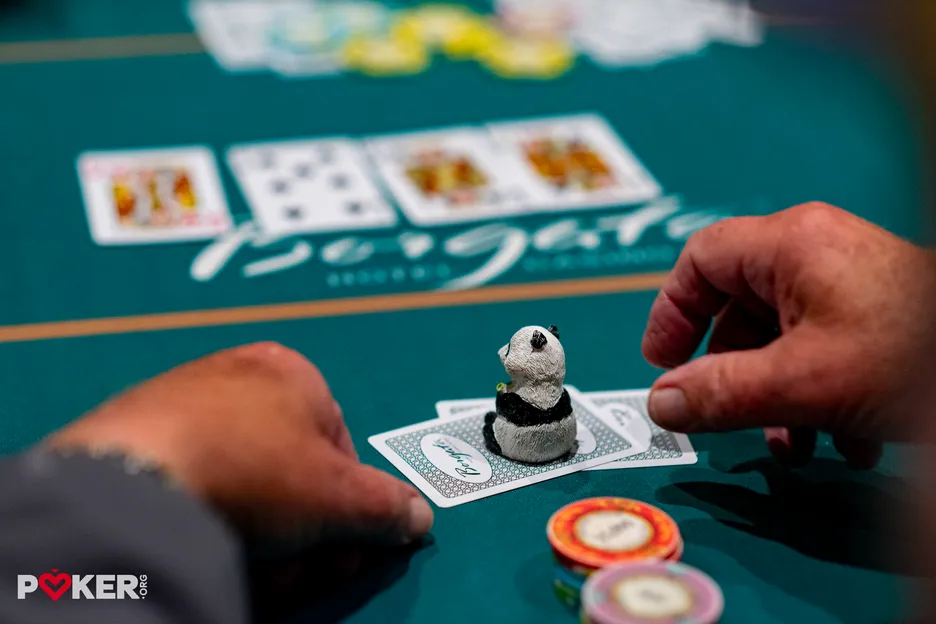


In high-pressure moments, players swear they’re thinking. They’re not. They’re tanking.
And tanking isn’t about the hand. It’s about the mind destabilizing under internal threat.
A big pot. A bizarre river raise. A line that doesn’t map onto anything familiar. You look like you’re analyzing, but inside, the system is scrambling.
You’re not reacting to the board – you’re reacting to the internal experience the moment creates.
That experience, not the strategy, is why we tank.
Two ways tanking shows up
Most tanks come from one of two places:
- You don’t know what to do. New terrain. No category. No pattern. The uncertainty is real, and your nervous system hates real uncertainty.
- You do know what you want to do, but you don’t know if you can do it. Your instinct is loud. Your courage… less so. You feel the ‘yes,’ and right behind it, the internal veto.
Most players confuse #2 for #1 and call it ‘thinking.’ It’s not thinking, it’s avoidance disguised as logic.
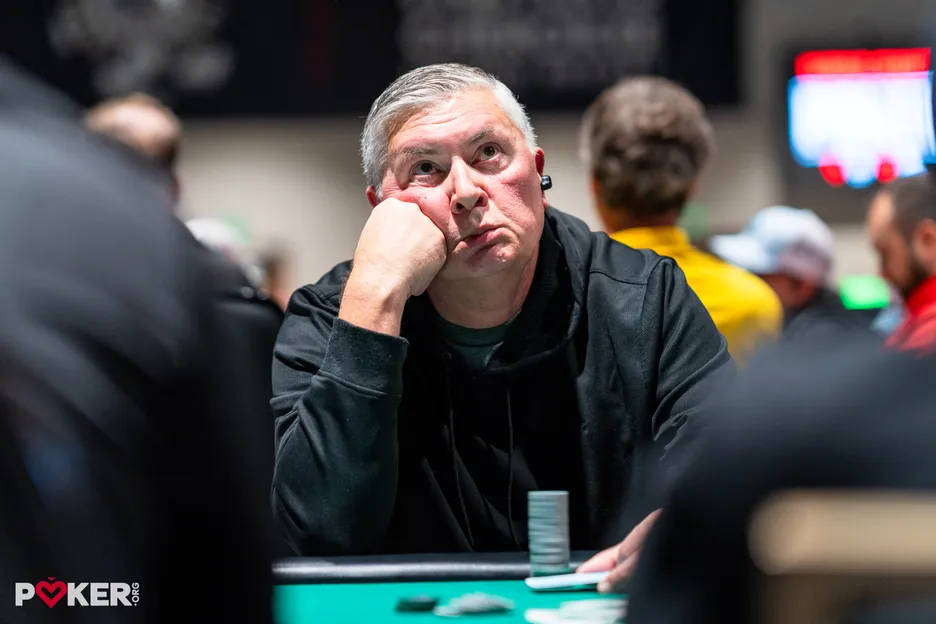









The real problem
Under both versions, the engine is the same – a part of your mind doesn’t want to feel something:
- Uncertainty
- Being wrong
- Embarrassment
- Regret
- Losing control
When those sensations spike, your nervous system does what it always does with threat. It tries to shut the whole thing down. Suddenly the goal shifts from ‘Figure out the hand’ to ‘Make this feeling stop.’
And that’s how predictable tank errors emerge:
- Folding too quickly
- Calling because folding ‘feels worse’
- Forcing logic where none exists
- Pretending to be deep in thought when you’re actually drowning in sensation
This is the fog. The compression. The internal suffocation. When your mind is fighting itself, you can’t think.

This is where RAIN comes in
RAIN isn’t meditation, it’s regulation. It stabilizes the system so you can actually think again.
- RAIN = Recognize → Allow → Investigate → Nurture
But the lived experience isn’t four steps — it’s one motion:
- Notice what’s happening.
- Stop resisting it.
- Feel it directly.
- Remind yourself you’re safe enough to think.
When you do that, two things happen fast:
- The pressure drops.
- Information comes back online.
This is why someone like Phil Galfond looks relaxed in impossible spots. He’s not relaxed because the hand is simple. He’s relaxed because he’s not fighting himself. RAIN recreates that capacity.

How RAIN changes real tank spots
When you genuinely don’t know you admit: “This is unfamiliar terrain.” Instead of forcing clarity, you let that be true.
The body settles. Curiosity returns. And curiosity, not certainty, is what unlocks the actual data: ranges, textures, timing, combos.
Suddenly the hand becomes solvable instead of suffocating.
You tell the truth: “My read is here. My fear is here too.” You stop pushing fear away. You feel where it lives - throat, chest, gut.
Then you remind yourself: “Being wrong won’t break me. My identity isn’t on the line.”
Space opens. Choice returns. And now you’re deciding, not escaping.
What RAIN builds
Use RAIN every time you tank and two muscles grow:
- Tolerance for internal discomfort is the real edge in big pots and big moments.
- Trust that you stay intact even when wrong. This lowers the emotional cost of risk, which raises the quality of your risk-taking.
Without these, technical knowledge collapses the moment the pot gets large or the situation turns strange.
With them, clarity stays available, even when your pulse spikes.
Why we tank
We tank because a part of us is running from an internal experience it doesn’t know how to hold.
RAIN teaches you to stay with that experience instead of getting swallowed by it.
When stability returns, clarity follows. And when clarity returns, decisions stop being fear-management and become what they’re meant to be: Choices informed by reality, not protection.
Tanking is inevitable. Staying stuck is not. RAIN is the difference.
Jared Alderman is a high-performance coach and poker player. Find out more at his JaredAlderman.com.