

On Thursday night in the WSOP $100K High Roller, a contentious hand arose between Martin Kabrhel and Sam Soverel.
Unusually, it wasn’t related to what their cards were, but where they were.
As PokerOrg’s Matt Hansen reported, Kabrhel and Soverel contested a pot when the latter refused to place his cards over the RFID reader until the end of the hand.
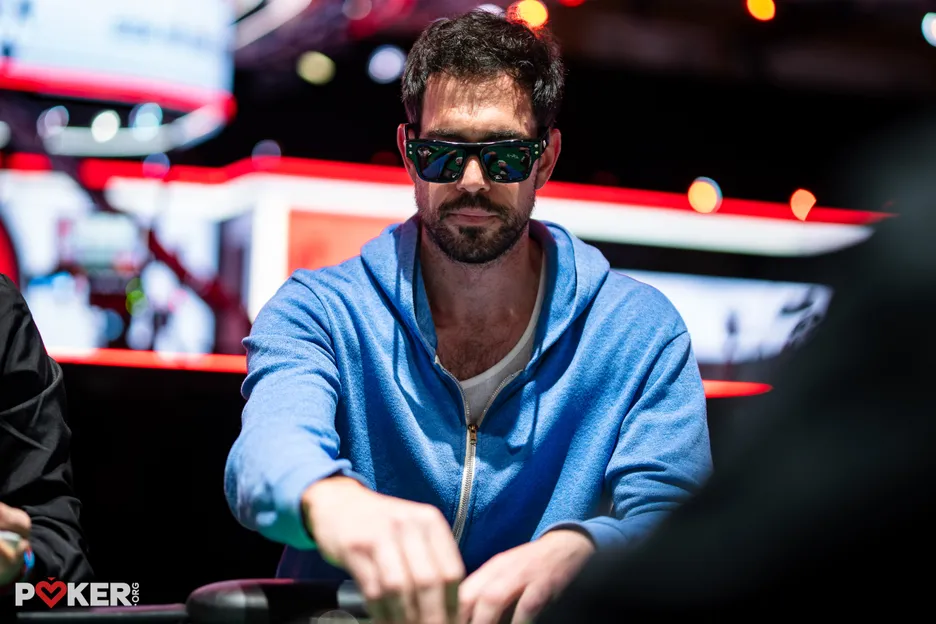
It’s since become one of the week’s hot topics, with the likes of Hall of Famer Nick Schulman (above) weighing into the controversy — see below.
It’s true that players are required to position their cards onto the marked area of the table where the sensors can read them. This allows the production team to note players’ hole cards and show them on screen.
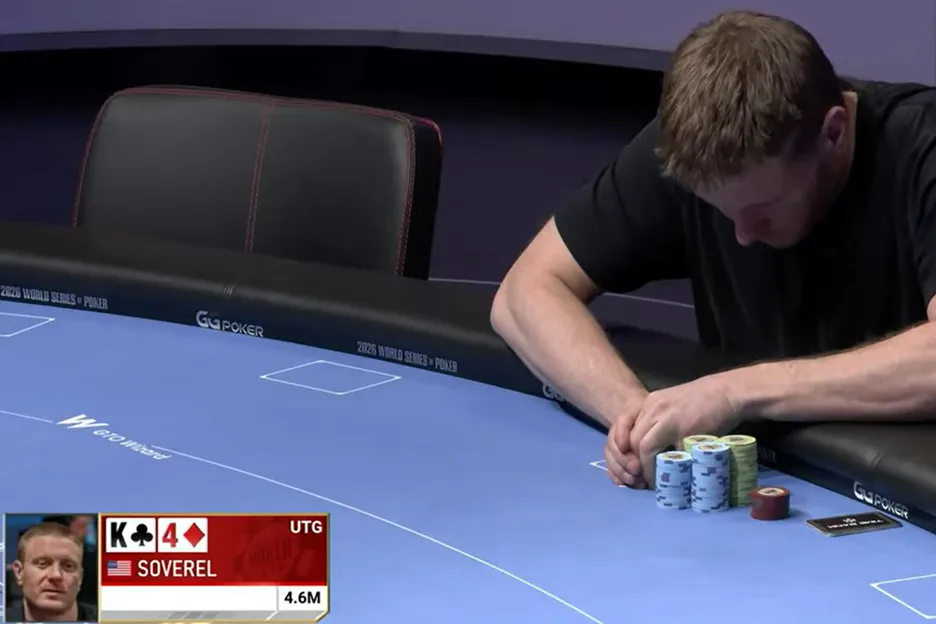
But as Soverel pointed out at the time, it’s only necessary to position them over the sensor by the end of the hand. As the stream is using a delay, production simply needs to know what the cards were in time to prep the hand for broadcast — it’s not technically necessary to do this at the start of a hand.
Kabrhel did not take kindly to Soverel’s approach and complained loudly, calling the Floor over to get a ruling.
It was ultimately confirmed that while all players must scan their cards, it’s fine to wait until the end of the hand.
Watch the situation play out below.
Schulman-approved
7-time WSOP bracelet winner, and 2025 Poker Hall of Fame inductee, Nick Schulman was quick to praise Soverel for his stance.
“Just want to say I really respect how Soverel handled that last night,” posted Schulman in the aftermath, going on to call the potential security vulnerability “The single biggest threat to the game we love, nice to see it being taken seriously.”
While there is no suggestion that the integrity of the set-up at the WSOP is compromised, RFID sensors and hole-card cameras are by their nature a potential security weakness.
The Mike Postle drama of several years ago (get your history lesson here) centered around an allegedly compromised livestream set-up.
With such big money in play during one of the WSOP’s biggest buy-in events — the winner will get over $2.8 million — it’s understandable that players are on guard.
Schulman also gave credit to the WSOP for not brushing the issue aside and posting the clip itself.
“Most operators get shook at the mere mention of cheating and sweep it under the rug, thought it showed integrity to not hide the incident and share it.”





Is RFID the best way?
Schulman’s post is one of many from the poker community that land firmly on Soverel’s side.
Pro poker player and commentator Derek Kwan called into question the need for any RFID technology at all.
“We are already at the point of no longer needing RFID when computer vision can identify just about anything… You still have the production as a point of failure, but enough process, banning devices at the table etc, should be enough to maintain game integrity."

The WSOP tournament content is being broadcast with a sizeable delay, and one might assume that scanning the cards at the end of the hand would not impact the commentators’ ability to see them when the hand is streamed.
But it would take an expert in poker livestreams to really understand the impact.
One man who has been involved in this side of the business for a long time is Johan ‘YoH ViraL’ Guilbert. He posted a lengthy outline of changes he would make to livestreamed poker, including dynamic shuffles and the removal of RFID technology.
Read the full post below.
At the end of the day, when exactly you scan your cards has no impact on the production of the stream or the viewing experience.
So was Martin Kabrhel overreacting to get under his opponent’s skin, or to get his name in some more headlines?
As with so much of Kabrhel’s behavior at the table, it can raise more questions than answers.


