


California officials have approved a new set of regulations that will effectively ban blackjack-style games in cardrooms throughout the state, marking a new stage in the ongoing feud between tribal casinos and cardroom operators.
The new rules that ban "any game of blackjack" and a tighter set of restrictions on player-dealers will take effect on April 1 with later deadlines for full compliance. Casino-style table games are an essential source of revenue for cardrooms and their employees, who now may face severe job loss and closure.
California's gaming laws create two different worlds: tribal casinos and commercial cardrooms. The tribal casinos operate on sovereign land and were granted the right to offer casino games through Proposition 1A, a sweeping 2008 law that was approved in a narrow margin by the state's voters.
Since then, tribes have consistently challenged the workarounds of commercial cardrooms in the state who operate blackjack-like games with players standing in as the house. The use of these 'player-dealers' means it's not a 'banked' game, and a statewide industry now rests on the revenue from this casino-style gambling.
The end of casino games in cardrooms?
New rules state that "any game of blackjack shall not be approved for play." Often times an altered brand name, like Blackjack 21.5, will be adopted to avoid laws about blackjack, but new regulations focus on the mechanics. Wagers against a player-dealer with a 21-point target using standard deck values and a hit/stand/bust structure are now prohibited.
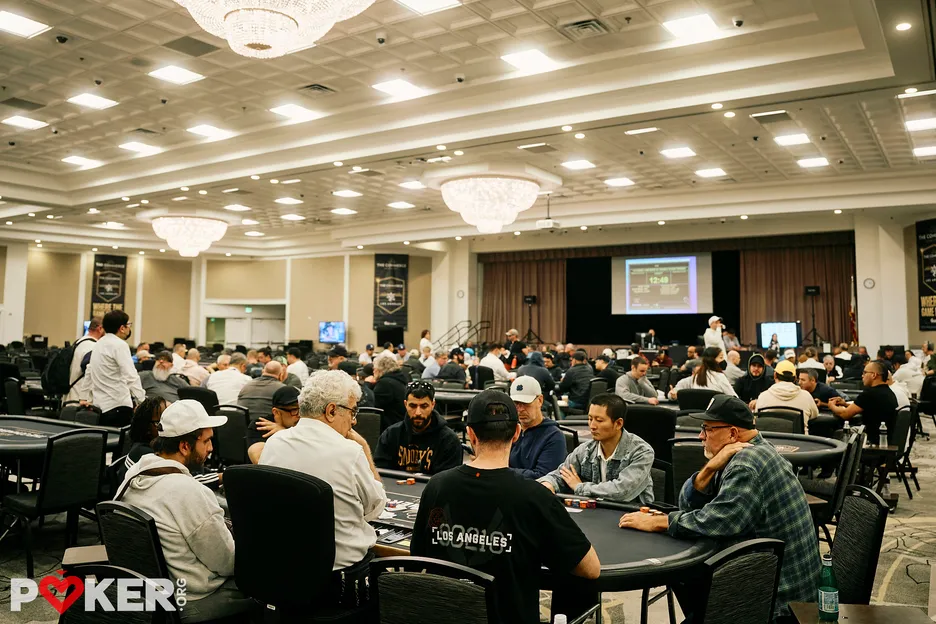
Regulations around the player-dealers will also tighten up, and the ability of third-party providers to operate as the 'bank' will be severely limited. Third-party providers of proposition player services (TPPPS) are businesses that are authorized by the state's Gambling Control Commission to work as player-dealers. They stand in as the 'house' for these games and are licensed by the state.
The player-dealer role must now be rotated to at least two non-TPPPS players every 40 minutes, and the game will end entirely if that doesn't happen. Only one TPPPS representative will be allowed at each table, and they are banned from wagering while not in the position of player-dealer. The jammed-up rules make it almost impossible to have a continuously banked game.





Far-reaching fallout
The consequences could be severe for poker in California. Cardrooms have long paid the bills with casino-style games, and the new regulations could create massive fallout in an industry that now supports more than 18,000 jobs. Those jobs could face impact and the lost revenue from table games could force some of the 88 cardrooms across the state to close.
It's also an industry worth billions in revenue that contributes hundreds of millions in taxes every year to state and local authorities. Municipal budgets that have come to rely on the proceeds would have to find another way to fund essential services, up to half the budget or more in some cases.

The tribal casinos say it's an important step in cleaning up the state's messy gaming laws and enforcing their voter-given rights, which are enshrined in the state's constitution and a series of tribal compacts give tribes the exclusive ability to offer house-banked casino games. Sweepstakes sites, cardrooms, and daily fantasy operators have long been fighting in the grey areas to carve out a place in the state's large economy, creating a game of whack-a-mole for state regulators.
In the end, it's another chapter in the serial saga of California gaming, and this time the tribal interests have the upper hand. Municipalities and labor groups will now increase what was already a strong pushback to protect what has become an essential source of revenue for government services. The state's Department of Justice issued the new rules for review in December and signed off on them last week, setting up an April 1 date for the ban to take effect. Cardrooms have until the end of May to show plans for compliance.


