

The World Series of Poker Main Event is a behemoth of a poker tournament. There’s no event that compares. It’s chaotic, but there is a beauty inherent to the chaos.
If you can’t make the trip out to Las Vegas to witness or take part in the bedlam, the next best thing is to watch it unfold from the comfort of your home.
After several years of partnership with the CBS Sports Network, the WSOP returned to its televised roots on the ESPN platform this summer. Omaha Productions, the content house founded by NFL legend Peyton Manning, was tapped to handle the production of both the livestreamed and episodic content for the Main Event.
It was a gargantuan task – one that Omaha Productions rose to meet head-on.
PokerOrg spoke with Dan Gati, Head of Content at Omaha Productions, to learn more about the unique challenges posed by the Main Event and how he and his team overcame them.
Telling the Main Event story
Capturing the essence and scale of the Main Event on camera is no easy feat. The energy in the room is singular. Thousands of players come from all corners of the globe to take a shot at eternal poker glory and only one walks away successful. It’s the only poker tournament on the calendar that promises an opportunity to turn a five-figure buy-in into $10M.
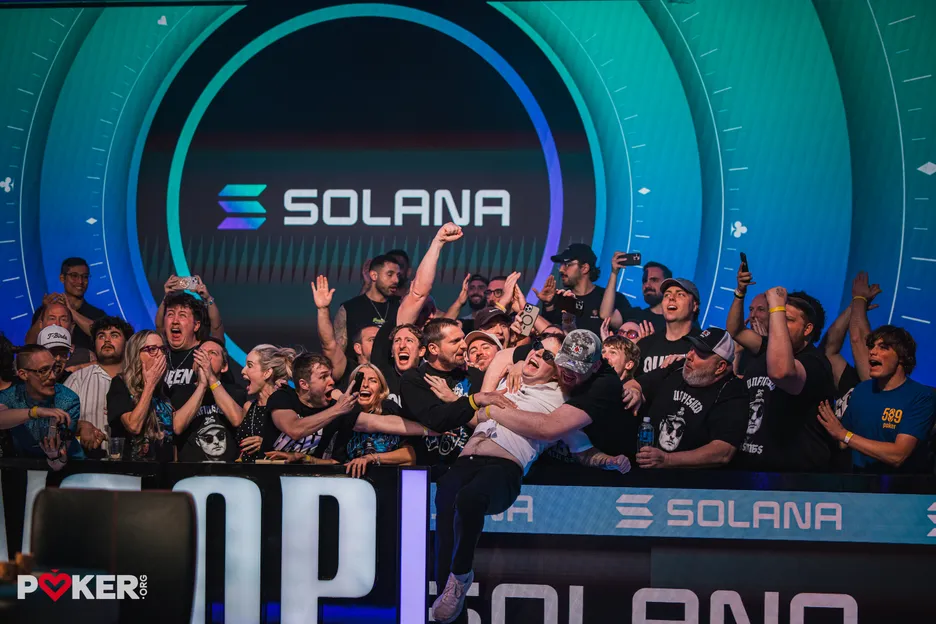
Omaha Productions had boots on the ground from Day 1 onwards, cameras rolling. With multiple feature tables and roving camera crews, the livestreamed coverage was comprehensive. When all was said and done, they had more than 100 hours of footage to work with.
And then came arguably the toughest part of the job – condensing a twelve-day rollercoaster ride into six tight episodes of television.
With more than two decades of experience working behind the scenes in the televised poker industry, Gati understood the difficulties he and his team would face.
“There’s a lot to plan for in live coverage and the World Series presents unique challenges,” Gati says. “You don’t know who’s playing, you don’t know where they’re sitting, you don’t know how long they’re going to last. It’s a challenge in real time to figure out who to follow.
“And when you have a lot of time for episodes, you can go back and try to tell the story as best as you possibly can, but you just can’t be everywhere all at once.”
The Omaha Productions team didn’t have a lot of time. Once the final table of 9 came together at the end of Day 8, it was a race against the clock to trim the fat in the editing room.
When you’re dealing with a fixed deadline and an overwhelming quantity of content, decisions have to be made about which storylines to follow and which to ignore.
Gati was prepared for that – and any blowback that might come with it.
“I’m sure there are things that we missed. There’s always going to be,” Gati reasons.
“I’m sure that there are people who watched the episodes and wondered what happened on some of the days we didn’t cover in full.
“We make editorial decisions based on a lot of factors and we wanted to tell a full story rather than dabble in each day here and there – and we felt like that was the best story to tell. We told the full story of Days 1, 2, 6, and 8, with brief summaries of Days 3, 4, 5, and 7 sprinkled throughout."

“Maybe somebody else would have done it in a different way, but I felt like we made the best decisions we could in a short amount of time trying to build to a live final table on ESPN.”









Overcoming variance
Aside from the time constraints, Omaha Productions also had to contend with the unpredictable nature of the Main Event. How can you possibly account for the variance of a poker tournament when crafting an episodic arc for television?
Well, you can’t. You have to work with what the poker gods give you.
In an ideal world, the final table might include a player whose following spills beyond the poker community – a Daniel Negreanu or Phil Ivey. It’s happened before.
In 2025, the Main Event story told itself. Michael Mizrachi, fresh off of a record fourth win in the $50,000 Poker Players Championship, bulldozed his way through the tournament and won it all.
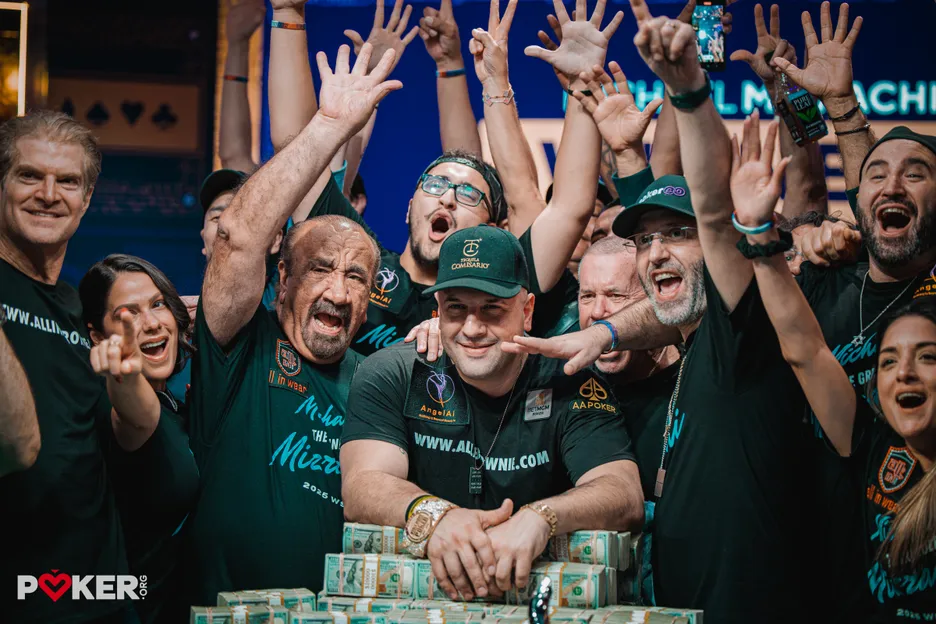
It was an achievement unlikely to ever be replicated – one that the Poker Hall of Fame recognized immediately by inducting Mizrachi into its ranks on the spot.
Sometimes, the poker gods present you with a pre-packaged narrative. Other times they don’t, leaving you no choice but to figure out how to draw the eyes of audiences outside of poker in a different way.
“I’m very interested in people who don’t consume poker regularly – I'm interested in having them watch,” Gati explains. “If they recognize Daniel Negreanu or Phil Hellmuth or Maria Ho, that’s great. I don’t stress it too much because it is obviously completely out of my control.”
As the field narrowed this year, there were a few big-name players still in the hunt – including 2019 WSOP Main Event winner Hossein Ensan, 2025 WSOP Player of the Year Shaun Deeb, and Poker Hall of Famer Todd Brunson.
“When Deeb, Ensan, and Brunson are in the final 18, you start thinking about what can be,” Gati admits.
Alas, it wasn’t meant to be. None of the three reached the final table. There would be no layup of a story this time around.
Interestingly enough, the lack of a major player at the final table provided Omaha Productions with an opportunity. With nine relatively unknown stories to tell, they had a chance to introduce new characters to the poker world.
“It’s incumbent upon us to make sure that people care about the nine players who are there,” Gati explains.
And that’s exactly what Omaha Productions did. Luckily, this year’s final table had no shortage of compelling stories.
While much of the narrative centered on 22-year-old Lucas Jumalon – the eventual champion – players like Rami Hammoud, Han Feng, and Greg Mueller also shone throughout the episodic coverage.
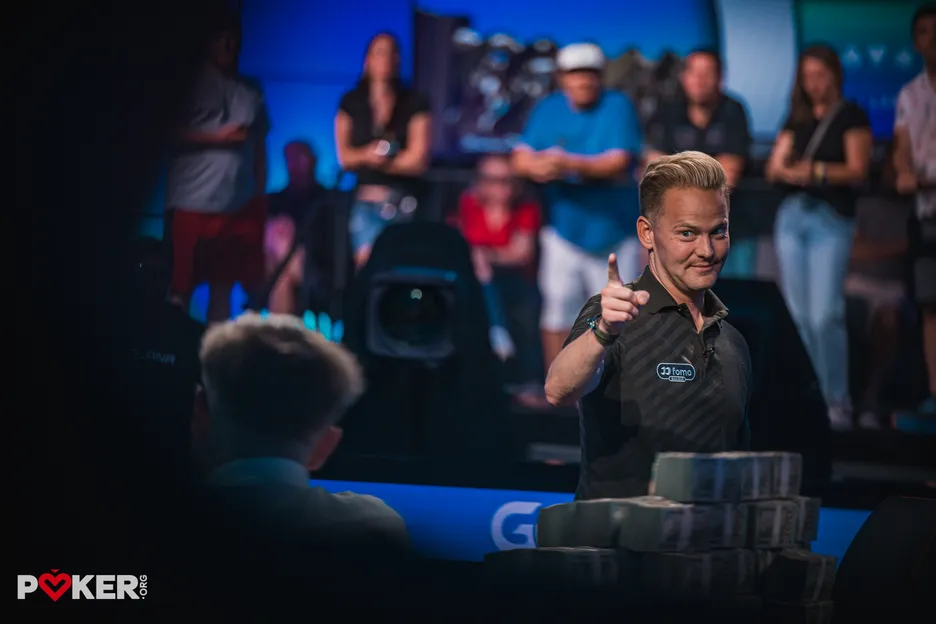
As did Lauri Saaskilahti, the second-place finisher from Finland.
“Lauri Saaskilahti was an incredible character – maybe even underrated at the final table in terms of the performance he gave,” Gati argues. “He was talkative, he played to the cameras, he was dancing.”


The delay debate
Omaha Productions also benefited from the three-week delay between the end of Day 8 and the start of final table play.
With plenty of time to coordinate with friends and family, each player had a rail of supporters that added immensely to the atmosphere of the overall production – both during the livestream and in the episodes that followed.
“I give a lot of credit to Ty Stewart at the World Series for environment he created, and the buzz around the event, plus the three-week delay,” says Gati. “I think the rails were much bigger this year than in previous years because of the amount of time that people had.”
In the aftermath of the final table, the delay became the focus of debate in the community.
Was the break too long?
And, if so, what is the right amount of time between reaching the final table and playing it out? If we’re going to listen to anyone’s opinion on the matter, shouldn’t it be the players at the final table?
Following his $6M runner-up finish, Saaskilahti told PokerOrg that he too benefitted from the break: "I was mentally and physically done on Day 8. I could really recharge my batteries and have a good mindset coming into the final table."
Conversely, the Finlander also noted that the pause of play could have been a week shorter.
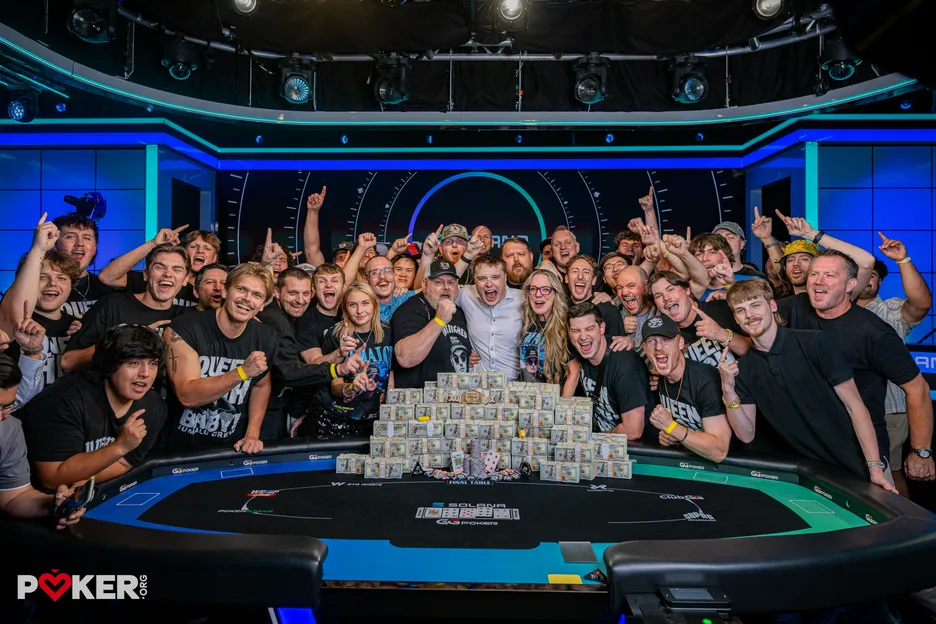
“I’m not really going to weigh in on what the right amount of time is,” Gati tells PokerOrg. “But as far as the crowd and being able to prepare for the final table production-wise, this was a great three weeks for us.”
There’s certainly an argument to be made for a shorter break.
10 to 15 days seems a reasonable compromise – anything less runs the risk of not only a lackluster environment, but also a rushed timeline for audiences to acquaint themselves with the players battling for millions of dollars.
'I'm heavily invested'
Gati and his team at Omaha Productions rose to the task at hand – anyone who watched the coverage can attest to that – and the higher-ups at ESPN praised the success of the partnership.
“The production of the 2026 World Series of Poker was a quintessential example of ESPN’s outstanding partnership with Omaha Productions," says Dan Kole, Coordinating Producer at ESPN. "No where else could avid poker fans gain this level of coverage, access and innovation on the event. The product that Dan Gati and the rest of Omaha Productions provided, alongside the support from Ty Stewart and the World Series of Poker, was tremendous, from 9,208 players down to just one.”
Still, there's always room for improvement.
“I think we learned a lot from 2026 and there are things that we will improve on – so much of it is going to be dependent on what the schedule is and what the deliverables are,” Gati says. “We’re always wanting to innovate and do more for poker broadcasts. I’m a television producer, but I’m also a huge poker fan and I’ve been around the poker world for 25 years.”
Gati understands the poker community – and, just as importantly, he understands television. With a champion for the game leading the way forward, the resurgence of televised poker is well on its way.
“I’m heavily invested.”