Upon arriving in St. Augustine, Florida, for the Poker Atlas Tour, I saw David Lappin’s post on X regarding the WSOP $500 Colossus event’s final hand.
Let me briefly recap what happened, and then I'll share my perspective as a tournament director.
On the first hand of heads-up play, it appears as though the dealer pitched the first card to the button and then continued dealing the hand to the big blind. That's backward from how it's supposed to be. The button is always supposed to get the last card, even in a heads-up situation.
As the action unfolded, Justin Smith was dealt 
 versus the
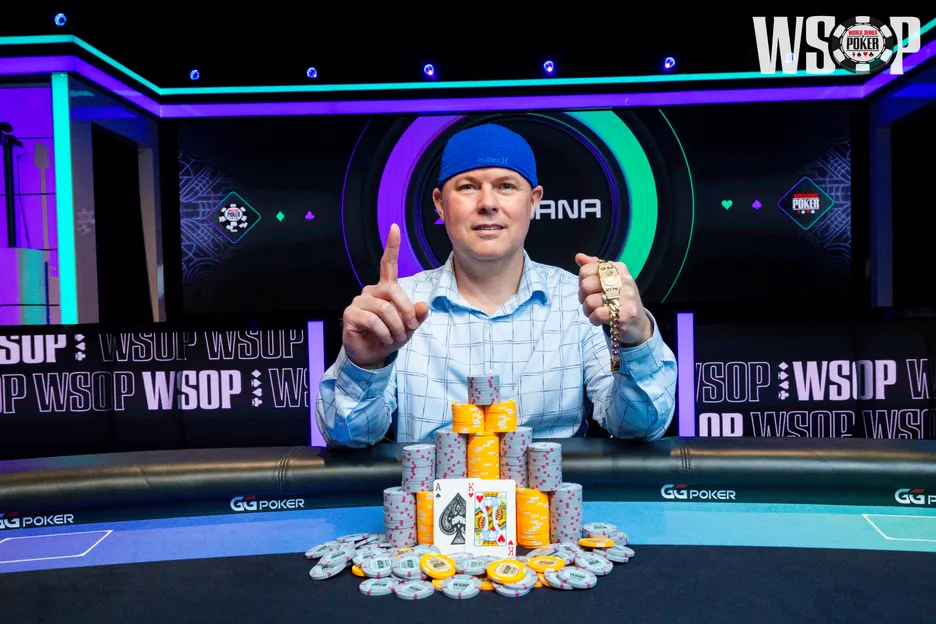
 to Miles German, and all the money went in preflop. Smith hit a flush on the river and won the tournament, the bracelet, and $550,000.
Did the dealer error change anything?
Once it was discovered that the dealer dealt the cards incorrectly, people were understandably upset. It felt as though the wrong person had won the tournament and that it should have gone the other way, because the hand should have been dealt exactly backward. Which, in some sense, is true.
And let me start by saying, in this case, it really sucks. The whole situation sucks.
I understand that German will feel as if a bracelet was taken away from him. I also understand that many players will feel the dealer made a huge mistake and that it cost people a lot of money.
In some regards, I agree. However, there's a broader point that echoes the situation I discussed recently on PokerOrg: the four-card flop.
What did I say about how that hand was dealt?
The key is upholding both randomness and procedural consistency. When a mistake isn't corrected before action is taken, honoring the accepted deal matters more than the individual outcome. We need to do something that is fair for everyone.









Accepted action is what matters
In this situation, once both players accepted their cards and acted, those cards stand. This upholds the integrity of the process, even if the result is tough. That’s why the result, in this case, should stand.
Why do we follow this approach?
Because everyone agreed that these were the two cards that they were going to play. At that point, the action is accepted. Waiting to see the result before arguing what should happen sets a bad precedent.
Why do we maintain this policy?
Focusing too much on individual errors undermines consistency and fairness, inviting players to exploit dealer mistakes rather than ensuring a level playing field for all. You incentivize players not to point out mistakes when they occur.
Let’s say, as a player, I see that the dealer gave the wrong cards. And I know that they're going to hold the dealer responsible. If I don't say anything, I will get a freeroll. I can go all in and play that hand. If I win, I win the tournament. If I lose, I could still win the tournament by calling out the dealer’s mistake.
Staff are going to make mistakes. You can’t just say, "Hey, we know you're going to make mistakes. If you do, you are now responsible for the entire outcome of the tournament." It can't work that way.
Why do these mistakes happen?
I’ve seen feedback on X saying that dealers should be better trained and that we should get more qualified dealers overall.
I understand that perspective, but here's the thing: you tell a dealer for 99.99% of the tournament that the small blind gets the first card. And then at the most important part of the tournament, heads-up play, you tell them, scratch that, we're going to do it all differently.
No matter how good the dealers are, mistakes are going to happen. The fix in these situations is for the player(s) to say something.
Because if they don't, the outcome will be whatever happens in the hand. And in this case, that's exactly what should happen. The hand should stand as it was played.
Justin Hammer is the Live Events Director for PokerAtlas, an online tournament director for the Texas-based poker app Hijack, and a tournament director at Thunder Valley Casino Resort. He also works as a consultant and is a minority owner of Desert Bluffs Casino in Kennewick, Washington.
For more info visit PokerAtlas.com, HijackPoker.com, and bluffs.poker. Follow Justin on X.