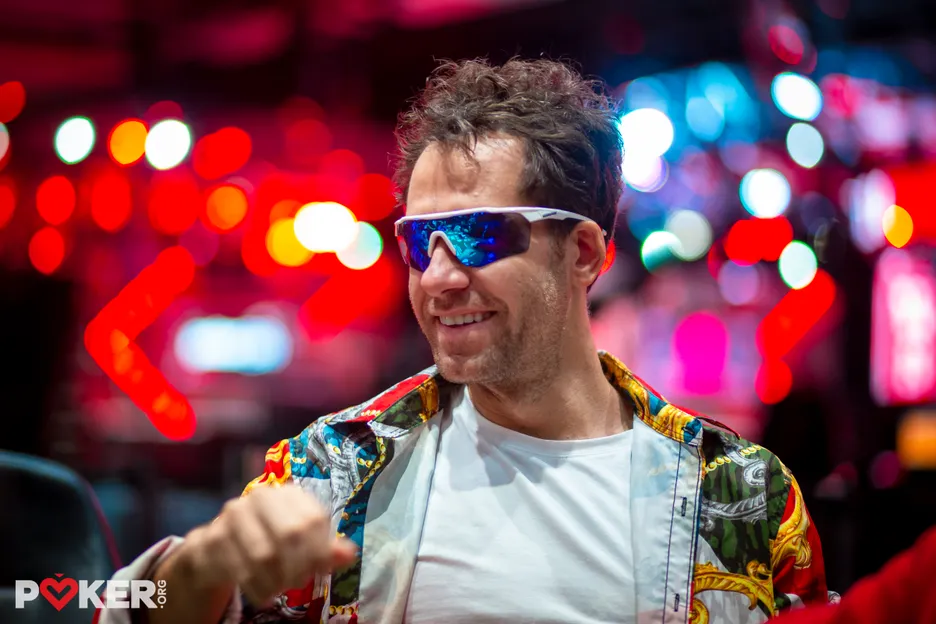


Only a select few poker players are better known by their nicknames than their actual names these days. Dan ‘Jungleman’ Cates is one of them.
The early days of online poker saw many young players start out on the road to becoming today’s biggest stars, and back then screennames were often all we had to go on.
Over time, most of that generation have shaken off those early online nicknames and become better known in their own right. A grown-up ‘Isildur1’ goes by Viktor Blom these days, ‘OMGClayAiken’ is now the famous Phil Galfond, and ‘iluvthewnba’ is still racking up the wins, but under his real name of Isaac Haxton.
But will Cates ever lose his famous nom de guerre?
Jungleman is still Jungleman, the name he picked to use online all those years ago. In an exclusive edition of PokerOrg’s The Interview, coming this week, he discusses his career from its very beginnings all the way through to his recent record-breaking heads-up encounter with Ossi ‘Monarch’ Ketola, from which he walked away up some $15 million.
In another sneak peek of the upcoming episode, let’s rewind to the start of the tale and hear Jungleman’s origin story — as well as the thinking behind some of his famous at-the-table costumes — in his own words.
The full episode of PokerOrg’s The Interview with Craig Tapscott will be available later this week.
Working at McDonald’s and the first big win
I wanted to play poker really badly in high school. I played other games, like Command & Conquer and other RTS [real-time strategy] type games that were fun. But poker seemed like a game where I could play it and win money.
Not quite as much of a dopamine rush as, say, building an air force or a bunch of nuclear tanks or whatever [in Command & Conquer], but I wanted to play my friends at high school.
I played some kids that were better than me and they kicked my ass. I lost $3,000. I worked at McDonald's, grinded, then found out I could actually play online even though I wasn't 18 years old yet.
I grinded my way up from there to winning pretty quickly. I quit McDonald's.
At 18 years old, I had about $350 in the account. And from there, I grinded up some more and then I won a tournament for $5,000. That was the last time I ate sh*tty cafeteria food, and I just ate out from that point on basically all the time.





Following the money
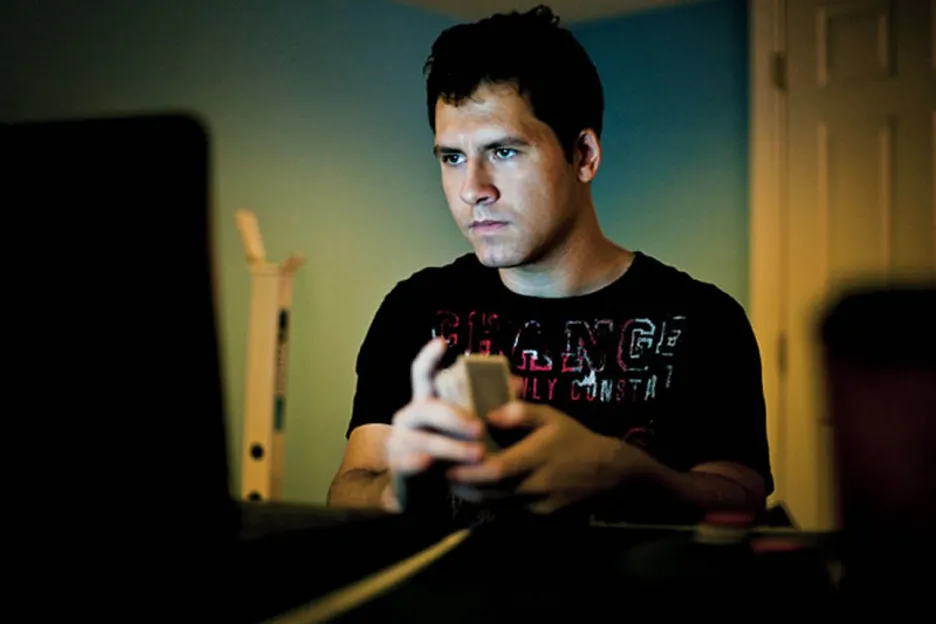
I was playing mostly Sit & Gos for a long time, before moving to heads-up cash. I'm sure part of me liked it a bit, but I didn't really do it for the challenge. I just went where I thought the money was at.
When I moved to heads-up, I made $350 in one day and it sure seemed like it was just a lot faster than what I was doing in Sit & Gos, so I switched from Sit & Gos over to heads-up. It's a pretty easy jump between Sit & Gos and cash games.
No one really knew who I was back then, of course, and it took me about two years to get to the highest stakes possible. And that was when people started to know who I was. I was a millionaire by then.
And then I took the 'Durrrr Challenge' and that's when people really knew who I was, especially when I started beating him [Tom Dwan]. That’s really when I became well known for poker.

Breaking the news to his parents
My parents weren't too thrilled with it at first, but they seem to think that I could succeed at whatever I did and were kind of okay about it for a while. But when I started making more money than them, that's when they didn't mind it too much, I think, or they minded it in another way. My mom didn't care, maybe my dad was a bit annoyed.
It's not that he was conservative, but he felt it wasn’t ‘real’ in comparison to running part of a company, for example. I don't know if that's easier or not; it's easier in some ways but harder in some ways for sure. To me, I think it's easier, but it's way different. It requires different skills.
Now, poker's quite a bit harder than it was 15 years ago, for example. If someone does play in soft games, it's definitely true that poker’s easier, but if someone was to play in competitive games online, the gap is closer.
Breakthrough moments
I had an ‘a-ha’ moment, of sorts: It helped for me to imagine categories of hands, you could say between bluffs with a certain kind of blocker potential or not, or gutshots or weak top pairs, weak middle pairs, etc. and play them in similar sorts of ways, or think about how to be playing them in your overall strategy. All games kind of work like this.
Then, it just seemed natural that I was able to see the holes in other people's strategies in comparison to whatever I was doing. It just seemed as if people were a little bit more stagnant or rigid than myself, whereas my whole way of doing things was just to adjust to the other players.
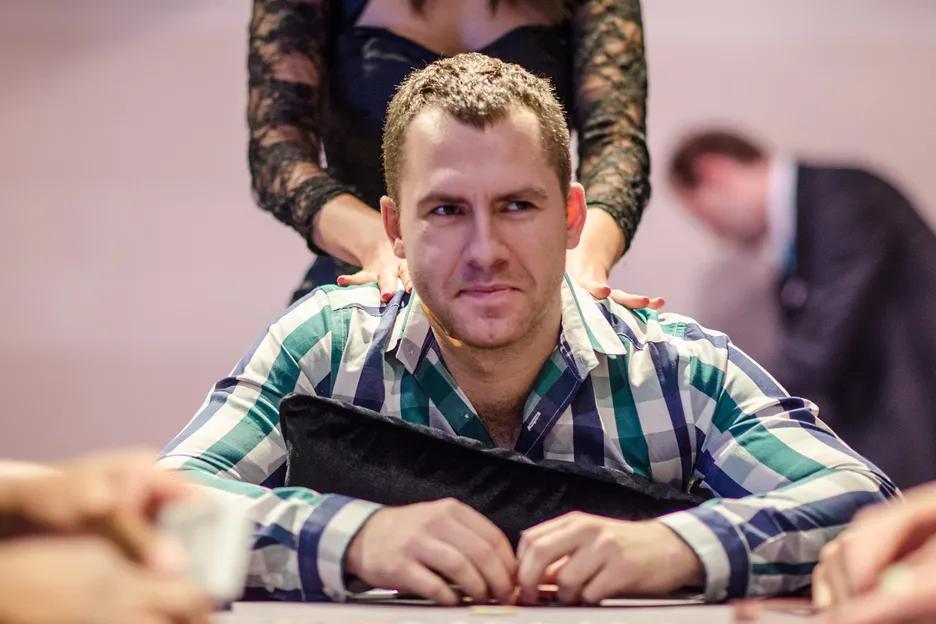
I didn't have one way of doing things. I had things that went well against the population, but I didn't truly understand poker at the time. A big part of it was just that I was able to counter opponents better than they countered me. I don't know how to teach that.
That would be where I started thinking I was better than other players. Maybe also it's just that it seemed that a lot of players fell into certain ‘hive mind buckets’ quite a lot, meaning they did things in one kind of way, and it didn't really make a whole lot of sense to me. And I often just exploited those population tendencies.
Dressing to impress
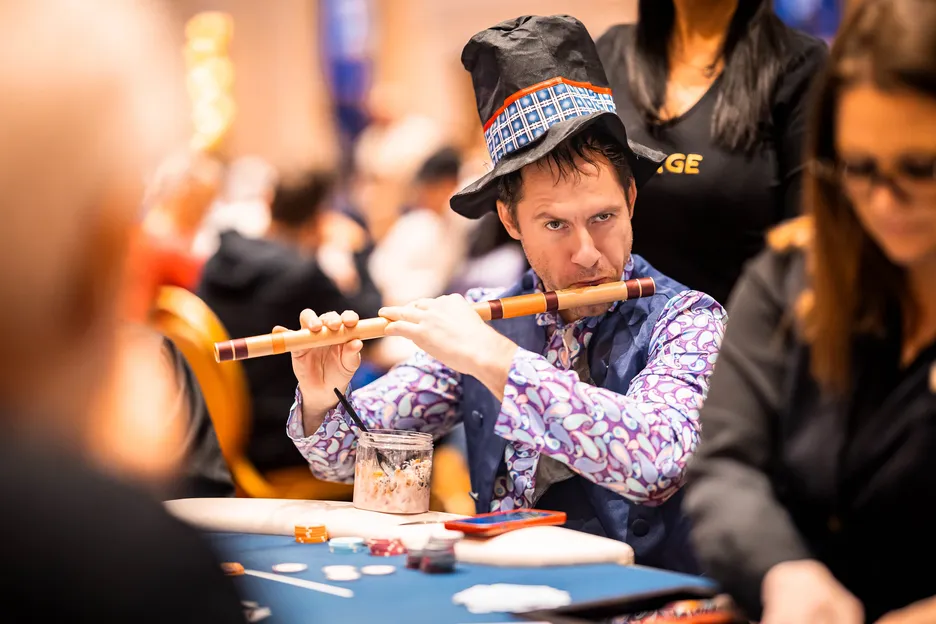
[The dressing up thing] is a bit improvisational, but it's also done in such a way that it's not totally random. I like for it to be a fun foil to what other people are doing. So, Macho Man is kind of the opposite of a lot of poker players. He’s full of himself, but it's to the point of being totally absurd, and poker players don't really dress like that — even though some of them do have some totally absurd tendencies.

I try not to piss people off. If they get really rattled and upset because I'm dressing as Macho Man and doing some goofy stuff, okay, that's a nice bonus. But I'm not trying to distract anyone or really throw them off. If they get thrown off by stuff like that, I don't know what to tell them. ‘Sorry, bro.’
[At the WSOP in 2023] Phil Hellmuth said he wanted to be the world's greatest showman and someone had the idea of me being a lion in a cage. So, you know, it's time to be a lion in a cage and growl and stuff.
That one was a little bit of ego destruction. I thought ‘Man, this is really nuts’. People thought it was a bit much to have Phil Hellmuth dragging me around, but I did not care about that, to be honest. But it was a little much to have loads of people staring at me, just growling.
The above extracts are from PokerOrg’s The Interview, an in-depth conversation between Dan ‘Jungleman’ Cates and Craig Tapscott.
The full episode drops later this week — in both video and audio versions — at PokerOrg, YouTube and wherever you get your podcasts.
Additional images courtesy of the WPT/PokerGO/Antonio Abrego/Alin Ivanov/Suited Designs.


