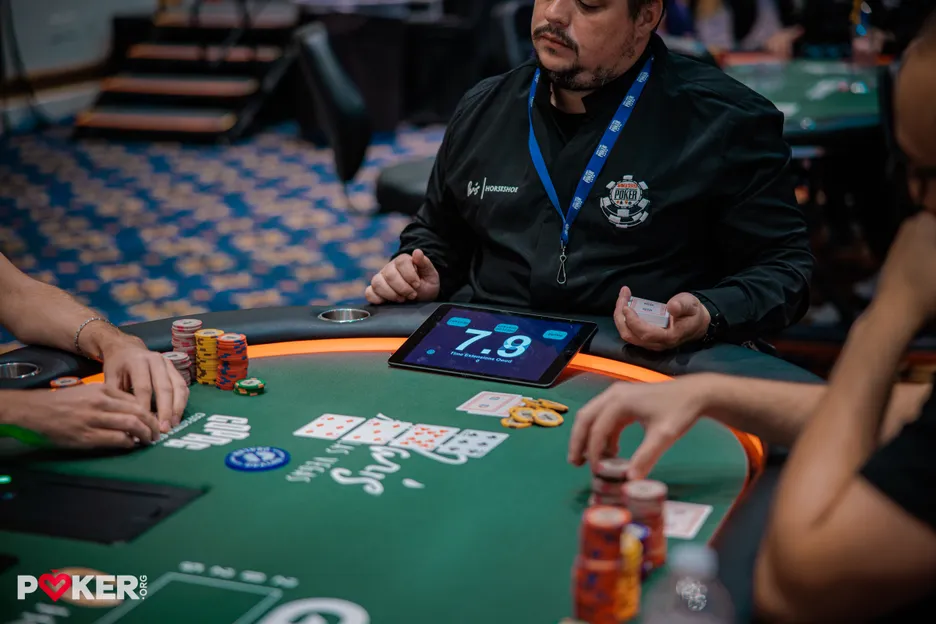


Poker player David Fenigsohn writes in reply to Lee Jones' op-ed on the recent shot clock controversy in the WSOP Main Event.
I don’t consider myself a cheat. Lee Jones would apparently disagree.
Make the best decision at every opportunity. Find every edge the rules allow, then exploit it relentlessly. These principles make for winning poker players, whether in cash games or tournaments, across every variant of the game.
In today's tournament structures following these maxims often dictates stalling on the bubble and during significant pay jumps in large MTTs.
Loren Klein recently highlighted this conundrum when he took it to an extreme with a 17-minute tank, during which none of his tablemates called the clock before the floor intervened.
According to Jones in his article (below), not just Klein, but the entire table was cheating. But no penalties were given. No one was disqualified. Because no rules were violated.
It is grossly unfair to level one of the game's most serious accusations against players who are violating etiquette rather than regulations.


Right idea, wrong solution
It is true that if everyone stalled to this degree, tournament poker would be unplayable. And those willing to stall the longest increase their EV at the expense of everyone else.
But this points to a fundamental flaw in the rules of the game. It is especially ironic to take a population specially trained to maximize EV and expect them to act against their own best interests when they are not required to do so.
The solution is simple: require it.
If there’s a scandal here, it’s not Klein's or his tablemates' behavior. It’s that, in the most prestigious and widely watched event of the year, it took a floor person nearly 20 minutes to become aware of the situation.

The players at Klein’s table alone paid a combined $6,300 in rake. At the time of the incident, there were just eight tables left. At that stage of any major event, floor staff should be monitoring the action closely enough to prevent excessive stalling.
The rulebook grants the floor a great deal of discretion — if one player or table is not playing fast enough, the floor can and should take action.
In a controversial decision, the WSOP overcorrected by implementing a shot clock on Day 7 of the Main Event. Shot clocks are a reasonable solution, though it is highly unusual to make a change of this magnitude in the middle of a tournament.
While I disagree with the decision, my outrage is muted by the fact that it is right there in the rulebook: 'Host Properties ... reserves the right at any time to implement an Event-wide 'player shot-clock' into any tournament at any point.'
The WSOP itself, just like the players in the event, took an extreme but permissible action under the rules.





No one is cheating
I have a great deal of respect for Lee Jones. He’s an important voice advocating for improvements to the game we all love. But to label Klein and his tablemates as cheats is inaccurate and unfair.
I’m already looking forward to next year’s WSOP. I hope to play a couple of smaller events. If there’s a shot clock, that will be an interesting new experience. If not, and I am short-stacked on the bubble, I’ll likely take my time before folding a hand that would otherwise be an auto-muck. And I won’t be angry or upset if someone else calls the clock.
Because no one is cheating. And poker players shouldn't be expected to ignore incentives the rules themselves create.
If the incentives are wrong, fix the rules rather than shaming the players who follow them.
The game of poker is shaped by what players want. If you want to join the conversation like David, above, send your submissions to hello@poker.org.


