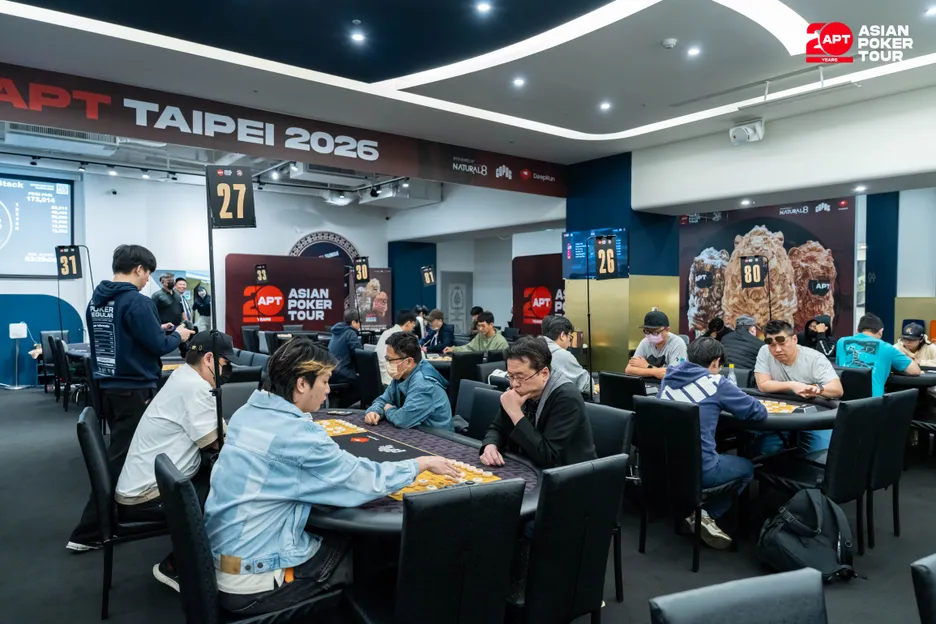


Poker and chess are similar in some ways, but very different in others.
Players of both will know the importance of a pair of kings, and the power of a pair of queens.
A chess player will respond very differently to hearing the word ‘check’, though, while if you tell a poker player about a ‘pawn sacrifice’, they might assume you’re hocking your favorite guitar.
Both games have been classified as mind sports, officially speaking, since 2024. That’s when the International Mind Sports Association added poker to their list of recognized games alongside the likes of chess, bridge and go.
In an unofficial sense, it could easily be argued that poker’s been a mind sport a lot longer than that: ever since someone first cottoned on to the fact that sustained success in the game was less about good luck than good judgment.
With that in mind, any seven-day poker series could be viewed as a ‘Mind Sports Week’.
But here at APT Taipei, deliberate steps are being taken to bring poker even closer to its more traditional mind sport cousins.
A new tournament format
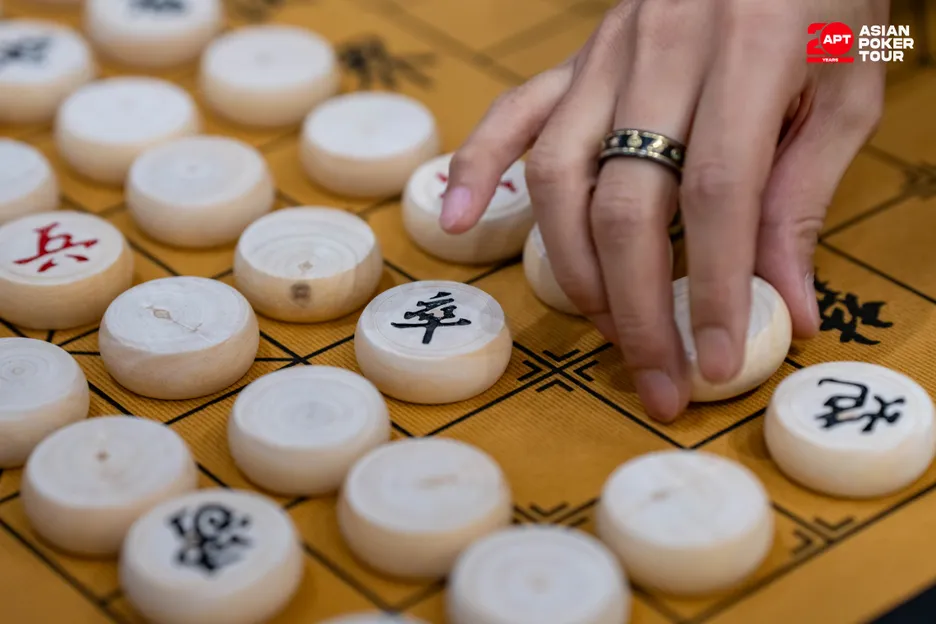
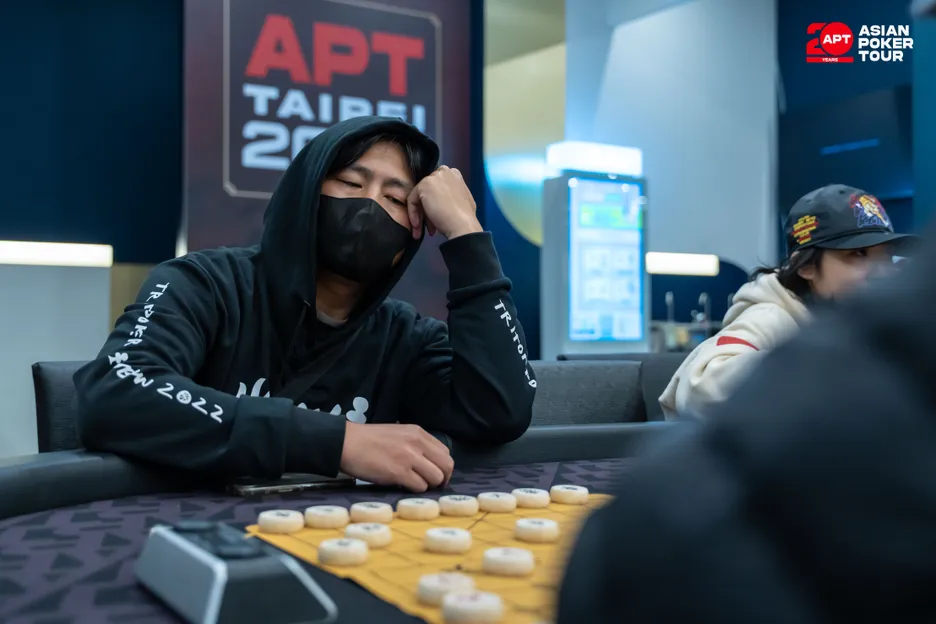
Mind Sports Week in this particular case involves a fusion of poker with various other games, specifically Chinese chess (pictured above), traditional chess and the game of go — also known variously as weiqi, baduk or igo.
From Monday, the next three days will see special tournaments running in a unique new format. Starting with five games of chess in the morning, for example, each win a player picks up will translate to bonus chips for their starting stack when the poker element of the tourney plays out that afternoon.
The first day takes in Chinese chess, Tuesday will be traditional chess and Wednesday will focus on go.
It’s another way to add variety to poker and, as so often with the more unusual games played on this tour, springs from the mind of APT President Neil Johnson.









‘It’s good to take a break with something different’
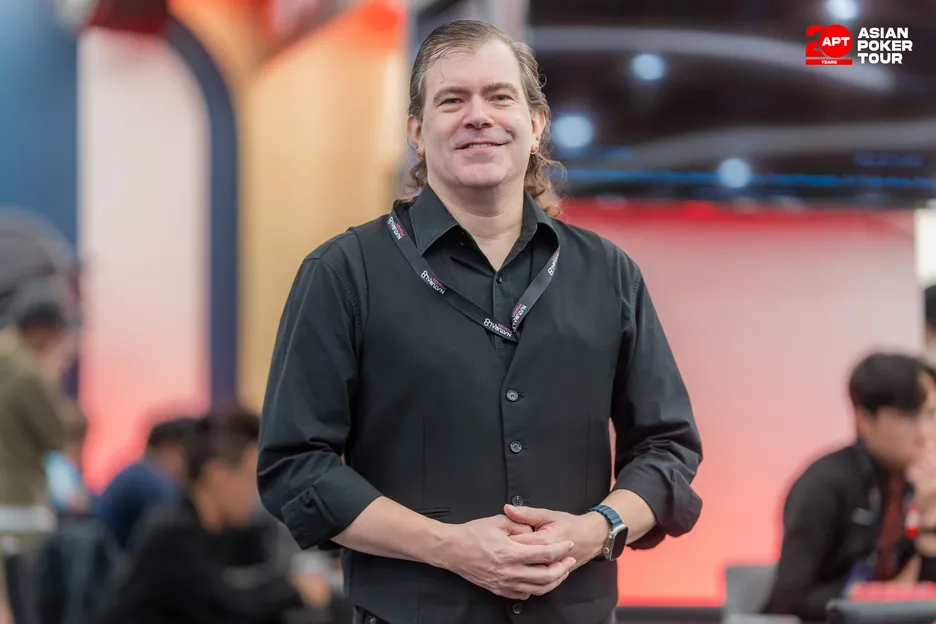
“I'm well aware that I probably schedule more aggressively than almost anybody in poker,” confesses Johnson, as Chinese chess boards and clocks are set up behind us in the Asia Poker Arena (APA). “We average around 14 tournaments a day. If you want to be in play at an APT, you are in play.”
This is no empty boast. 170 different events fill the schedule of this year’s APT Taipei series — so many in fact that the APA, the largest dedicated poker room in Asia, cannot hope to house them all.
The APA was once the host venue of the APT in the city, then the series grew and relocated to the larger Red Space events center nearby. It didn’t stop growing, and now fills both venues.
“It’s a lot of poker in 12 days, so it’s good to offer the chance to take a break with something different.”
Already famous for providing weird and wonderful mixed games, the APT’s definition of ‘something different’ has grown alongside everything else relating to the tour.
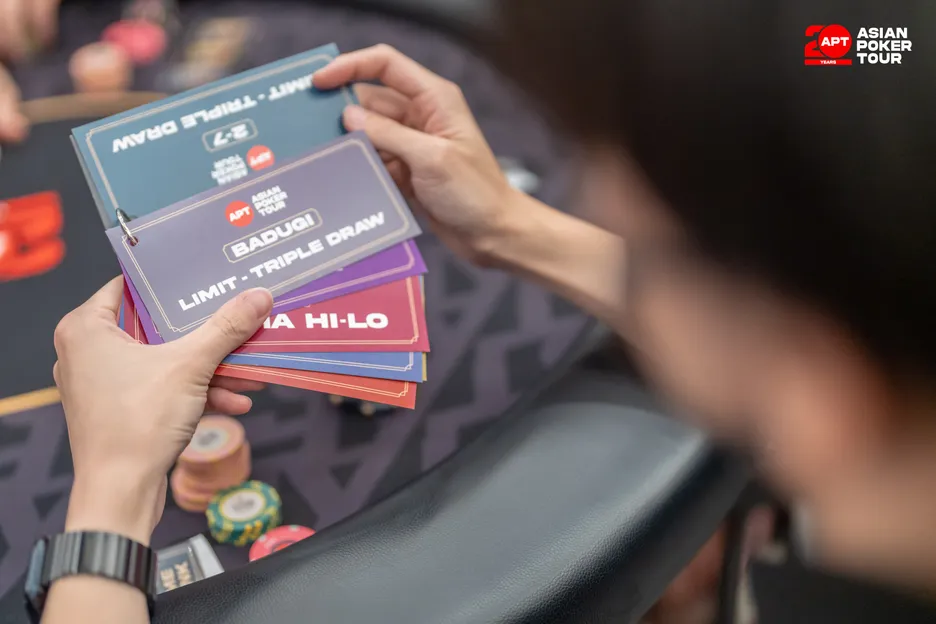
Dealers, floors and tournament directors have had to learn all kinds of game variants that few, if any, other operators spread. Thankfully, they have not needed to also become chess experts overnight; the traditional mind sports will be overseen by local, more qualified partner organizations.
But as Johnson explains, the challenges don’t begin and end with mastering the rules. For example, how does one set the buy-ins for unusual tournaments such as these? Each will have a buy-in of TWD 4,000 — around $125.
“Pricing is always difficult, because $100 is quite low for a poker tournament, but it's incredibly high for a mind sports event.
“We wanted to get the price right so we could get casual chess people to come, that maybe have never played a poker tournament before. We're conscious that it is a lot of money for a chess player, but there’s an element of fun in it. It's an easy introduction to poker for a relatively small buy-in.
“And for poker players who aren't necessarily that good at the mind sport, it's a very low barrier of entry to them.”
‘It could be Monopoly, it could be FIFA’
As we speak, the tables begin to fill around us. By the time registration closes, 19 players are in the mix and dueling it out over the Chinese chess boards. The eventual winner will bank over $1,000, and four spots will be paid.
It’s an excellent result for the first run of this experimental format, but this has not been planned as a money-spinner. It’s about providing entertainment, choice, and an experience to complement the more serious poker events taking place a short walk away at Red Space.
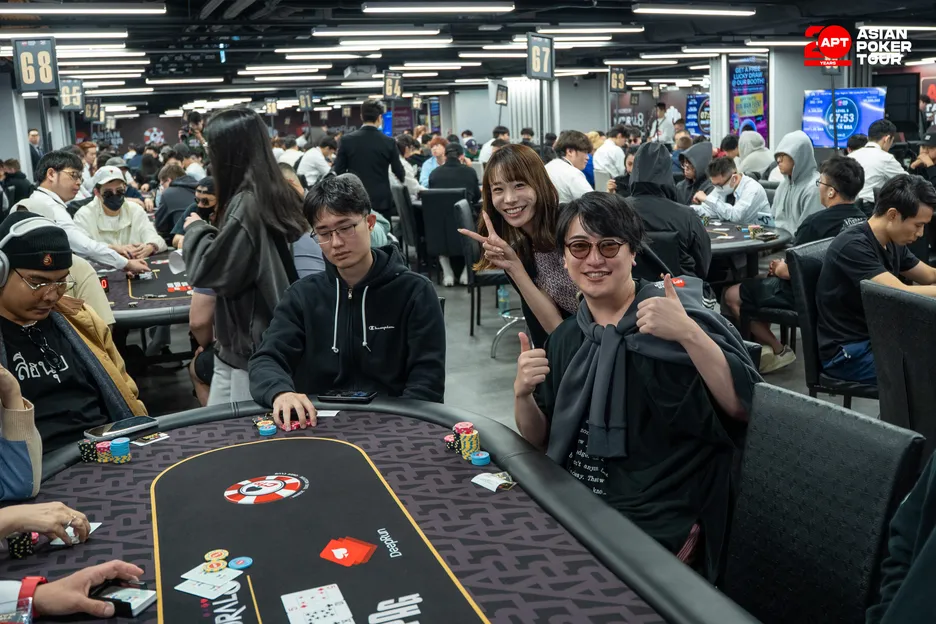
“Yesterday at Red Space you had Day 2 of the Mystery Bounty, Day 2 of the Super High Roller, the Sunday Superstack, the Main Event… It's very exciting, but I had four tournaments, all of them playing 2-card poker, with players hoodied-up up and headphoned-up.
“And then I came to the Asia Poker Arena and we’ve got Cry Me A River, three-board Omaha going in the corner, we’ve got 73 people in the fixed limit ROSET. And everybody’s talking, it's loud, they're laughing. And that, to me, is when I feel like I'm in my element.”
That’s the beauty of having two venues this time around. There’s a place for marquee events, for players to pony up $25K, focus and bring their A-game. And there’s also a place to laugh, try new things, and where there may be no such thing as an A-game because the game being played is simply too new.
“My philosophy has always been that we're playing a game,” says Johnson. “I grew up playing with my family at the kitchen table, all types of card games, so I try to never lose sight of the fact that this is a game.
“It can be a game for a lot of money, but at its core it’s just a game. I never want our players, or our staff, to lose sight of that.”
And when it comes to future fusions of poker with other games, Johnson is clear that very little is off the table.
“It could be Operation, it could be Monopoly, it could be Street Fighter, Call of Duty, FIFA, anything.
“It’s the spice, it’s the flavor. It’s the sugar on top of the cherry.”
APT Taipei runs until May 3 at Red Space and the Asia Poker Arena in Taipei, Taiwan.
Images courtesy of APT.