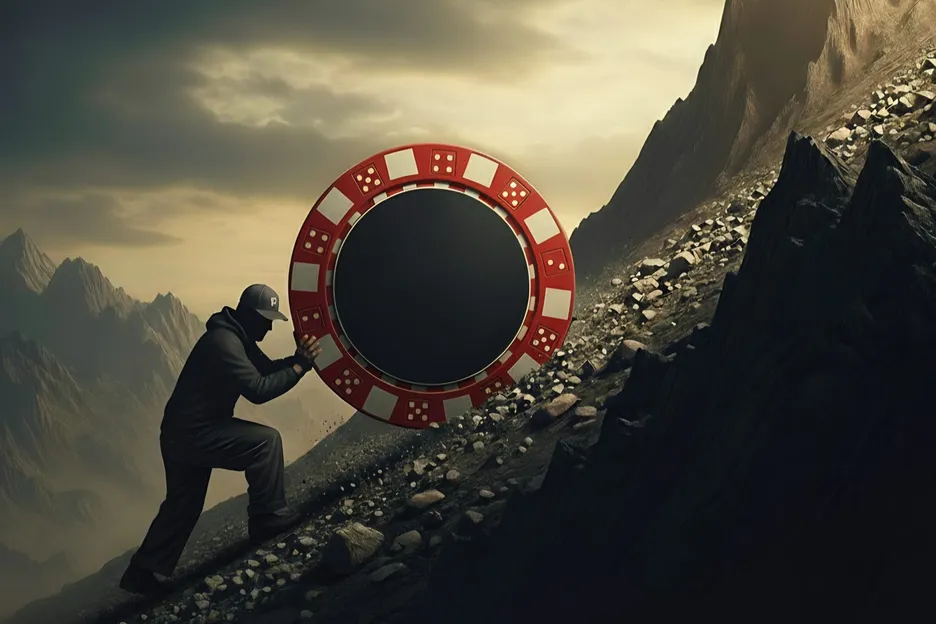


This article is part of our ongoing series on mental health in poker. Previous articles include ‘Shining a light on poker’s mental health crisis’ and an exclusive interview with Stephen Chidwick.
The following content can be distressing for some people as it mentions suicide. If this affects you, contact one of the support services mentioned at the foot of this page.
Poker players are no strangers to the pressures of downswings, isolation, and the endless grind – forces that test even the most resilient minds.
When those mental struggles hit hardest, most players lean toward whatever coping tools they’ve picked up along the way. Some players bury themselves in more volume. Others chase distractions, pump themselves up with a ‘grind or die’ rally cry, mask the pain with faux positivity, or fall into the throes of substance abuse. In the moment, these ‘go-to’ strategies feel like solutions, but in reality they often deepen the problem.
According to mental health professionals and mindset coaches who work directly with many players, such as Dr. John Grace, M.D., Catherine Jaffe, APRN, and mindset optimization coach Elliot Roe, many of these tactics do more harm than good. What feels like resilience can actually be escapism; what appears to be fortitude can actually be a player in a deep state of denial.
As part of our mental health series, this article seeks to separate myth from method, examining the coping tactics players turn to when the mental game gets tough and the real-world solutions coaches and medical professionals say can make the difference.

Understanding depression
Poker players can often be in deep denial of the subtle and not-so-subtle symptoms of a slow descent into a state of depression. It can feel for some like a state of mind that’s a dark, bottomless pit with no place to go but further down.
To understand the various degrees of depression, PokerOrg reached out to Catherine Jaffe, a board-certified medical professional, who shared some of the many symptoms of a depressive disorder.
“The symptoms to watch for can include depressed mood, feeling sad, low energy, dark thoughts, negative thoughts, sleep irregularity, thoughts of suicide, feelings of guilt, decreased interest in things, isolation, a change in appetite (overeating or not eating enough), decreased concentration, and moving more slowly than normal.”
When asked some of the best ways to treat depression, Jaffe was quick to respond:
“Most depressive episodes can be treated by medication. Milder forms of depression can be treated by talk-therapy. A combination of both is often best.
“Group therapy is a useful tool as it can be both supportive and offer the sense that you are not alone with your symptoms. The most important thing is that there is hope for depression, anxiety, ADHD, etc. Treatment is both available and can be very successful.
“New treatments are constantly emerging on the horizon. Reaching out for professional help is the key. In addition, a healthy lifestyle can be very helpful as well as social engagement.
“Being a poker player myself, I feel that playing your best game should always be the goal, because relying on results can be both fickle and devastating. You want to be able to say to yourself at the end of a session, ‘I played my hands correctly’.”





The double-edged sword of emotional dissociation
Rayan Chamas is a tournament pro who has dealt with anxiety and depression after a close friend, Horveech, who was a high-stakes cash pro, took his life eight years ago.
PokerOrg shared some of Chamas’s vulnerable and articulate X post in the first part of our ongoing mental health series.
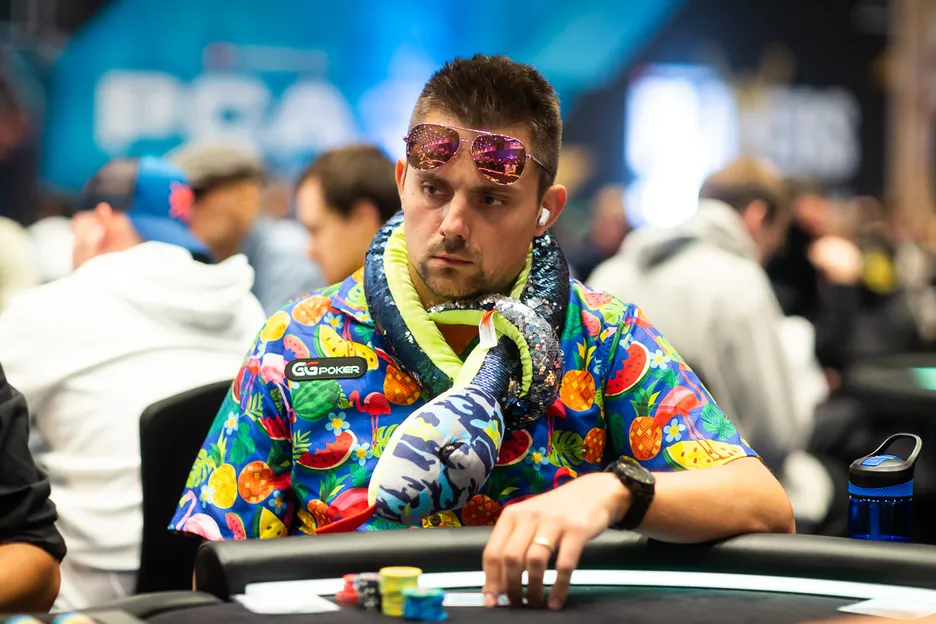
We asked Chamas how he deals with the highs and the lows of the turbulent ride that is the daily life of an MTT grinder.
“Let me share first what happens when you play tournaments for a living,” says Chamas. “Just mathematically, you're going to lose 85-90% of the time. And sometimes, if you're running really badly, it's closer to 95%. And that means you're always going to be in kind of a depressed mood. I believe that if you have a feeling that something's not right, that's already something you need to be aware of.”
For ways to manage the game’s brutal swings and protect his own sanity, Chamas turned to peers for advice and devoured podcasts from elite high-stakes pros.
“You have to find a way, no matter the end result, to be in a stabilized, happy mode, before and after your sessions. From the content I’ve consumed, I’ve learned to have a complete dissociation from the variance, and that is what’s needed to succeed in poker. At least for me.”
Perhaps, as a fan or player, you’ve noticed that many of the elite players show little to no reaction to a huge title or payday. It may look a bit strange as compared to other competitive sports/activities where participants joyously celebrate a big win.
Chamas pointed to Seth Davies, a high-stakes regular, who recently shared that when a player wins a Triton tournament, most are not even celebrating. It’s usually a simple handshake, and on to the next event.
“You can't even feel bad or good when you win,” explained Chamas. “There is no celebration, no emotion.”
Not every coping mechanism is healthy
Players struggling with depression and mental disorders often reach for various coping mechanisms to unwind from the grind, such as over-grinding, isolation, substance abuse, or withdrawing into silence, which don’t offer a proper mental or life balance, but the illusion of it.
These coping strategies do very little to stop a downward slide. Left unchecked, anxiety and exhaustion often spiral into depression; it’s a reality the poker world is only beginning to confront and talk about.
Chamas shared what essentially works for him to cope with the unpredictable pendulum of variance on the tournament circuit.
“It's very different for each person,” says Chamas. “When I have a terrible session, I go straight to bed, feel nothing, wake up the next day, and go play tennis. I just did that today. I had a very bad session yesterday, went to play tennis, and focused on a side business I have.
“It's as if yesterday didn't happen. It's a dissociation. It's kind of a weird way of coping, but I think it's necessary. It might not be the healthiest. I'm not sure, but I think that's what needs to be done. I say this because if you emotionally attach yourself to every session’s result, you're going to live a very hectic and unbalanced life.”
‘Happily ever after just doesn’t exist’
PokerOrg also reached out to Elliot Roe, best-selling author of A-Game Poker, for sage advice for players struggling with their mental approach to the game.
Roe is an acclaimed mindset coach who has worked with some of poker’s top players, including Phil Galfond, Fedor Holz, Alex Foxen, and Jason Koon.
“The early education part of the work that I'm doing with poker players is helping them understand that you're bringing your issues to the table, and poker's amplifying them. Poker isn't creating the emotional issue(s).”
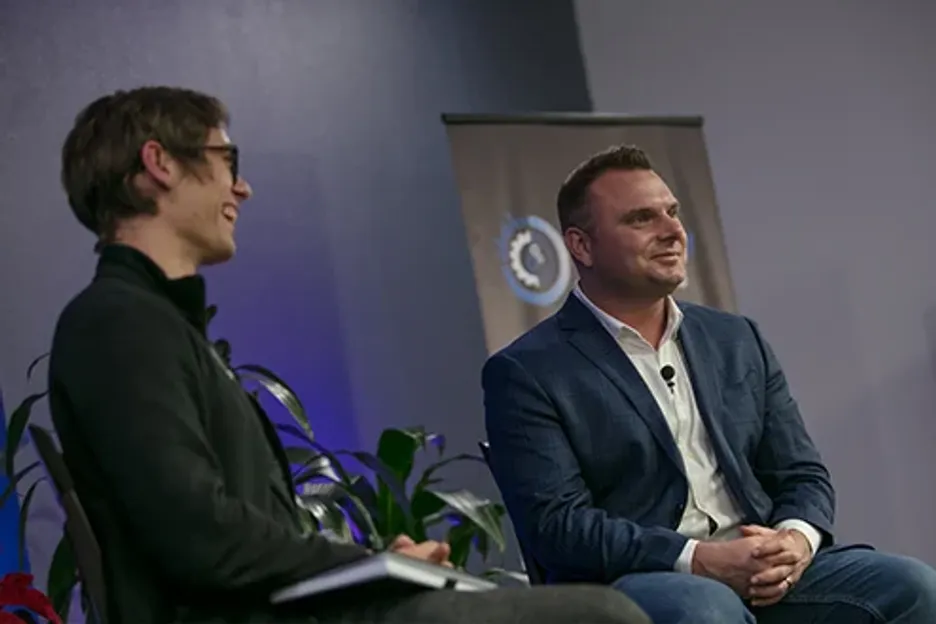
Roe refers clients to a medical professional when depression enters the conversation.
“If someone says they’re feeling chronically depressed and having suicidal thoughts, I'll say, We need to find you a mental health professional who can help you.”
The old saying ‘money doesn’t buy happiness’ rings true as much in the poker world as it does in any other facet of life.
Winning numerous titles and piles of cash doesn’t make your inherent emotional or mental issues magically disappear overnight. (as shared by Stephen Chidwick on X and our recent feature). In what might be the starkest of wake-up calls, ‘the real work’ has just begun by simply bringing an awareness to the forefront.
“This issue comes up an awful lot from successful players,” continues Roe. “When a player says, ‘I've had extreme success. Yet I find there is no happy ending from becoming number one in the world or from winning the biggest tournament and a massive payday.’
“Many players thought it would be a ‘happily ever after’, yet that just doesn't exist. It's a very confronting moment for people when they realize that their financial number doesn't solve their problems.”
‘Mental health needs to be actively sought and cultivated’
When tension mounts, stress builds, and bills come due, players fall back on learned habits or short-term fixes and often grind exponentially harder.
PokerOrg spoke to Dr. John Grace, a Board-Certified psychiatrist, to understand more about how players can strive toward overall mental wellness. Dr. Grace has 20 years of clinical experience and a particular interest in the healing potential of poker.
“Mental health problems are not a crisis within our world — they are the expected result from it,” shares Dr. Grace. “It is very hard to achieve wellness and balance in most of our environments today, and this is magnified in the competitive poker community.
“You have to approach mental wellness like an unexpected outcome. It has to be actively sought and cultivated. It is not the natural state of our minds, given the poker environment.
“I advise my clients to establish a routine and a system to save themselves when starting to slide mentally. A disruption of circadian rhythms, neurological, and gastrointestinal dysfunctions are magnified in the competitive poker world.
“That means that your mind and body are working against the competitive poker player’s goal of mental health. Therefore, a system of wellness, recovery, routine, and rescue is the best way to try and maintain such a difficult and elusive goal.”
A culture of self-support
“The most important thing any community can do is develop a culture of self-support,” says Dr. Grace. “When you support yourself emotionally, you are better at identifying, asking for, and accepting assistance. In my opinion, encouraging self-support is as important as being supportive.”
Poker is hard. But it’s one of the reasons we love the challenges the game presents to each of us when we sit down to do battle, whether you’re a professional or a weekend warrior.
The brutal grind, intense swings, and ever-escalating stress will always be part of the poker life. But dismissing it all with a shrug and the flippant ‘That’s poker,’ only buries the struggle deeper instead of facing the core issues head-on.
As a community, the most crucial step we can take is to recognize the challenges many players face when extreme anxiety, depression, and dark thoughts take hold. Ignoring these struggles only deepens the silence.
The most compassionate choice is to face poker’s mental health struggles openly. That step is essential if the poker community hopes to build balance, wellness, and real change.
As PokerOrg’s mental health series continues, we’ll turn to the darker inner battles players face when extreme anxiety and depression spiral into suicidal thoughts.
We will explore these struggles openly and compassionately, with the primary goal of helping players better understand the warning signs and know when, how, and where to seek support.
If you’re struggling with mental health issues, help is available. Your primary care physician should be able to refer you to a psychiatrist, a nurse practitioner, or a therapist. FindAHelpline.com can connect you with professional support services in almost any country in the world, while the Suicide and Crisis Lifeline is available within the USA by dialing 988 anytime.
Additional images courtesy of Neil Stoddart/Elliot Roe.


