

When's the last time you were given a homework assignment? It's probably been a while, right?
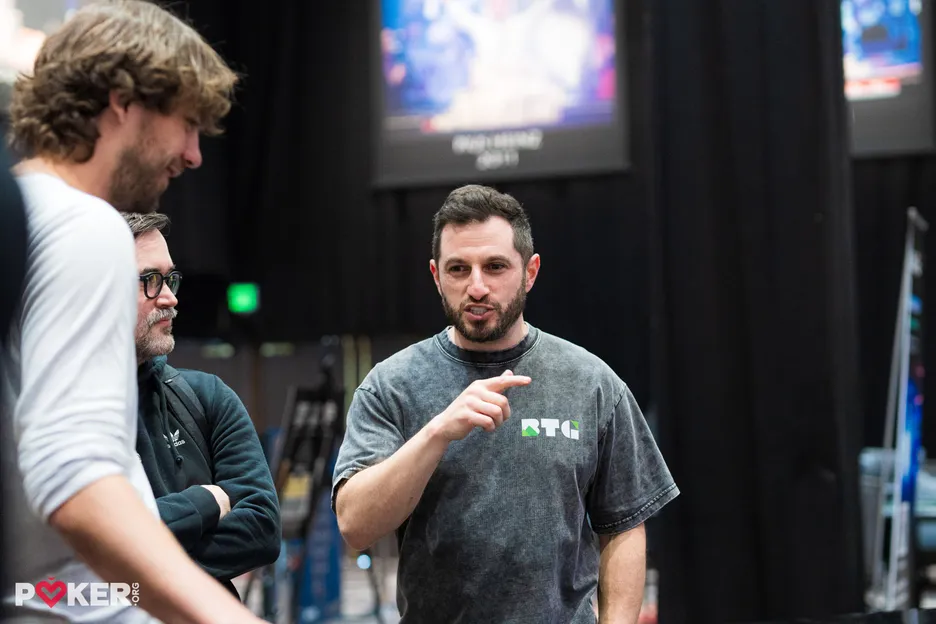
If you asked me the same question 24 hours ago, I'd be right there with you in the free-from-homework camp. Then I tuned into a webinar on Thursday titled 'When Discipline Isn't Working' led by online poker legend Phil Galfond (above).
Galfond runs Beyond the Game, a year-long, private coaching program dedicated to "helping poker players reach their full potential."
As he grew the program and adjusted the formula, the BTG Summer Summit emerged in 2025 as an exciting way to introduce mental game concepts from his private curriculum to the masses.
The inaugural summit, held last summer in Las Vegas ahead of the World Series of Poker, featured a panel of top poker professionals – Scott Seiver, Brian Rast, and Jeremy Ausmus) – alongside mindset coaches Elliot Roe and Adrienne Carter.
This week's 'When Discipline Isn't Working' webinar brought listeners a taste of the BTG Summer Summit experience and Galfond's broader coaching principles and style. While there's no shortage of takeaways to highlight from the webinar – for both on and off the felt pursuits – one in particular stands out.
It's Galfond's homework assignment.
The two tools
After listening to him speak for the better part of an hour and a half, I walked away from Galfond's webinar with a handful of ways to address my own pitfalls within the discipline game tree – and a two-fold homework assignment to complete by day's end.
When I think of homework, I think of solving a sheet of mathematical problems. Or writing an essay on the impact of Eli Whitney's cotton gin on the Industrial Revolution.
Galfond's assignment, understandably, had little in common with those memories.
And rightfully so. Ultimately, he's teaching poker players how to navigate the highs and lows of one of the most mentally-challenging games in existence – not a fifth-grade homeroom class.
"I'm gonna leave you with two tools," said Mr Galfond. "These are things that you can do today that I hope will be helpful not only in helping you become more of whatever it is that you want to be, but I also hope that it's an easy example and proof that this kind of thing would work for you, if it does."

Tool #1: Set an 'anti-goal'
The concept of an anti-goal sounds contradictory on the surface, but Galfond simplifies it elegantly.
"It's one thing that you won't do this week. Like goals, anti-goals should be very specific," he said. "If I was observing your life and you told me your anti-goal, I should know pretty easily whether or not you did it."
Rather than trying your best to tackle the entirety of whatever is preventing you from reaching your set goals, Galfond wants you to pick one obstacle that you can realistically remove from the path forward.
"Sometimes people have a much easier time just saying, 'I'm not going to eat ice cream this week,' rather than 'I'm going to change my whole diet'," he elaborated. "Think about the things that get in the way of the goals that you have and just set one anti-goal that will make sense for you."
Tool #2: Make an environmental change
Galfond's second assignment is even simpler than the first.
"We talked about [how] structure beats willpower, but it's really environment beats discipline," Galfond asserted. "So, the second tool is make an environmental change. It could be moving your phone to another room before bed. It could be blocking the sites that you drift to. If you want to have a journaling habit every morning you could set out your journal materials on your desk."
And that's it. Easy, no? Galfond thinks so.
"So, those are your two homework assignments," he summarized. "And they're both simple, right? It is important, by the way, that you do these today."
After fielding questions from listeners, Galfond closed the session with a simple instruction: "Do the homework."
Registration for the 2026 Beyond the Game Summer Summit is currently open.
Additional image courtesy of PokerGO.


