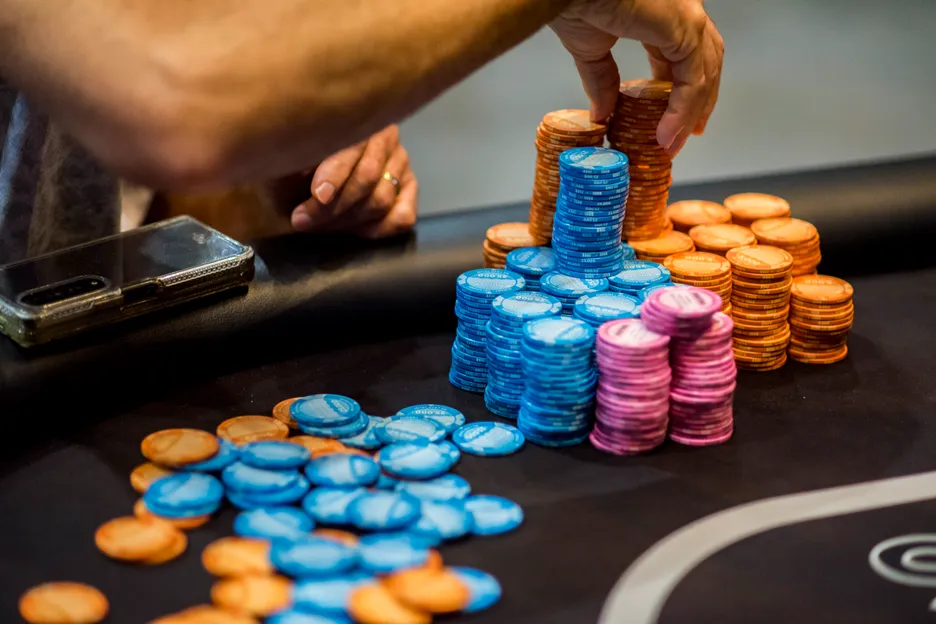


Today we’re going to talk about how to adjust when somebody is losing a massive amount of money at your cash game table, and seems determined to keep putting chips into pots.
These tips apply whether the player is legitimately tilted after losing a few big hands or is simply the type of gambler who loves firing chips into the middle.
When this happens, you need to recognize that the entire complexion of the game has changed. There may be eight other players sitting at the table, but a disproportionate amount of your potential profit can suddenly revolve around one person.
1. Every pot becomes about this player
When you first sit down at a cash game table, you should generally start by playing fundamentally solid poker and betting your strong hands for value. The average low-stakes player doesn’t fold enough, and your strongest hands are going to generate a huge percentage of your profits.
At the same time, you should constantly be looking around the table to figure out who is actually giving the money away. Sometimes the answer becomes blindingly obvious within a few orbits.
Maybe there’s a player who wants to see 80% of the flops and loves calling raises preflop. Another player might have been playing reasonably well until they lost two huge pots, and now you notice them calling every raise and refusing to fold anything remotely playable.
That is the person you want to play against as frequently as possible. Once you identify them, start paying extremely close attention to exactly how they play.
Do they raise top pair because they want to “find out where they’re at,” or do they simply call with every pair and hope to reach showdown? Those are two very different players, and you need to know which one you’re dealing with.
Watch what they do with draws as well. Some players play every decent draw aggressively, while others simply call repeatedly and hope the card they need eventually arrives.
You should also pay attention to their physical behavior and emotional state. Do they become uncomfortable when they’re bluffing or holding a mediocre hand, or are they perfectly comfortable gambling with almost anything?
The more information you collect about this player, the easier it becomes to structure pots specifically against them. Your goal isn’t merely to notice that somebody is playing badly, it’s to understand exactly how they’re playing badly.









2. If they keep limping, start isolating them
If this player is frequently limping into pots, you should be looking for opportunities to raise behind them. You don’t want to simply allow four or five other players to limp along every time the weakest player at the table enters a pot.
This becomes especially important if several other players have figured out what’s happening and are also trying to play pots with them. Everybody at the table understands that this player’s chips might not be there much longer, so you’re going to have competition.
That means your isolation raises need to be substantial. Depending on the stack sizes, table dynamics, and number of limpers, you may need to use a much larger sizing than you would in a normal unopened pot.
A large raise may look ridiculous to the stronger players at the table. But the important question isn’t whether they think your sizing looks pretty. It’s whether the loose player you’re targeting is still willing to call it.
If that player is limping hands like 
 ,
, 
 and all kinds of disconnected garbage and then happily calling a huge raise, keep charging them. Go to two times or three times the pot if you have to. Your objective is to create bigger pots while simultaneously discouraging the other players from coming along.
Ideally, you end up heads-up against the weakest player with a stronger range and position. That is one of the most profitable situations you can manufacture in a cash game.

3. If they start raising, be ready to three-bet
Eventually, an extremely loose player may get tired of you raising every time they limp. They might decide that instead of limping, they’re going to start opening pots themselves and fight back.
That doesn’t necessarily mean you should back off. In many cases, it simply means you need to adjust from isolation raising to three-betting.
The most important requirement is still that your hand performs well against the range this player is actually entering the pot with. If they’re opening dramatically too many hands, however, your profitable three-betting range can become much wider than it would be against a disciplined opponent.
I particularly like hands that have some connectivity or suitedness when there is still a reasonable chance the pot becomes multiway. Suited aces, suited Broadway hands, suited connectors, pocket pairs, and some suited gappers can all give you useful ways to make strong hands postflop. They also give you more equity to keep firing on turns.
Three-bet pots are more likely to become heads-up because the additional raise tends to discourage everyone else from entering. When that happens, you can sometimes start incorporating more offsuit big-card hands that dominate the loose player’s raising and calling ranges.
Take a hand like 
 . Against a normal opening range, it might not be particularly exciting, but against someone angrily raising hands like
 and then calling three-bets with them, the situation changes dramatically.
Now king-ten is dominating all kinds of weaker kings, tens, and random suited hands that your opponent refuses to fold. You’re not three-betting because king-ten offsuit suddenly became a premium hand; you’re three-betting because your opponent’s range has become absurdly weak.
Always build your adjustment around what the opponent is actually doing. When somebody radically expands their range because they’re tilted, your value range should expand accordingly.

4. Sometimes you should keep the weak player in the pot
There is another situation where trying too hard to isolate the weak player can actually work against you. Imagine a good player raises, and the extremely loose recreational player is sitting directly to your left.
Your first instinct might be to three-bet the strong player and try to take control of the pot. But that can be exactly the wrong adjustment.
When you three-bet a competent player, you’re creating a situation they have probably studied extensively. Strong players tend to be much more comfortable in heads-up three-bet pots because those situations are relatively well understood and they’ve spent a lot of time working on them.
Now you and another competent player are playing a big pot against each other while the person you actually wanted in the hand folds. You may end up spending the evening trading coolers with another strong player instead of getting involved with the person who is giving away the money.
Cold calling can sometimes accomplish something much more useful. You allow the extremely weak player behind you to enter the pot with all of the questionable hands they desperately want to play.
The pot may become multiway, but that isn’t necessarily a bad thing when one of the participants is making enormous mistakes. Multiway situations are more complicated, and the strong player loses some of the advantages that come from playing a familiar heads-up three-bet pot.
Meanwhile, the weak player is still there calling with mediocre pairs, weak draws, and dominated hands. That’s the person you wanted in the pot in the first place.
The lesson is that isolation isn’t always the objective. Sometimes your priority should simply be keeping the weakest player involved.
5. In multiway pots, bet your strong made hands
When you do end up in a multiway pot with this player, don’t automatically become passive just because several people saw the flop. If you flop something like top pair with a decent kicker or better, you should frequently be looking to bet for value and protection.
I generally don’t want to use tiny bets in these spots when there are several players involved. A more substantial sizing can force the more competent players to release backdoor draws, gutshots, weak pairs, and other marginal hands that might otherwise improve later. Go for more than 50% of the pot.
That is useful because those are often the players who can actually create problems for you on future streets. They understand when to apply pressure, when to represent strong ranges, and when your hand is becoming vulnerable.
The loose player you’re targeting may respond completely differently. If they have any pair or any reasonable draw, they may call regardless of your sizing.
That is exactly what you want.
You can start with a multiway pot and use your flop bet to effectively transform it into a heads-up pot against the weakest player. Now you have a strong made hand, the pot is getting larger, and the player most likely to make calling mistakes is the one still putting chips in.
That is a much better result than checking and allowing everybody to realize their equity for free.
Recognize when the entire game changes
When somebody starts dumping chips into a cash game, you can’t continue playing exactly the same strategy you were using before. The most profitable player at the table to play against has changed, so your priorities should change with them.
Pay closer attention to that player than anyone else. Figure out what they raise, what they call, how they play draws, whether they bluff when frustrated, and how much pressure they’re willing to tolerate.
Then structure pots accordingly. Isolate them when that makes sense, three-bet them when their raising range becomes too loose, keep them in the hand when isolation would chase them away, and value bet aggressively when they refuse to fold mediocre holdings.
The important thing is understanding that these opportunities don’t last forever. A player who is hemorrhaging chips may eventually quit, calm down, or simply run out of money, so you need to recognize the situation while it’s happening.
Alex Fitzgerald is a best-selling author published by D&B Poker. Check out Alex’s most recent book, ‘How to Beat Players Who Never Fold.’
Visit pokerheadrush.com and subscribe to Alex's FREE strategy newsletter to receive three FREE training video packs. Follow Alex on X and Instagram.