


In today’s article, we’re going to talk about what to do once you start feeling fatigued at the World Series of Poker.
When you get tired, your game can start leaking in ways you do not immediately notice. Look for these signs that fatigue is creeping into your decisions.
1. You start opening anything that looks playable
This happens a lot after people have played numerous events.
They are tired of how they are running, tired of sitting in tournaments for long hours, or just tired in general.
At the beginning of the series, they were thinking carefully. They were debating which hands they should open based on position, stack configuration, table image, and who was behind them.
But as the series wears on, that discipline starts to disappear.
Eventually, they just start opening anything that looks playable because they want to play.
That makes sense emotionally. When you want to play poker and you are tired of how things have been going, you start forcing action. But that can actually make the downswing worse.
The more fatigued you are, the more important it is to slow down and ask yourself, “Would I have opened this hand on day one of the series?”
If the answer is no, that is a warning sign.








2. You stop checking stack sizes
Fatigued players stop checking stack sizes.
If you are consistently raising or cold calling without looking at the stacks to your left, that usually means you have been in Vegas for a long time and you are starting to get tired.
There are many times where someone behind you can easily move all in with a short stack. When that is the case, you cannot just cold call or raise with speculative hands as if nothing can happen.
If you are not checking those stacks and anticipating what you will do versus a jam, you are playing more recklessly than you realize.
Before you enter the pot, take one extra second.
Look left.
Ask yourself, “Who can jam on me?”
That tiny habit can save you a lot of chips.
3. Every thin decision starts going the same way
At the World Series of Poker, you are going to face a lot of thin decisions.
When you are fresh, you actually think through the totality of the situation. You consider the player across from you, the line they took, the board, the stack sizes, the timing, and everything else you have observed.
Then you make a judgment call.
But once you get tired, something different happens.
You still think you are making judgment calls, but if you pay attention, you will notice you are defaulting to the same answer over and over again.
For some players, the default answer is always to gamble. For others, the default answer is always to fold.
Do you know which one you become when you are tired?
You need to know before your opponents figure it out.
If every close spot is suddenly going the same direction, that is not a strategy. That is fatigue making decisions for you.
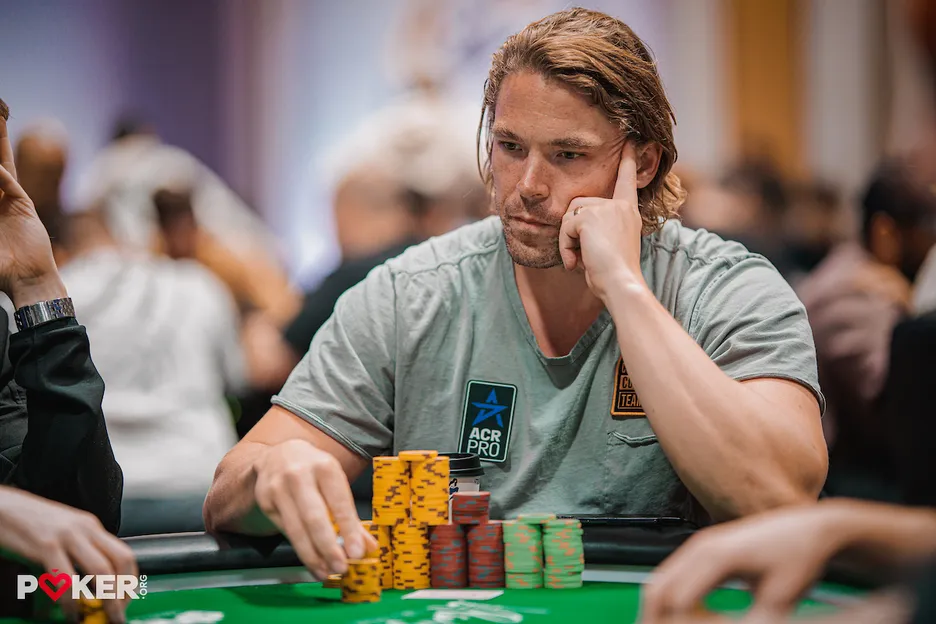
4. Thin check-raises become calls
At the beginning of a tournament series, many players are willing to put pressure on frequent openers.
When they are in the blinds against someone who is raising often and continuation-betting too much, they will use thin check-raises. Then they will keep barreling on turns and rivers when the situation calls for it.
But once variance smacks them across the face, they start trying to reduce volatility.
They say, “Okay, I have a gutshot. I’ll just call.”
Or, “Okay, I have a mediocre pair. I’ll just call.”
They think they are limiting variance, but they can actually be increasing it.
By never check-raising, they allow aggressive opponents to realize equity, keep control of the hand, and keep putting them in difficult spots.
Sometimes the aggressive line is the lower-variance line because it gives you fold equity and a way to win the pot immediately.
If all your thin check-raises have quietly become calls, fatigue may be taking away one of your most important weapons.

5. 3-bets become cold calls
Another thing that happens when players get fatigued is they stop 3-betting medium-strength hands.
They get tired of the goofy spots 3-bets create.
Who wants to 3-bet jacks when you keep getting 4-bet?
Who wants to 3-bet ace-king when you keep missing the flop?
Who wants to 3-bet a hand like jack-nine suited or ten-eight suited when you know the hand might get complicated?
But if you are not 3-betting some of your better hands, you are probably also not 3-betting the hands that need to be 3-bet versus frequent openers. That takes away your ability to bluff.
And when you take away your ability to bluff, you take away a huge part of your skill advantage.
Pay attention to the trend. Were you 3-betting more at the beginning of the series, but now you are constantly cold calling and hoping the flop hits you?
If so, fatigue is shrinking your game.
You are not playing safer. You are playing more passively. And passive poker is rarely winning poker at the World Series.
I hope these tips are helpful to you.
Best of luck on the felt.
Alex Fitzgerald is a best-selling author published by D&B Poker. Check out Alex’s most recent book, ‘How to Beat Players Who Never Fold.’
Visit pokerheadrush.com and subscribe to Alex's FREE strategy newsletter to receive three FREE training video packs. Follow Alex on X and Instagram.


