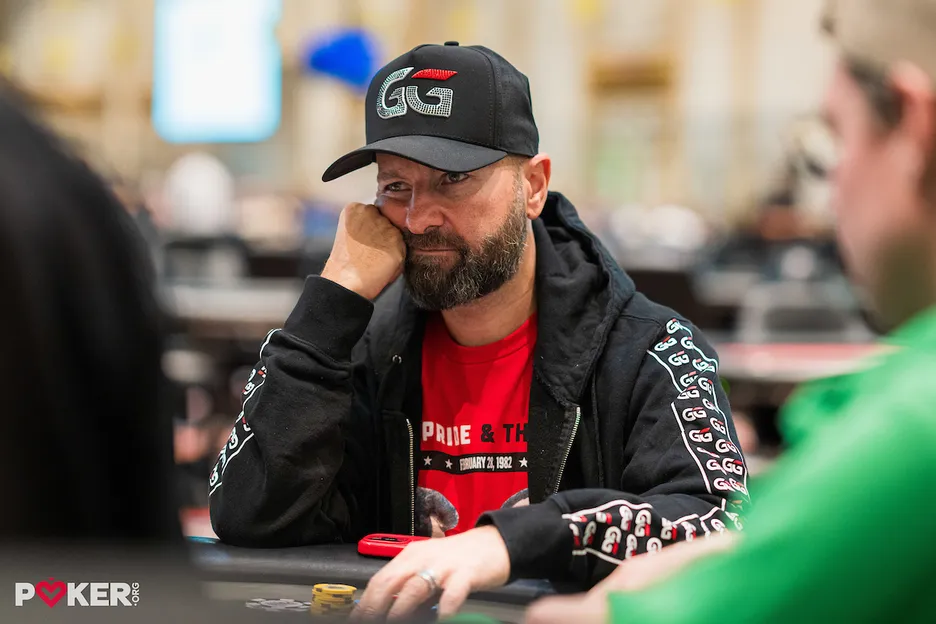


The sting of a heavy downswing or a long, losing session is a reality every professional must face. It is common to feel drained or frustrated when the cards don't match your effort. This is where 'resilience' becomes the deciding factor for your long-term success.
'Resilience' is often misunderstood. It isn't just a personality trait you are born with, and it isn't a "switch" you can just flip. It is a dynamic process — a way for your brain and body to work together. It is your ability to return to a stable state after facing high levels of stress, and more importantly, it is how you grow from those difficult moments.
How the bounce back works
In simple terms, 'resilience' is how you adapt to the pressure of the game. For a poker player, this means 'maintaining calm' and making logical decisions even when you are losing.
This process depends on 'emotional regulation'. When you lose a big pot, your brain triggers a stress response. 'Resilience' is the system that manages that stress so you can continue to 'realize your EV' without your play falling apart. It is about how quickly you can get back to your mental baseline.










What a resilient player looks like
A resilient player handles the grind differently. They focus on the process rather than the short-term results. Here are the core parts of that mindset:
- 'Self-efficacy': This is the tactical belief that you can execute your strategy correctly. It is the confidence that you have the skills to handle the game, no matter what the current session looks like.
- 'Cognitive reappraisal': This is the ability to change how you look at a situation. Instead of seeing a lost pot as a personal failure, you see it as just a piece of data within 'game variance'.
- 'Inhibitory control': This is your ability to hit the "pause" button on your impulses. It is what stops you from playing bad hands just because you are frustrated.
- 'Emotional stability': This means keeping your mood and energy consistent. While some of this comes naturally, it is a skill that gets stronger the more you play.
The experience factor
One thing the data shows is that experience matters. The more time you spend in the 'trench reality' of the game, the better your brain becomes at 'navigating tilt'.
Experienced players are often more resilient because they have seen the highs and lows enough times to desensitize their stress response. As your skill grows, so does your ability to regulate your emotions. This means 'resilience' is something that builds up over thousands of hands.
When your 'resilience' is low, 'performance blocks' start to appear. One of the most common is a 'cognitive distortion' called the 'illusion of control'. This is when you falsely believe your skill should win you a specific pot, forgetting that 'variance' is always part of the equation.
External factors also play a huge role. Research in the poker environment shows that a lack of sleep or even a small amount of alcohol weakens your 'inhibitory control'. This makes 'navigating tilt' almost impossible and directly stops you from 'realizing your EV'.
How to strengthen your 'resilience'
While much of what we know about these tools comes from the world of sports, they are very effective when you apply them to the poker table. Here are some practical ways to stay strong:
- Set 'process goals': Focus on how you play, not how much you win. Aim to play every hand according to your strategy. This keeps you in control and builds 'self-efficacy'.
- Practice 'mindfulness': Just a few minutes of daily focus training can help you observe a 'bad beat' without reacting to it. It lowers your physical stress, keeping your mind clear for the next hand.
- Catch your "brain errors": Learn to spot when you are blaming bad luck for a technical mistake. Staying honest about your play helps you stay resilient.
- 'Optimize recovery': You cannot be resilient if you are exhausted. Prioritize sleep and take real breaks. Fatigue is a major 'performance block' that makes it much harder to stay disciplined.
Find your tribe: Don't go through a downswing alone. Talking about your strategy and your feelings with a coach or other players helps you 'reappraise' the situation and feel less isolated.
A 'tool' for 'optimizing recovery'
To help you 'navigate tilt' and get back to your baseline, try this 'reappraisal' technique after your next session:
- Spot the trigger: Write down the exact moment or hand that made you feel the most frustrated.
- Facts vs. Feelings: Describe what happened (e.g., "I lost a 200bb pot") without using emotional words.
- Check your execution: Ask yourself: "Did I play the hand correctly?" If you did, you successfully 'realized your EV', regardless of the money lost.
- Physical reset: Step away from the computer or phone. Give your body and mind a total break to reset before you do anything else.
How do you usually handle the first ten minutes after a losing session?